

What do you make when the ingredient you need no longer exists?
Food history is full of carefully developed recipes. This is not that list.
The foods below appeared because cocoa was scarce, tomatoes were difficult to find, or the usual product had become too expensive. Someone improvised, people kept eating, and a temporary substitute became permanent.
Here are five foods invented because people were running out of options.
#5 Mock Apple Pie
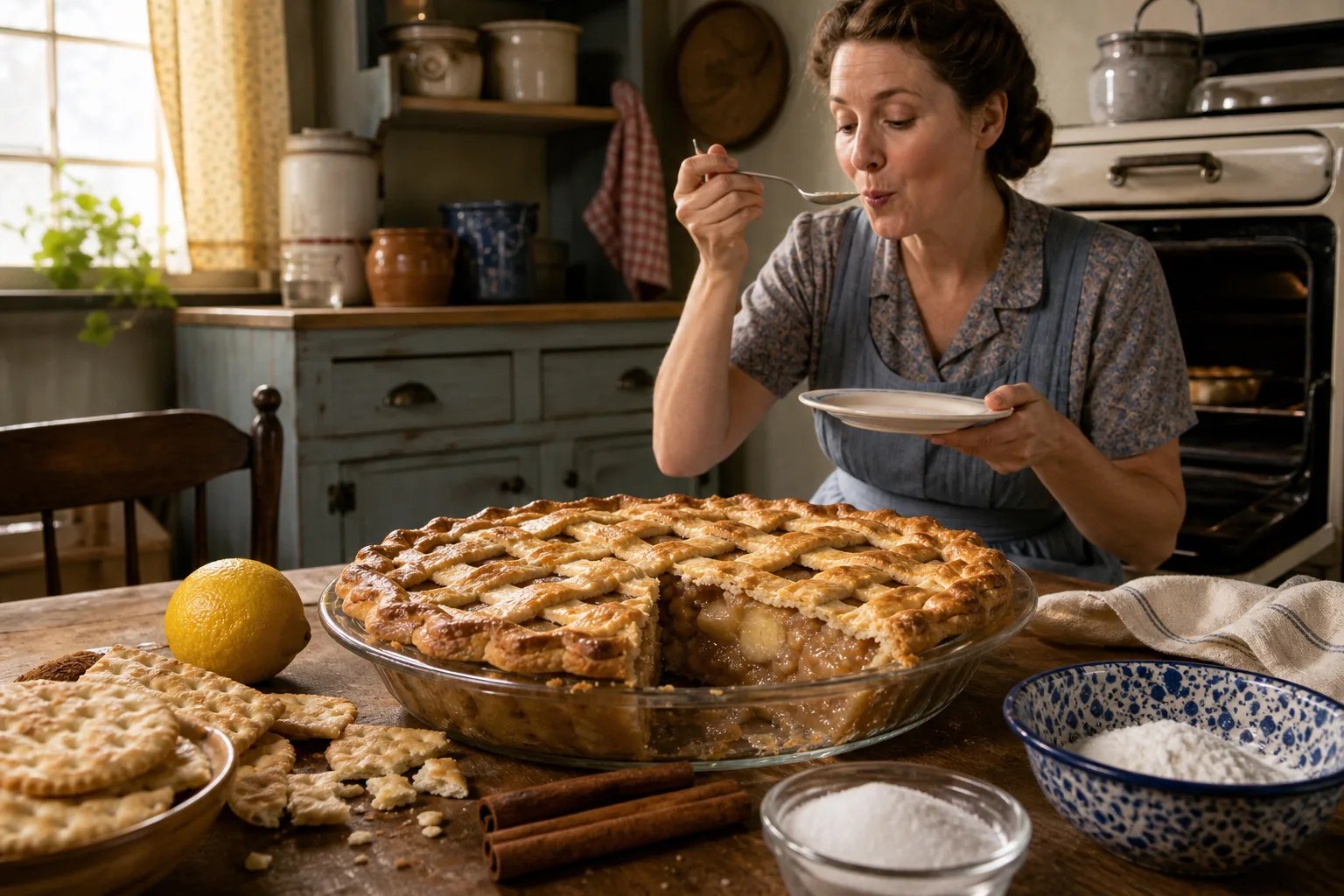
Mock apple pie answered a fairly important question: how do you make apple pie when you have no apples?
Apparently, you use crackers and refuse to elaborate.
Versions of the recipe date back to the 1800s, when travelers heading west sometimes had limited access to fresh fruit. Cooks used soda crackers or even hardtack as a substitute, combining them with sugar, lemon juice, cinnamon and cream of tartar.
The crackers softened while baking, the lemon provided the tartness, and the cinnamon did what cinnamon usually does: convinced everyone that something involving apples was nearby.
The recipe became especially famous during the Great Depression. Ritz crackers were introduced in 1934, and Nabisco placed its own mock apple pie recipe on the box the following year. The company did not invent the basic idea, but it helped introduce the cracker-filled version to kitchens across the country.
There were no apples in it. There was not even apple flavoring. Somehow, the combination of texture, acidity and spices came close enough that people continued making it long after fresh apples became easier to find.
Mock apple pie began as a practical substitute. Eventually, it became a recipe people made simply because they wanted to see whether a pile of crackers could really pull it off.
#4 Margarine
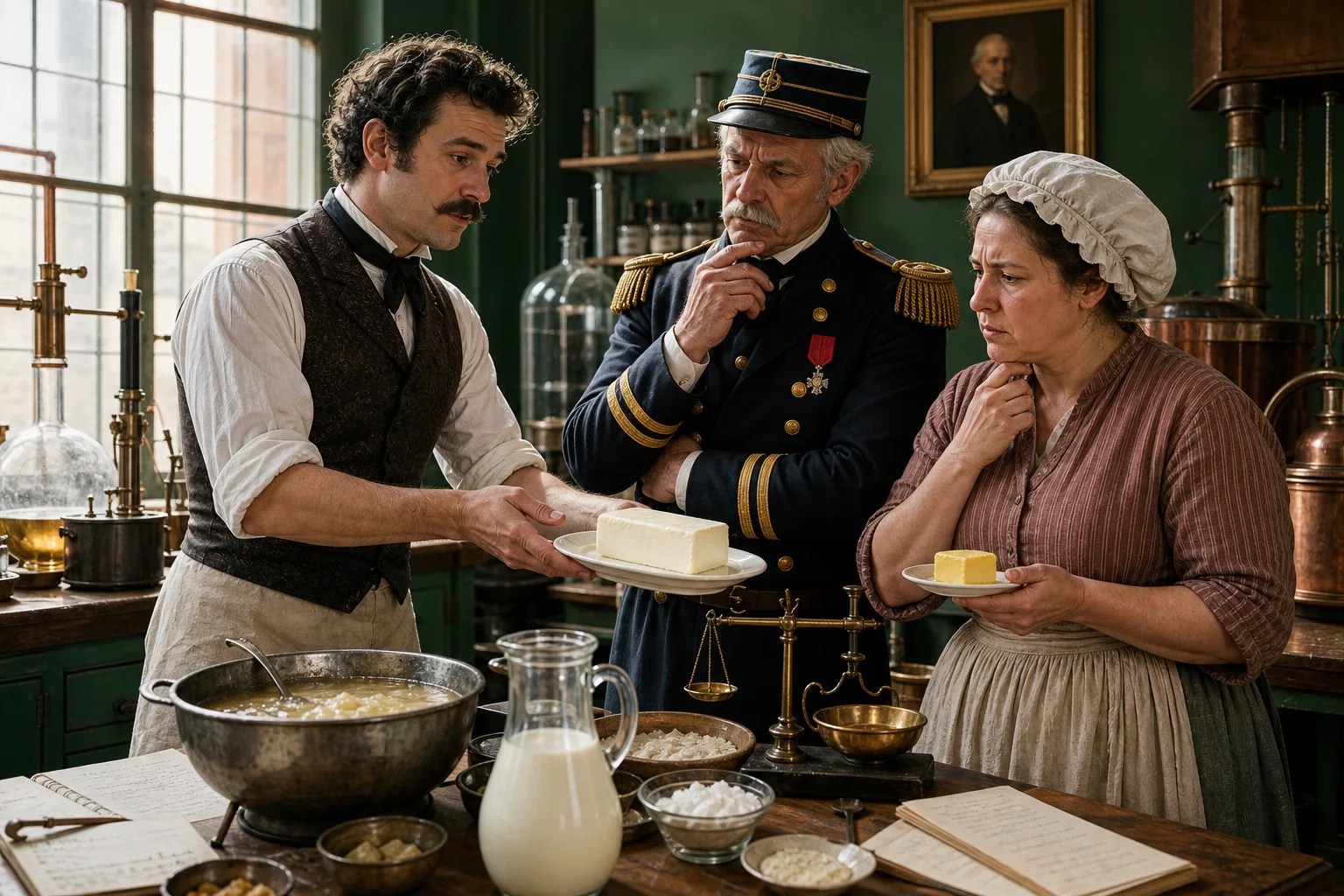
Margarine was invented because butter had become too expensive for many of the people expected to eat it.
In 1869, French emperor Napoleon III called for a cheaper substitute that could feed the navy and poorer members of the population. French chemist Hippolyte Mège-Mouriès responded with a mixture made from beef tallow and skimmed milk.
He called it oleomargarine.
The original version was not the soft vegetable-oil spread found in supermarkets today. It was pale, firm and apparently convincing enough to earn Mège-Mouriès a French patent. It was also cheaper to produce and lasted longer than ordinary butter.
That should have been the end of the problem.
Instead, butter producers treated margarine like an edible criminal conspiracy.
As margarine spread into other countries, dairy companies pushed for taxes, labeling restrictions and bans on coloring it yellow. Some American consumers received white margarine with a separate packet of coloring that had to be mixed in at home. Butter had managed to acquire political protection.
Margarine became especially popular during later periods of war and rationing, when butter was difficult to obtain. Manufacturers gradually replaced the animal fat with vegetable oils, creating something closer to the modern product.
It was designed as an affordable emergency substitute. More than 150 years later, people are still arguing over whether it belongs on toast.
#3 Banana Ketchup

Banana ketchup exists because the Philippines had plenty of bananas and not nearly enough affordable tomatoes.
Tomato ketchup had become popular in the country, but imported bottles were expensive and the local climate made tomatoes difficult to grow on a large scale. During the 1930s, Filipino food scientist Maria Ylagan Orosa began developing a version made from ingredients the Philippines could produce for itself.
Her solution used mashed bananas, vinegar, sugar and spices. The result was sweet, tangy and surprisingly close to ketchup, apart from one fairly obvious problem: it looked like banana sauce.
Commercial producers eventually colored it red, because apparently ketchup still needed to dress like a tomato before anyone would trust it.
Orosa’s work went far beyond condiments. She developed hundreds of recipes and food-preservation methods intended to reduce the country’s dependence on imports. During World War II, she also helped create nutrient-rich foods for civilians, soldiers and prisoners facing severe shortages.
Banana ketchup became especially useful when wartime conditions made tomatoes even harder to obtain. In 1942, Magdalo V. Francisco Sr. began commercially producing it under the Mafran brand, helping turn the substitute into a household staple.
Today, banana ketchup is used on fried foods, eggs, hot dogs and Filipino-style spaghetti. It may have begun as an answer to scarcity, but it never remained a second-rate imitation. The Philippines made its own ketchup, and plenty of people prefer it that way.
#2 Fanta
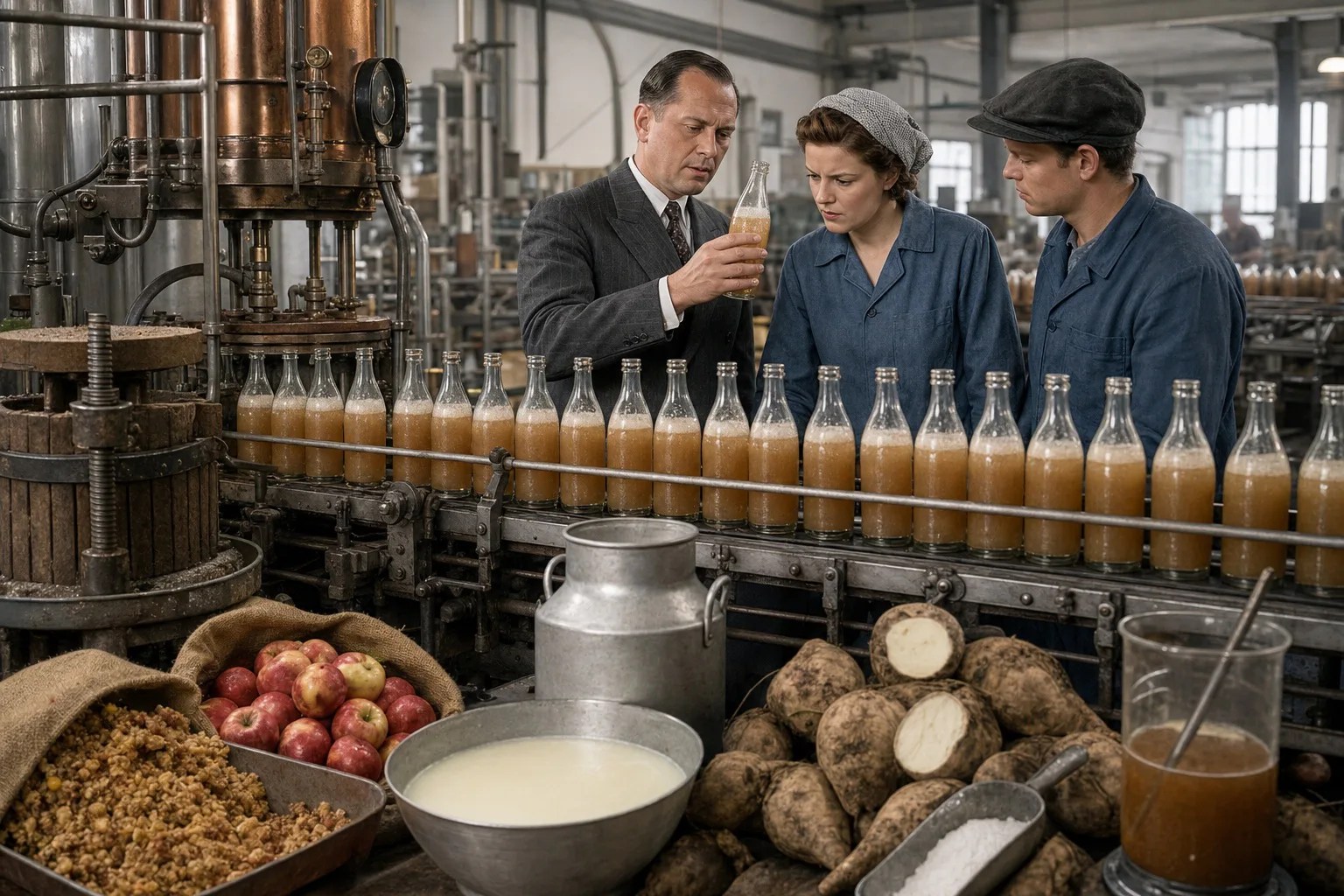
The original Fanta was not orange. It was a cloudy brown drink made from apple scraps and leftovers from cheese production.
Fanta was created in Germany in 1940, after World War II cut Coca-Cola’s German operation off from the imported syrup needed to produce Coke. Max Keith, who managed the company’s German subsidiary, needed another product to keep its bottling plants open.
His team used whatever ingredients remained available. The recipe changed depending on supply, but it commonly included apple pulp left over from cider production, whey from cheesemaking and beet sugar.
It was essentially a soft drink assembled from industrial leftovers.
The name came from a competition among employees. Keith reportedly told them to use their imagination, or “Fantasie” in German. A salesman suggested “Fanta,” and the name survived far longer than the original recipe.
The drink became popular inside Nazi Germany as other choices disappeared. Sugar was also heavily rationed, so some households reportedly used Fanta as a sweetener in cooking. By 1943, nearly three million cases had been sold.
Production of that version stopped after the war. Coca-Cola later revived the Fanta name for a new orange-flavored drink developed in the 1950s, which is much closer to the bright soda sold today.
Modern Fanta tastes nothing like the wartime original. That is probably for the best. Apple waste and cheese liquid may have kept the factories running, but nobody is asking Coca-Cola to bring back the 1940 recipe.
#1 Nutella
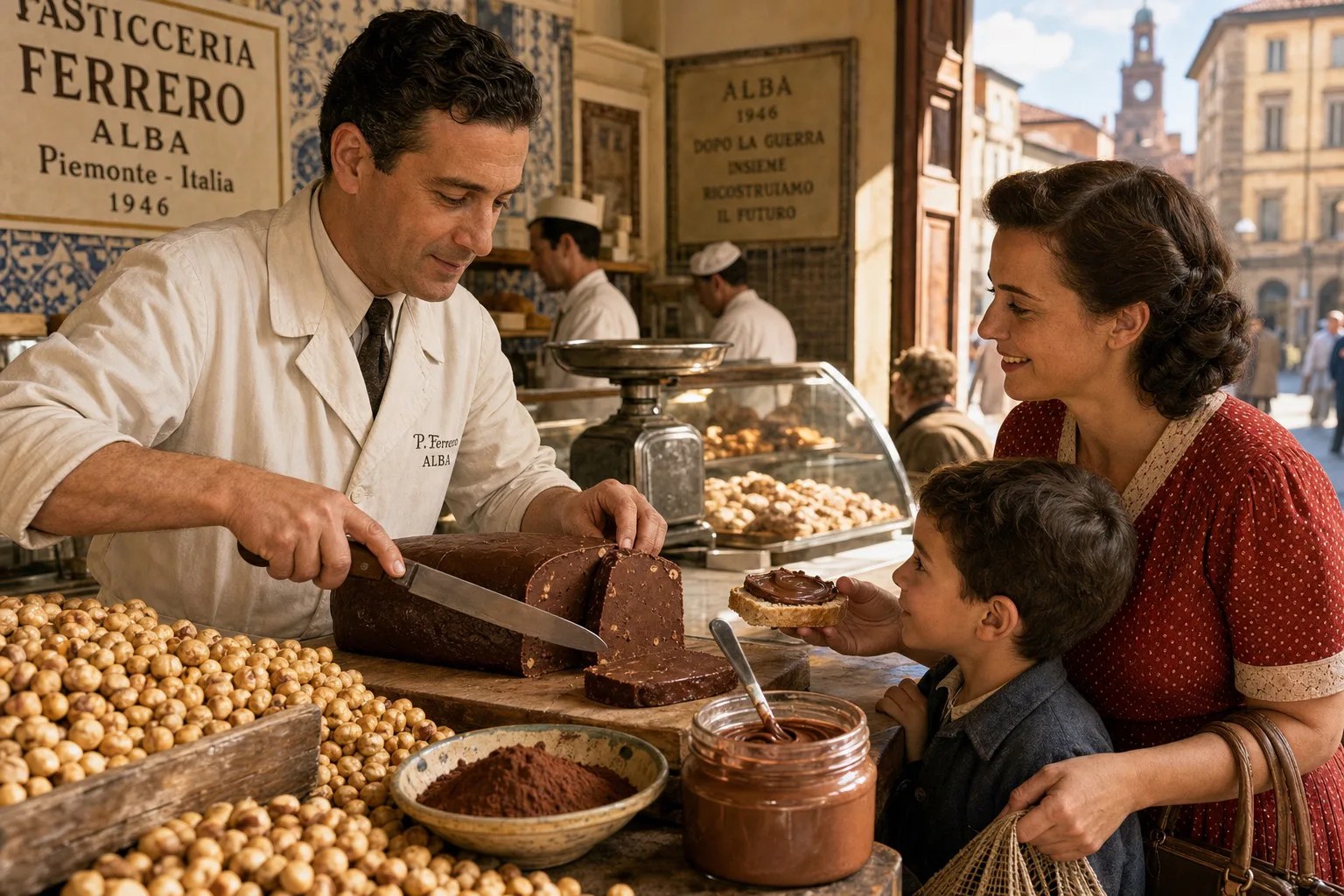
Nutella exists because postwar Italy wanted chocolate and did not have nearly enough cocoa to make it affordable.
After World War II, cocoa was scarce and expensive. Hazelnuts, however, grew abundantly around Piedmont in northern Italy. Pastry maker Pietro Ferrero realized he could combine those hazelnuts with sugar and a much smaller amount of cocoa, stretching the chocolate flavor considerably further.
In 1946, Ferrero introduced Giandujot, a dense hazelnut and cocoa paste shaped into loaves. Families could slice off a piece and place it on bread, which sounds slightly less convenient than opening a jar and immediately losing all sense of portion control.
Ferrero made the mixture creamier and easier to spread in 1951, selling it as SuperCrema. His son Michele later refined the recipe again, and in 1964 the first jars carrying the Nutella name left the company’s factory in Alba.
The idea of combining hazelnuts and chocolate was not new. Piedmont already had a long tradition of producing gianduja, a hazelnut and chocolate mixture. Ferrero’s achievement was turning that regional solution into an inexpensive, mass-produced spread that ordinary families could buy.
Nutella now travels across the world in quantities Pietro Ferrero could hardly have imagined. It appears in cafés, bakeries, desserts and kitchen cabinets where someone has carefully hidden the jar from everyone else.
It began as a way to make a limited supply of cocoa go further. Instead of disappearing once chocolate became plentiful again, it became one of the most recognizable foods on the planet. That is why it earns the number one spot.
Leave a Reply