

What if you opened your eyes somewhere unfamiliar and had no memory of getting there?
Losing track of a few minutes is unsettling. Losing days, months, or an entire identity is something else.
These seven people woke up in places they could not explain, carrying few clues about the journeys their own minds had erased.
#7 Jean Albert Dadas

In 1880, a young French gas fitter named Jean-Albert Dadas suddenly became aware of his surroundings aboard a steamship headed toward Budapest.
He had no idea how he had gotten there.
This was not the first time Dadas had wandered far from home without understanding why. He would leave Bordeaux and travel enormous distances across Europe, sometimes passing through several countries before returning to himself. Reports placed him in Belgium, Germany, Austria, Russia, Turkey, and Algeria.
During these journeys, Dadas could walk, work, speak to people, and navigate unfamiliar places. Yet afterward, large portions of the trip were missing from his memory. He was not simply getting lost. He appeared to be moving through the world without access to his usual identity.
In 1886, Dadas entered Saint André Hospital in Bordeaux, where physician Philippe Tissié began studying him. Under hypnosis, Dadas reportedly recalled details from journeys he could not remember while fully conscious. His case became an early landmark in the study of memory and identity, a field that would later produce some of the psychological experiments that would never be allowed today.
Doctors eventually described his condition as a form of pathological wandering, sometimes called dromomania. Today, his experiences are often discussed alongside dissociative fugue, a condition involving memory loss, confusion over identity, and unexpected travel.
Dadas could leave home as himself, cross half of Europe, and then suddenly realize he had no idea where he was. It makes an accidental train nap seem extremely manageable.
#6 Doug Bruce
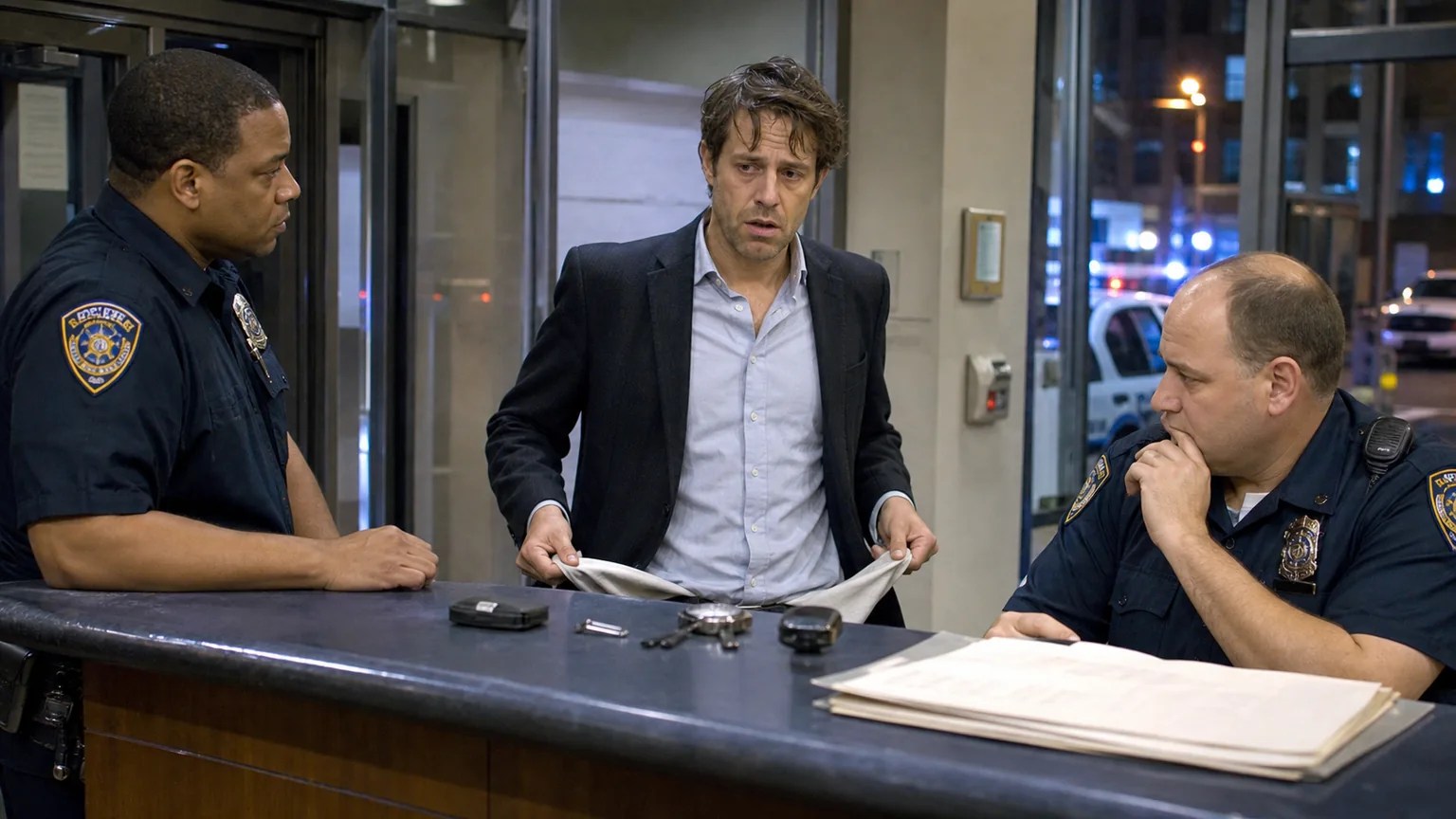
On July 3, 2003, Doug Bruce regained awareness aboard a New York City subway train heading toward Coney Island.
He knew how to speak, read, and move through the world. What he did not know was his own name.
Bruce got off the train and eventually walked into a police station. He had no identification with him, only a backpack containing a few ordinary items and a phone number. Calling it led him to a woman who knew him, although she initially struggled to believe that he genuinely did not remember her.
The man everyone else recognized as Doug Bruce was a British former stockbroker and photographer living in New York. To Bruce, that life belonged to a stranger. Friends showed him photographs, took him back to familiar places, and introduced themselves again. He could understand what they told him, but the memories themselves did not return.
Doctors diagnosed him with severe retrograde amnesia. A small cyst was found near his pituitary gland, although the precise cause of his memory loss was never established with complete certainty.
His experience was later documented in the 2005 film Unknown White Male, directed by his friend Rupert Murray. The film followed Bruce as he relearned his own history and encountered people who already had years of memories with him.
Some viewers and journalists questioned whether the story was genuine, partly because such extensive amnesia is exceptionally rare. The doctors involved maintained that his condition was real, but the debate never disappeared entirely.
Whatever caused it, Bruce stepped onto that subway with an established life and stepped off without recognizing any of it. Everyone around him knew who he was. He had to take their word for it.
#5 Michael Boatwright
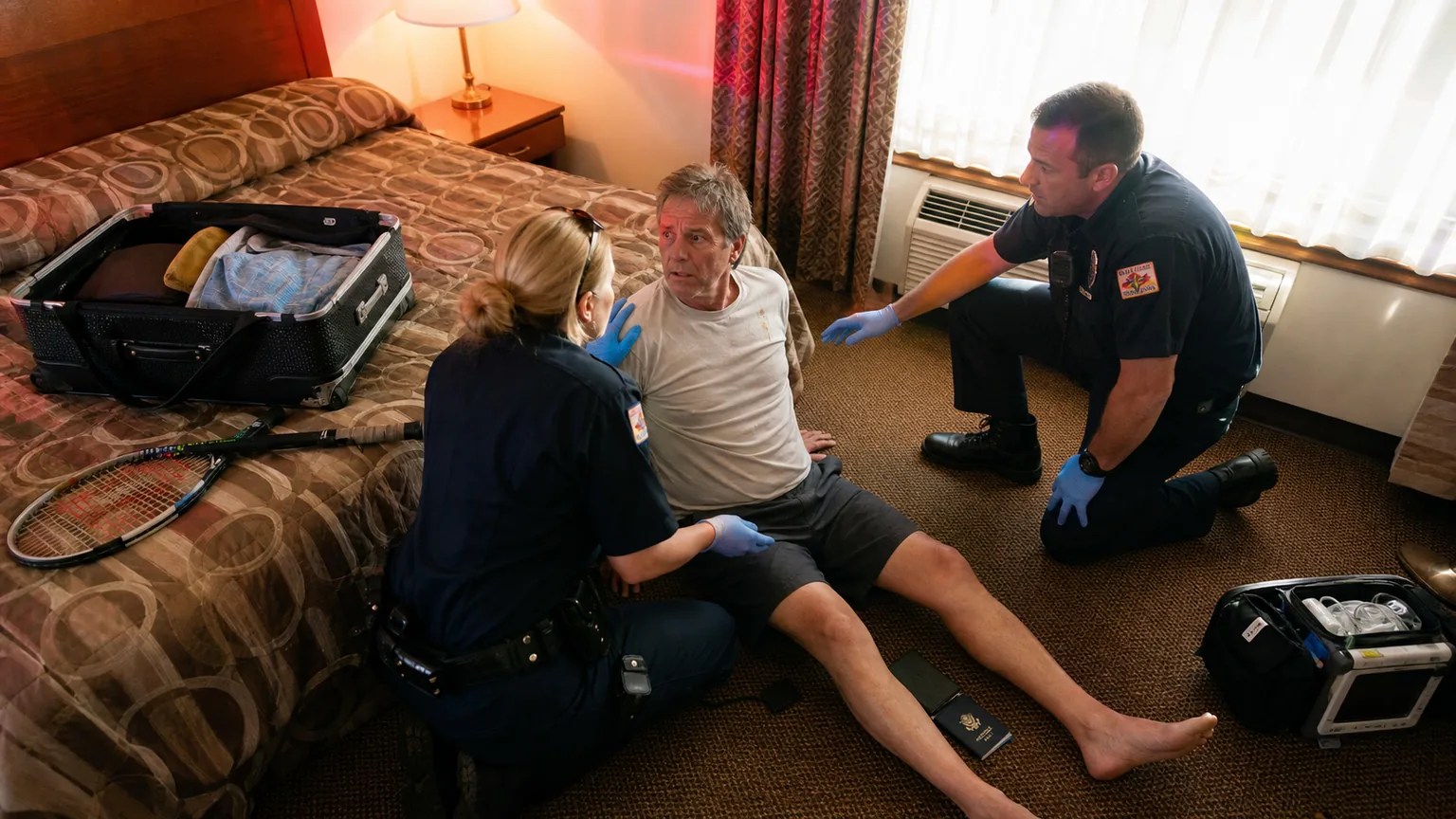
On February 28, 2013, police and paramedics found 61-year-old Michael Boatwright unconscious inside a Motel 6 room in Palm Springs, California.
When he awoke at Desert Regional Medical Center, he did not recognize his name, his face, or the life described by the identification cards found among his belongings. He spoke only Swedish and insisted that he was Johan Ek.
That might sound like a stranger had somehow acquired Boatwright’s documents, but investigators found plenty of evidence connecting him to both identities. Boatwright was an American Navy veteran who had lived in Sweden on and off between 1981 and 2003. Friends there remembered him, and records showed that he had once participated in medieval reenactments and jousting events.
His belongings supplied more pieces without explaining the full picture. Boatwright had recently flown from Hong Kong to Palm Springs, arriving only four days before he was found. Inside his luggage were exercise clothes, several tennis rackets, two phones, and multiple forms of identification bearing his legal name. Hospital staff suspected that he may have traveled to California for a tennis tournament.
Boatwright still remembered none of it. He did not recognize his son or his two former wives. He reportedly struggled with ordinary tasks such as using public transportation and exchanging money. The documents could tell him his name, but they could not make that name feel like his own.
Doctors described his condition as transient global amnesia accompanied by a fugue state, possibly triggered by physical or emotional trauma. Outside specialists noted that the depth and duration of his identity loss were unusual, making a psychological form of amnesia another possibility. No clear physical cause was found.
After months of treatment, Boatwright moved to Sweden, where a former girlfriend welcomed him. It was one of the few places connected to the identity he still recognized.
He woke in California surrounded by proof that he was Michael Boatwright. As far as his own mind was concerned, every piece of it belonged to somebody else.
#4 Ansel Bourne

On the morning of March 14, 1887, a shopkeeper named A. J. Brown woke inside his rented room in Norristown, Pennsylvania, and immediately knew something was wrong.
His name was not A. J. Brown.
He said he was Ansel Bourne, a preacher from Rhode Island. As far as Bourne knew, the date should have been January 17. He had no memory of traveling to Pennsylvania, renting the property, opening a shop, or spending nearly two months living under another name.
The people around him were just as confused. They had known him as Brown, a quiet and dependable man who sold toys, stationery, and sweets. He regularly traveled to Philadelphia to restock his shelves, cooked and slept in the back of the shop, paid his bills on time, and attended church. Nothing about his behavior had suggested that he was missing from another state.
During that same period, Bourne’s family had been searching for him. He had disappeared after withdrawing money from a bank in Providence, leaving no explanation of where he intended to go.
Once his identity was confirmed, Bourne returned home. The weeks he had spent as Brown remained absent from his memory.
The case later attracted the attention of psychologist William James. In 1890, James hypnotized Bourne and reportedly brought the Brown identity back. Under hypnosis, Brown could describe parts of the missing journey and his life in Norristown, but claimed not to know Ansel Bourne or recognize Bourne’s wife.
Modern accounts often describe the episode as an early case of dissociative fugue, although the hypnosis and diagnostic methods used at the time require some caution.
For nearly two months, Bourne had not been unconscious or helpless. He had built a functional second life, complete with a new name, a business, and neighbors who saw nothing unusual. Then he woke up one morning, and that entire life belonged to someone he could not remember being.
#3 Agatha Christie’s Missing Eleven Days

On December 3, 1926, Agatha Christie left her home in Berkshire, England, and disappeared.
Her car was found the following morning near a chalk quarry in Surrey. Inside were some of her belongings, but Christie was nowhere nearby. The discovery triggered an enormous search involving police officers, volunteers, tracking dogs, and aircraft. Newspapers followed every development, while some people began wondering whether Britain’s most famous mystery writer had staged a mystery of her own.
Eleven days later, Christie was recognized at the Swan Hydropathic Hotel in Harrogate, more than 200 miles from where her car had been found.
She had checked in under the name Teresa Neele. That detail immediately attracted attention because Neele was the surname of the woman Christie’s husband, Archie, intended to marry. Hotel guests recalled Christie behaving normally. She read newspapers, played the piano, and socialized while the rest of the country searched for her.
When Archie arrived at the hotel, reports suggested that Christie did not immediately recognize him. Her family later said she had suffered memory loss, possibly following the car accident and an intense period of emotional distress. Her mother had recently died, her marriage was collapsing, and Archie had asked for a divorce.
Not everyone accepted the amnesia explanation. Some believed Christie had deliberately disappeared to embarrass her husband. Others suspected a suicide attempt interrupted by a psychological crisis. No explanation has ever been confirmed, partly because Christie refused to discuss the episode publicly and left it out of her autobiography.
Unlike the fictional mysteries she solved on paper, this one never received a tidy final chapter. Christie returned home, resumed writing, and left those eleven days largely unexplained.
#2 Benjaman Kyle

On August 31, 2004, a Burger King employee in Richmond Hill, Georgia, found an injured man unconscious behind the restaurant.
When the man regained awareness, he could not explain how he had arrived there. He carried no identification and said he remembered almost nothing about his previous life, including his name.
With no identity to use, he chose one. He became Benjaman Kyle, deliberately keeping the initials B.K. as a reference to the Burger King where he had been found.
Doctors diagnosed him with dissociative amnesia. The condition left him in an unusually difficult position: he was alive and visible, yet officially almost impossible to place. His fingerprints produced no useful match, and without a confirmed identity or Social Security number, finding steady employment and rebuilding a normal life became extremely difficult.
Kyle remembered scattered details. He believed he had grown up in Indianapolis and seemed familiar with restaurant equipment and food-service work. His case appeared in newspapers, television programs, online campaigns, and a documentary, but years of publicity failed to produce a name.
Then genetic genealogy succeeded where photographs and fingerprints had not.
In 2015, researchers compared his DNA with records from possible relatives and identified him as William Burgess Powell, born in 1948. He had family members who remembered him, but major portions of his life remained unclear. Most notably, investigators could not fully account for where he had been during the decades before he appeared behind the restaurant.
More recent reporting has also raised doubts about whether every part of the original amnesia account was accurate. That does not change the circumstances in which he was found, but it makes the story less medically straightforward than it once appeared.
For more than a decade, the world knew exactly where Benjaman Kyle was. The mystery was who he had been before anyone found him.
#1 Hannah Upp
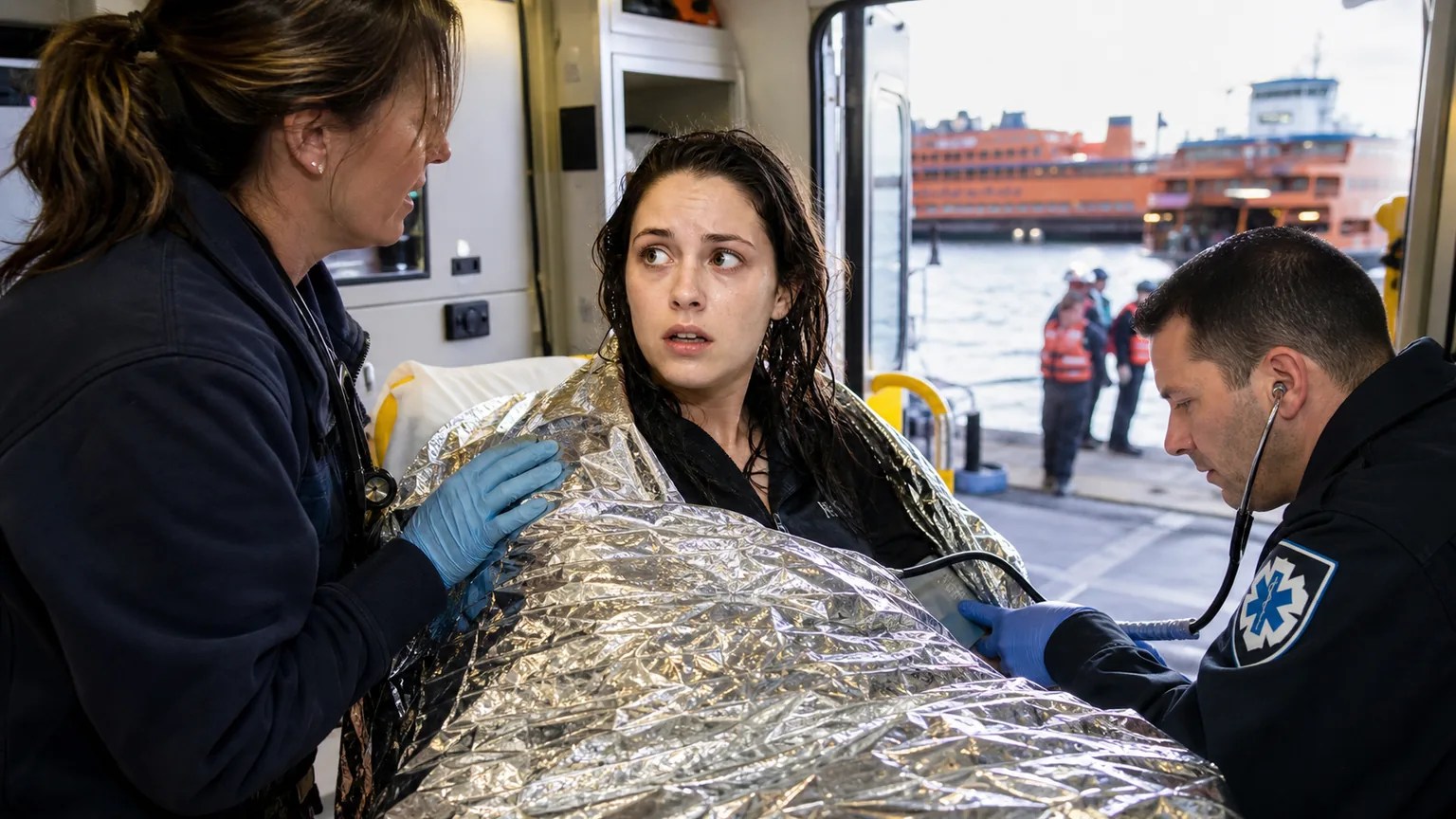
On August 28, 2008, 23-year-old teacher Hannah Upp left her Manhattan apartment for a run. The next moment she could remember came nearly three weeks later, when she opened her eyes inside an ambulance.
A Staten Island Ferry crew had found Upp floating face down in New York Harbor. She was alive, but suffering from hypothermia and dehydration. Her identification, phone, and wallet had been left at home.
The strangest part was what investigators discovered afterward. Security cameras had recorded Upp visiting gyms to shower and checking her email at an Apple Store. She even spoke with a classmate, apparently without realizing that people across New York were searching for her.
Doctors diagnosed her with dissociative fugue, a rare form of amnesia in which someone can lose access to their identity and personal history while continuing to move through the world. Upp had apparently spent almost three weeks functioning without knowing who she was. To her, almost no time had passed.
Then it happened again.
In September 2013, Upp disappeared while working at a Montessori school in Maryland. She was found two days later in a creek near Wheaton, once again alive and unable to account fully for where she had been.
By 2017, Upp was teaching on the island of St. Thomas. On September 14, she reportedly left home for a morning swim near Sapphire Beach and never returned. Her car and personal belongings were found nearby. Hurricane Maria struck the Virgin Islands days later, severely complicating the search.
No evidence has confirmed that Upp’s final disappearance was another fugue episode. She could have suffered an accident in the water, become disoriented, or encountered something entirely unrelated. She remains missing.
Hannah survived two disappearances and had to learn what she had done from other people. The third time, she never came back to hear the answer.
Sources & Image Credits
Sources
Jean-Albert Dadas: ScienceDirect
Doug Bruce: The Washington Post
Michael Boatwright: Los Angeles Times
Ansel Bourne: A Case of Double Consciousness

Agatha Christie: The National Archives
Benjaman Kyle: Los Angeles Times
Image credits
Agatha Christie photograph, 1926: Wikimedia Commons

Ansel Bourne case report, 1890: Wikimedia Commons

Remaining visuals are AI-assisted reenactments created for ListImmerse.
Leave a Reply