

We changed their world. They changed themselves
Here at ListImmerse, we usually document the strange things humans have done to one another. This time, the rest of the animal kingdom gets involved.
From tuskless elephants to moths that changed color around polluted cities, these seven animals evolved in response to problems humans created. We altered their surroundings, and evolution handled the follow up.
#7 Pesticide Resistant Bedbugs

Bedbugs were supposed to become a problem from the past once modern insecticides arrived. For a while, that seemed to be exactly what happened. Their numbers dropped dramatically across much of the developed world during the mid 20th century.
Then they came back, and they were considerably harder to kill.
For decades, humans attacked bedbugs with chemicals such as DDT and, later, pyrethroids. Most of the insects died. A small number carried genetic traits that helped them survive, allowing them to reproduce and pass those advantages to the next generation.
Eventually, some populations developed several layers of defense. Mutations made their nervous systems less vulnerable to certain insecticides. Their bodies produced enzymes capable of breaking the chemicals down, while thicker outer shells made it harder for the poison to enter in the first place.
One study found a resistant population that could withstand more than 10,000 times as much deltamethrin as a susceptible strain. That is less like building a tolerance and more like treating our best weapon as an unpleasant smell.
It is another example of a modern solution creating consequences nobody expected. If you would like to see how badly that pattern has played out elsewhere, read about these products that became public health disasters.
International travel helped resistant bedbugs spread between cities and countries, contributing to their worldwide resurgence. They remain killable, but exterminators frequently need combinations of heat, vacuuming and carefully selected treatments rather than a quick spray.
We spent decades trying to wipe them out. Instead, we helped train the survivors.
#6 City Adapted Anoles

Puerto Rican crested anoles evolved to climb trees, branches and other surfaces that usually come with bark. Then humans replaced much of their habitat with concrete walls, metal fences, glass windows and painted buildings.
The lizards did not receive building permits, but they moved in anyway.
Researchers comparing anoles from Puerto Rican cities with those from nearby forests found noticeable physical differences. Urban lizards had longer limbs, larger toe pads and more lamellae, the tiny specialized scales beneath their toes that help them grip surfaces.
Those features are especially useful in cities. Longer legs help the lizards sprint across broad surfaces such as sidewalks and parking lots, while larger toe pads provide a better hold on walls and windows that are much smoother than tree bark.
Scientists also raised offspring from urban and forest anoles under the same controlled conditions. The city born lizards still developed many of the same traits as their parents, indicating that the differences were inherited rather than simply caused by how individual animals grew up. Later genetic research found patterns associated with urban populations across multiple Puerto Rican cities.
In other words, humans built an environment that was awkward for anoles, and natural selection began producing lizards better equipped to navigate it.
Cities may feel artificial to us. To evolution, they are simply a new habitat with terrible trees.
#5 Traffic Dodging Cliff Swallows

Cliff swallows have a habit of building their mud nests beneath bridges and highway overpasses. These structures provide shelter, plenty of nesting space and one fairly obvious drawback: thousands of fast moving vehicles passing underneath.
Researchers studying cliff swallows in southwestern Nebraska began collecting birds killed along nearby roads. Over a 30 year period, they noticed something unexpected. The number of swallows killed by vehicles fell sharply, even though the local bird population had increased and traffic had not disappeared.
The birds themselves were changing.
Swallows found dead beside roads generally had longer wings than the surviving population. Meanwhile, the average wing length among living cliff swallows gradually became shorter.
That small difference matters in flight. Longer wings are useful for efficient travel over great distances, but shorter, more rounded wings allow birds to take off faster and make sharper turns. Around moving cars, being able to change direction quickly can determine whether a swallow escapes or becomes another mark on the pavement.
The researchers acknowledged that behavior may also play a role. More cautious birds could be learning to avoid traffic and passing that behavior to their young. Still, the consistent changes in wing length suggest that vehicles created a powerful form of natural selection.
Humans built the bridges that attracted the swallows and the roads that threatened them. The birds responded by becoming better at getting out of our way.
#4 Pollution Resistant Killifish
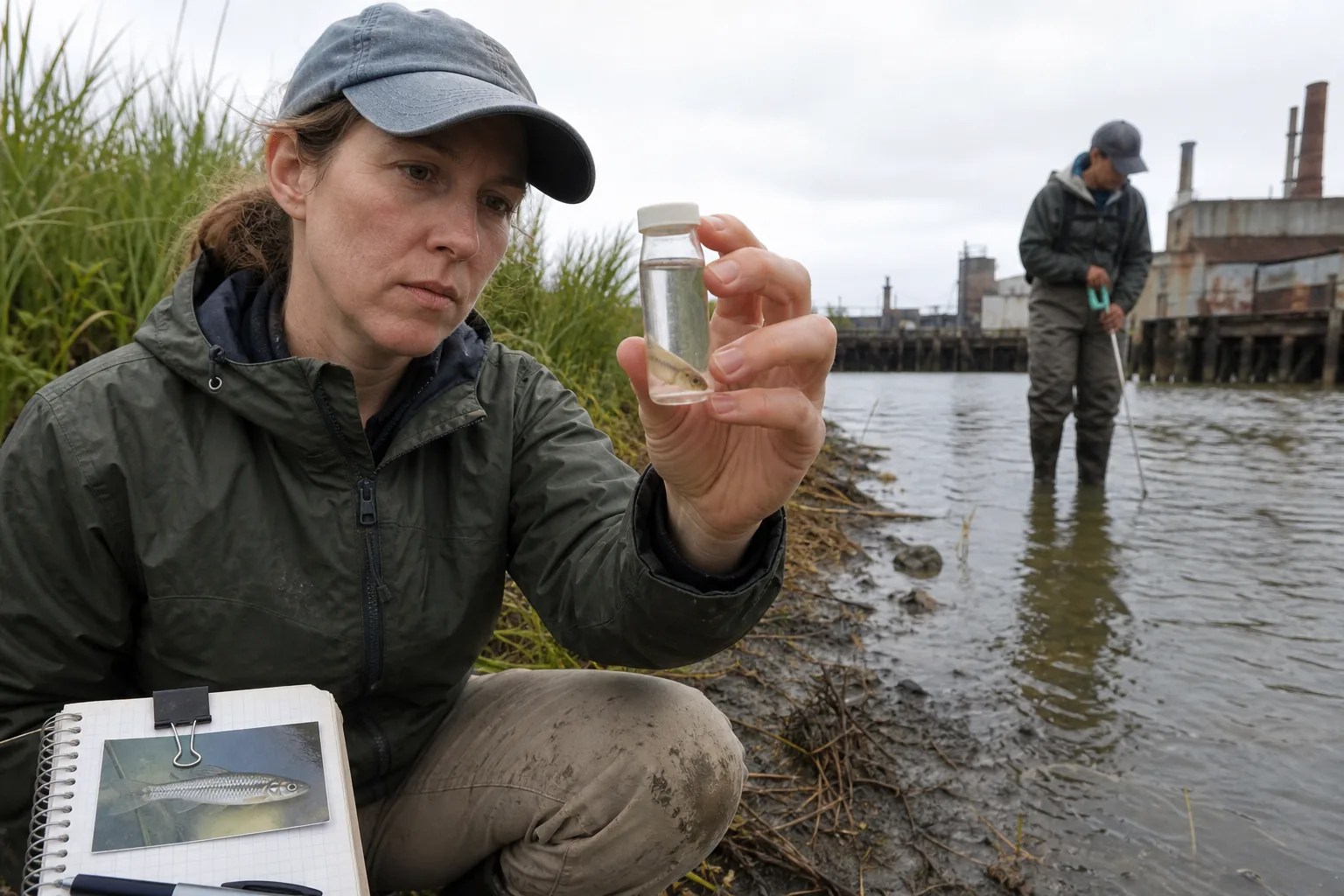
Several estuaries along the eastern United States became heavily contaminated by decades of industrial activity. The water contained toxic mixtures of PCBs, dioxins and other chemicals capable of causing developmental problems or killing fish outright.
Atlantic killifish continued living there anyway.
Researchers examined killifish from four polluted estuaries, including New Bedford Harbor in Massachusetts and the Elizabeth River in Virginia. They found that local populations had evolved resistance to chemical concentrations that would normally be lethal. In some cases, the fish could tolerate pollution levels thousands of times higher than killifish from cleaner waters.
The change was written into their genes.
Many of the pollutants interfere with a biological pathway that controls how animals respond to certain chemicals. Resistant killifish developed genetic changes that reduced the damage caused when that pathway was activated. Even more surprisingly, separate populations evolved similar defenses despite living hundreds of miles apart.
Killifish had a useful advantage before the pollution began. Their species already contained unusually high genetic diversity, giving natural selection more material to work with. When industrial chemicals transformed their habitats, the fish carrying helpful variations survived and reproduced.
That does not mean the pollution became harmless. Surviving toxic water can come with biological costs, and most species living in those estuaries never developed the same protection.
Humans turned parts of the coast into a chemical experiment. The killifish became one of the few animals capable of surviving it.
#3 Cod Shrinking Under Fishing Pressure

Commercial fishing does not remove fish at random. Nets and regulations often target the largest animals, which means the biggest cod may be taken from the population before they have many chances to reproduce.
Smaller fish are more likely to escape through the net or remain below the legal size limit. If body size, growth rate and age of maturity are partly inherited, those survivors can pass their traits to future generations.
Over time, that creates an unusual form of selection. In the ocean humans are not merely catching fish. We may also be influencing which fish get to become parents.
Researchers studying heavily exploited Atlantic cod in the southern Gulf of St. Lawrence found evidence consistent with a genetic change in growth. Other cod populations have shown shifts toward maturing at younger ages and smaller sizes, allowing fish to reproduce before they are likely to be caught.
The science is not perfectly simple. Food availability, water temperature and population density can also affect how quickly a fish grows. Researchers continue debating how much of the change in individual populations is genetic and how much comes from the environment.
Still, experiments with other fish have demonstrated the basic effect clearly. When humans repeatedly removed the largest individuals, later generations developed slower growth and smaller adult bodies. Reversing that change took considerably longer than causing it.
For generations, fishing rewarded the biggest catch. The fish left behind were often the ones that never became quite so big.
#2 Pollution Darkened Peppered Moths

Before the Industrial Revolution, most peppered moths in Britain had pale wings covered in dark speckles. The pattern helped them blend into lichen covered trees, making them harder for birds to spot during the day.
Then factories began coating the landscape in soot.
Air pollution killed much of the pale lichen and darkened the bark beneath it. Suddenly, the lighter moths were easier to see, while a rare black form of the same species had much better camouflage.
The dark moths survived more often and produced more offspring. In heavily industrialized areas, they eventually became far more common than their pale relatives. Near Manchester, the dark form reportedly made up almost the entire local population by the late 19th century.
This was not an individual moth changing color because its tree became dirty. A genetic mutation had already produced dark moths before industrial pollution transformed the environment. Human activity simply changed which version was more likely to survive.
Researchers later traced the dark coloration to a genetic change involving a section of DNA inserted near a gene called cortex. The mutation appeared around the early 1800s, just as industrialization was rapidly altering the British countryside.
Then the process began moving in reverse. Cleaner air reduced the soot covering trees, lichens returned and pale moths regained their camouflage advantage. As conditions improved, the dark form became less common.
Humans changed the background twice. The moths followed it in both directions.
#1 The Rise of Tuskless Elephants

Elephant tusks are useful for digging, stripping bark, moving objects and defending against threats. Unfortunately, they are also made of ivory, which turned one of the animal’s most valuable tools into the reason humans hunted it.
During the Mozambican Civil War from 1977 to 1992, armed groups killed elephants in Gorongosa National Park for ivory that could be sold to finance the conflict. The park’s elephant population fell by roughly 90 percent.
The killing was not random. Elephants with tusks were the valuable targets. Females born without tusks were more likely to be ignored, survive the war and reproduce.
Before the conflict, tusklessness was relatively uncommon among Gorongosa’s female elephants. Among the females that survived the intense poaching, roughly half had no tusks. The trait also appeared much more frequently in the generation born after the war.
Researchers examined the elephants’ family histories and DNA and found strong evidence that tusklessness was inherited. They identified two likely genetic regions connected to tooth development, including one associated with the formation of mammalian incisors, the teeth from which elephant tusks evolved.
The trait appears mainly in females. Scientists believe one of the genetic changes involved may be lethal to male embryos, which could help explain both the shortage of tuskless males and an unusual imbalance among calves born to tuskless mothers.
Losing tusks may protect an elephant from poachers, but it is not a harmless improvement. Tusks help elephants find water, access food and reshape the landscape in ways that benefit other species. A change that saved individual animals could eventually alter the wider ecosystem.
That is why the elephants take the number one spot. Humans did not merely reduce their population. Within a few decades, poaching changed which elephants were most likely to survive and what the next generation looked like.
Sources & Image Credits
Fishing pressure and Atlantic cod
Tuskless elephants in Mozambique
Image Credits
AI-assisted recreations created for ListImmerse using archival references.
Bedbug: CDC, public domain

Puerto Rican crested anole: Fleiwerks, CC BY-SA 4.0
.jpg)
Cliff swallow: Ken Thomas, public domain

Atlantic killifish: CC BY 2.5

Atlantic cod: David Hardie, CC BY 2.5
.png)
Dark peppered moth: Olaf Leillinger, CC BY-SA 2.5

Light peppered moth: CC0

African elephant: Judy Gallagher, CC BY 2.0
.jpg)
Leave a Reply