

What happens when an invention turns on the person who built it?
Who tests an invention when nobody knows whether it works yet? Usually, the inventor.
These five men put their own creations to the test. In every case, the result became part of the invention’s history for the worst possible reason.
#5 Thomas Midgley Jr.’s Pulley System

Thomas Midgley Jr. was an American engineer with an unusual record. He helped develop two products that were once treated as major breakthroughs and later became environmental disasters.
The first was leaded gasoline, which reduced engine knocking but exposed people to toxic lead. The second was chlorofluorocarbons, or CFCs, which became common in refrigerators and aerosol cans before scientists connected them to severe damage to the ozone layer.
Neither product directly caused Midgley’s death.
In 1940, he contracted polio and lost much of his ability to move. Rather than depend entirely on other people, Midgley designed a system of ropes and pulleys above his bed. It allowed him to lift and reposition his body without assistance.
On November 2, 1944, the 55-year-old became tangled in the cords and died from strangulation.
Midgley spent his career solving problems through invention. In the end, a device he created to regain some independence became the one that killed him.
#4 William Bullock’s Printing Press

William Bullock did not invent the printing press, but he made it dramatically faster.
In the 1860s, the American inventor developed an improved rotary press that could pull paper from a continuous roll, print on both sides, cut the finished sheets, and produce thousands of pages per hour. Newspapers could suddenly be printed faster and more cheaply, without workers feeding individual sheets into the machine by hand.
In April 1867, Bullock was helping install one of his presses at the offices of the Philadelphia Public Ledger when a belt slipped from a pulley. He reportedly tried to kick it back into place.
His leg became trapped and was badly crushed by the machinery.
Doctors initially believed they could save him, but the injury developed gangrene. Bullock died on April 12 while surgeons were attempting to amputate the damaged leg.
The press continued transforming the newspaper industry long after his death. Bullock never lived to see how widely his design would be used.
#3 Horace Lawson Hunley’s Submarine

Horace Lawson Hunley was not working alone. He financed and helped oversee the development of an experimental hand-powered submarine alongside engineers James McClintock and Baxter Watson during the American Civil War.
The vessel was cramped, difficult to control, and powered by eight men turning a hand crank. Its crew sat shoulder to shoulder inside a converted iron boiler with very little room to escape if anything went wrong.
Quite a lot went wrong.
The submarine sank during an early test in August 1863, killing five crew members. It was recovered, but Hunley remained convinced that the design could work.
On October 15, he joined another test in Charleston Harbor, despite not being part of the regular crew. The submarine failed to resurface. Hunley and all seven men with him died inside the vessel.
It was raised again and later became the first submarine to sink an enemy warship in combat. It disappeared after that attack too, taking another eight-man crew with it.
The submarine proved that underwater warfare was possible. It also sank three times and killed 21 men along the way.
#2 Max Valier’s Rocket Engine
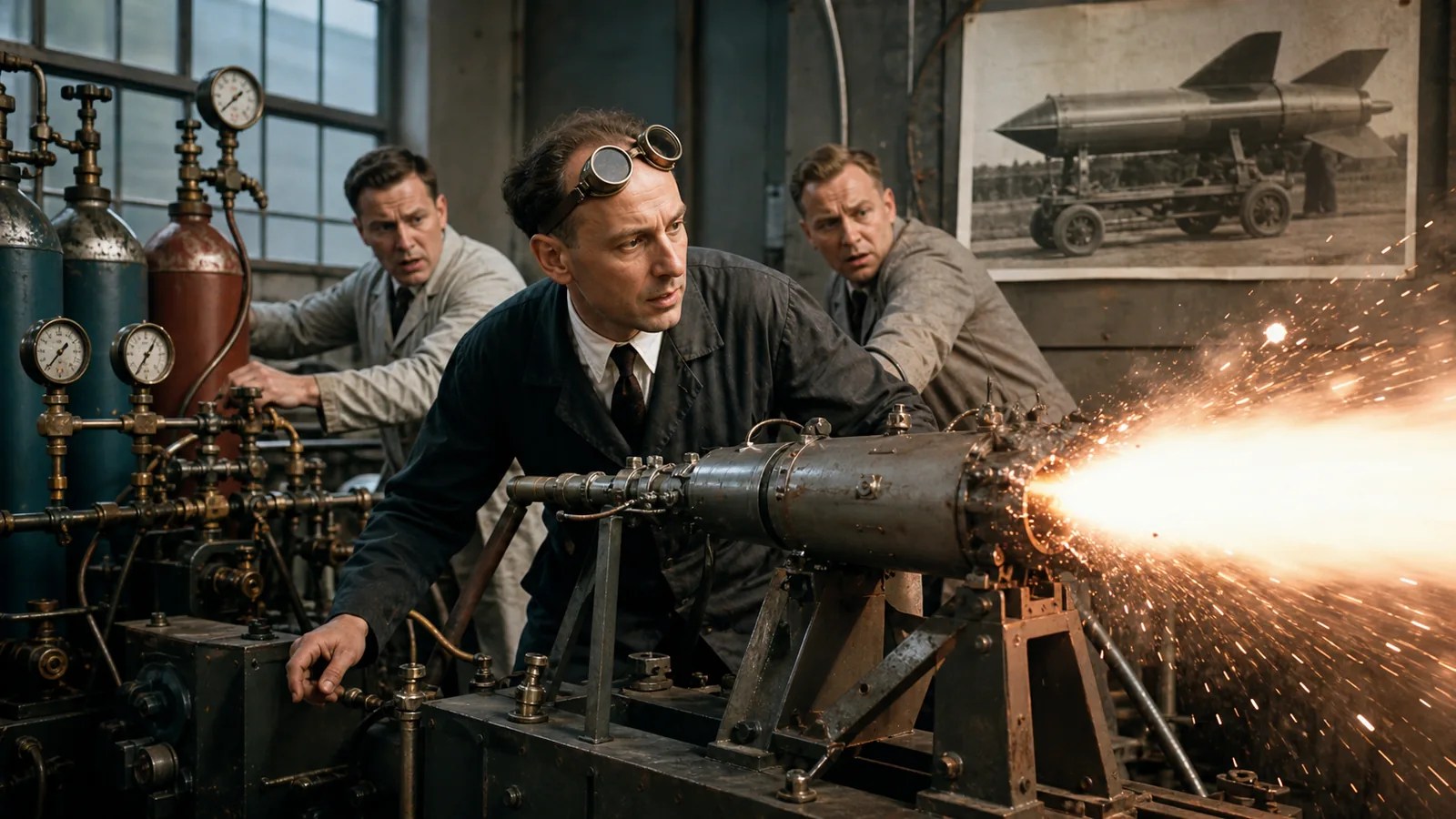
Max Valier believed rockets would eventually carry people into space. In the 1920s, when that idea still sounded closer to science fiction than engineering, he set out to prove it could be done.
The Austrian-born pioneer helped establish Germany’s Society for Space Travel and worked with automobile manufacturer Fritz von Opel on rocket-powered vehicles. Their experiments produced rocket sleds and cars that raced across test tracks at extraordinary speeds, usually with flames pouring from the back and very little resembling modern safety equipment.
Valier eventually moved from solid-fuel rockets to experimental liquid-fuel engines. These offered greater control and more power, but they were also dangerously unpredictable.
On May 17, 1930, Valier was testing a liquid oxygen and gasoline rocket motor in a Berlin laboratory when its combustion chamber exploded. A piece of metal struck him in the chest, and he died within minutes at the age of 35.
Valier became the first known person killed during the development of a liquid-fuel rocket. The technology continued advancing after his death and eventually became essential to spaceflight.
#1 Franz Reichelt’s Parachute Suit

Franz Reichelt was a successful tailor living in Paris when he became fascinated by the dangers facing early aviators. Airplanes were improving quickly, but pilots had few options if something failed in the air.
Reichelt believed he had the answer: a wearable suit that could unfold into a parachute.
His early tests with dummies produced mixed results. Some failed completely. Reichelt remained convinced that the design needed a greater height to open properly, so he requested permission to test it from the Eiffel Tower.
On February 4, 1912, Reichelt arrived at the tower wearing the suit himself. Police and officials reportedly expected the demonstration to involve a dummy. Instead, he announced that he intended to make the jump.
Friends and witnesses tried to change his mind.
News cameras recorded Reichelt standing on a stool at the edge of the tower’s first platform, roughly 58 meters above the ground. He hesitated for several seconds before leaning forward. The suit folded around him instead of opening, and he fell directly to the ground.
Reichelt died at the age of 33. The entire attempt, including his final moments at the edge, was captured on film.
That footage puts him at number one. The other inventions on this list failed inside bedrooms, workshops, laboratories, and dark water. Reichelt tested his in daylight from the Eiffel Tower, surrounded by cameras and people urging him not to do it.
Leave a Reply