

Some discoveries came with experiments. Others came with grudges.
Scientists compete over funding, discoveries, and the right to be remembered. Usually, everyone manages to remain professional.
These six rivalries did not remain professional. They became bitter, public, and surprisingly personal.
#6 Jonas Salk vs. Albert Sabin: The Polio Vaccine Feud

Jonas Salk and Albert Sabin wanted the same thing: a world without polio. They strongly disagreed about how to get there.
Salk’s vaccine came first. It used an inactivated form of the virus and was delivered by injection. After a massive trial involving more than a million American children, it was declared safe and effective in 1955. Salk became a national hero almost overnight.
Sabin remained unconvinced.
He believed a weakened live virus would provide stronger protection and do more to stop polio from spreading. His vaccine could also be taken by mouth, often on a sugar cube, making it much easier to distribute during large vaccination campaigns.
Sabin openly criticized Salk’s approach. Their disagreement became even sharper after the Cutter incident, when a manufacturing failure left live virus in some batches of Salk’s vaccine. The problem was traced to production, not the basic design, but it damaged public confidence.
Sabin’s oral vaccine was licensed in the United States during the early 1960s and soon became widely used around the world. For years, the two methods competed alongside the two men behind them.
In the end, both vaccines proved valuable. Sabin’s version was inexpensive and effective at stopping transmission. Salk’s could not cause the rare cases of vaccine-derived polio associated with the oral vaccine, which is why the United States later returned to an updated injected version.
Neither man won the argument completely. Polio lost, which was the part that actually mattered.
#5 Robert Gallo vs. Luc Montagnier: Who Discovered HIV?

In the early 1980s, AIDS was spreading rapidly, and scientists were racing to identify its cause.
At the Pasteur Institute in Paris, Luc Montagnier led a team that included Françoise Barré-Sinoussi. In 1983, they reported isolating a new retrovirus from a patient. They called it LAV and sent samples to other researchers, including Robert Gallo’s laboratory at the National Cancer Institute.
Gallo was already a major name in retrovirus research. In 1984, his team announced that it had identified the likely cause of AIDS, calling it HTLV-III. Their work also helped create one of the first widely used blood tests for the virus.
Then the breakthrough became an international ownership dispute.
The French team argued that Gallo’s virus came from a sample they had provided. Questions followed about laboratory contamination, scientific credit, patents, and who had actually isolated the virus first. The disagreement grew large enough to involve the American and French governments.
In 1987, the two countries reached an agreement recognizing Gallo and Montagnier as co-discoverers and dividing royalties from the blood test. Later genetic analysis indicated that the strain used in Gallo’s laboratory was closely connected to one sent by the Pasteur Institute, probably because samples had become mixed.
The 2008 Nobel Prize recognized Montagnier and Barré-Sinoussi for discovering HIV. Gallo was not included, although his research helped establish the connection between HIV and AIDS and made large-scale testing possible.
It was an argument over credit unfolding in the middle of a health crisis. The science moved forward. The feud took considerably longer to settle.
#4 Louis Pasteur vs. Robert Koch: Germ Theory Gets Personal
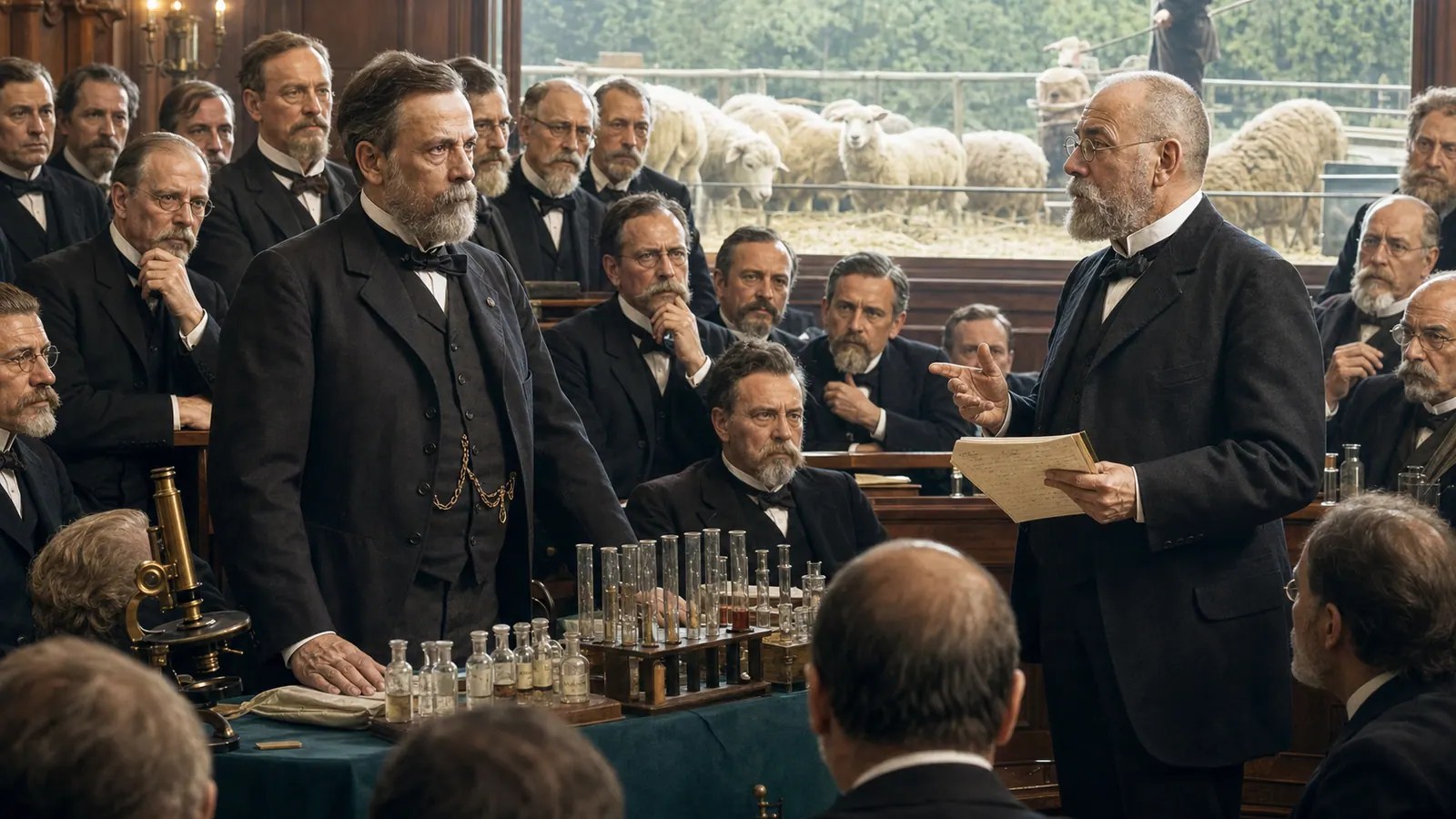
Louis Pasteur and Robert Koch helped prove that microorganisms cause disease. They also spent years criticizing each other’s methods, results, and scientific judgment.
Pasteur was already famous for his work on fermentation, pasteurization, and vaccines. Koch emerged as a major rival after showing how the bacterium responsible for anthrax could be isolated, studied, and connected to the disease.
Their approaches were different. Koch emphasized isolating specific bacteria and proving exactly which organism caused which illness. Pasteur focused more heavily on weakening microbes and using them to develop vaccines.
The rivalry became especially heated over anthrax. In 1881, Pasteur staged a public experiment in France in which vaccinated sheep survived exposure while unvaccinated animals died. It was a dramatic success, but Koch criticized Pasteur’s methods and questioned the purity and reliability of his laboratory cultures.
Pasteur did not quietly accept the criticism. The two men and their supporters traded public attacks through scientific papers, conferences, and lectures.
There was also a larger problem hanging over the argument. Pasteur was French, Koch was German, and their rivalry developed soon after the Franco-Prussian War. Scientific disagreements became tangled with national pride, making every criticism feel like it represented more than one laboratory.
Both men ultimately transformed medicine. Koch helped establish rigorous methods for identifying disease-causing organisms. Pasteur’s work helped lay the foundation for vaccination and immunology.
They were studying invisible enemies while treating each other as the one standing directly in the way.
#3 Charles Darwin vs. Richard Owen: Evolution Ends the Friendship
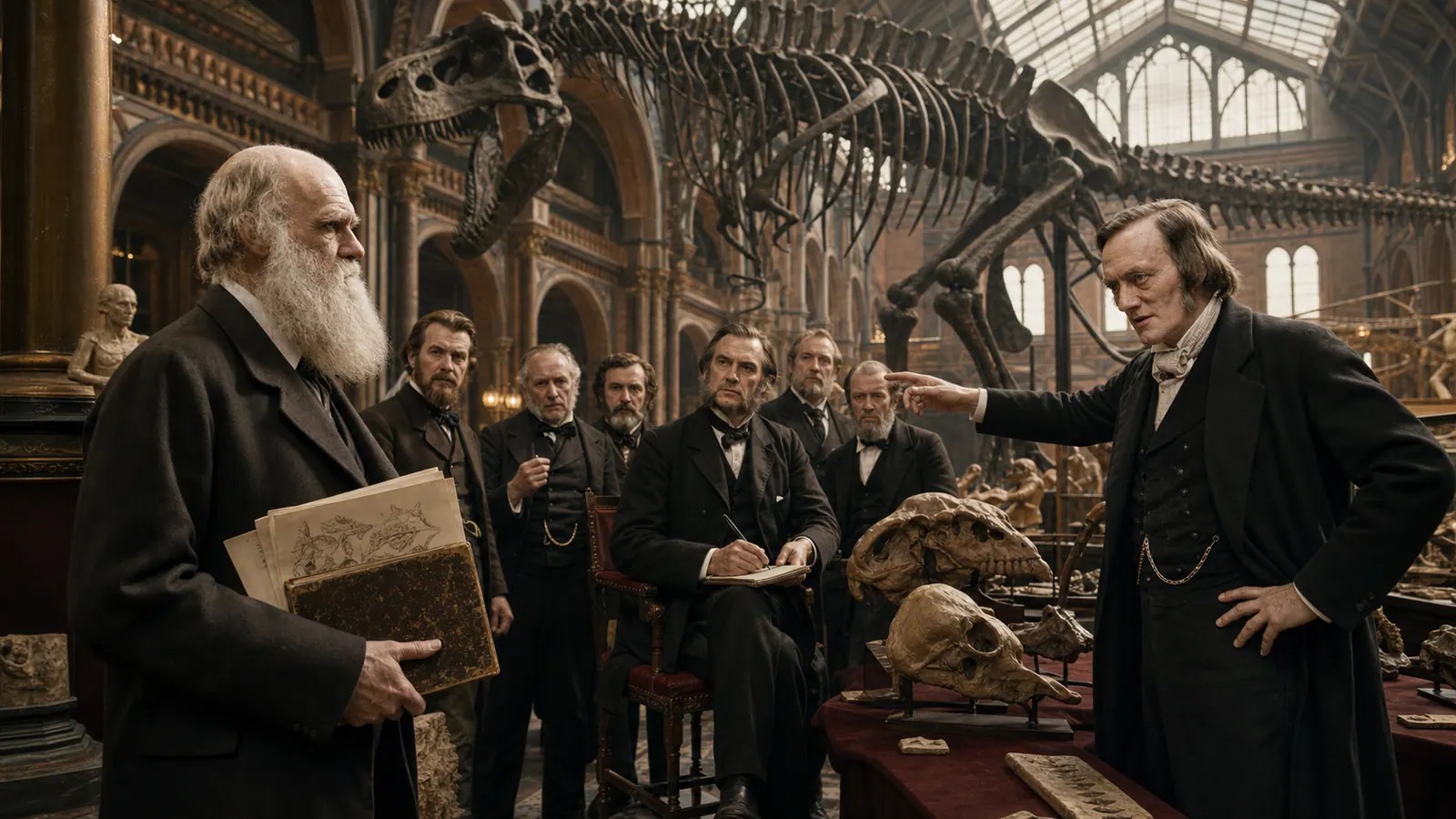
Before they became enemies, Richard Owen helped Charles Darwin make sense of fossils collected during the voyage of the Beagle.
Owen was one of Britain’s most respected anatomists. He identified several of Darwin’s South American fossils and later coined the name “Dinosauria.” Darwin valued his expertise, and for a time, the two men had a productive professional relationship.
Then Darwin published On the Origin of Species in 1859.
Owen accepted that species could change, but he rejected Darwin’s explanation of natural selection. He published a harsh anonymous review that praised parts of the book while attacking Darwin’s theory and questioning his scientific judgment.
Darwin quickly figured out who had written it.
The dispute became increasingly personal. Darwin described Owen privately as spiteful and dishonest. Owen continued criticizing natural selection while also clashing with Darwin’s supporters, particularly Thomas Henry Huxley.
One of their ugliest arguments concerned the human brain. Owen claimed that certain brain structures separated humans from apes. Huxley publicly challenged him, producing evidence that apes possessed the same basic structures. The debate damaged Owen’s credibility and turned the disagreement over evolution into something the public could follow.
Owen remained enormously influential and eventually became closely associated with the creation of London’s Natural History Museum. Darwin’s theory, meanwhile, changed biology permanently.
Their relationship did not collapse because one man disliked fossils or the other disliked museums. It collapsed over the larger question of how life developed, and neither man was willing to treat that as a polite disagreement.
#2 Isaac Newton vs. Gottfried Wilhelm Leibniz: The Calculus War

Isaac Newton and Gottfried Wilhelm Leibniz independently developed calculus. Instead of celebrating the fact that two people had solved the same enormous mathematical problem, their supporters spent years arguing over who had done it first.
Newton worked out his version during the 1660s, calling it the method of “fluxions,” but he did not publish a full account at the time. Leibniz developed his own system later and published it in 1684. His notation was clearer, easier to use, and eventually became the version most mathematicians adopted.
Then accusations of plagiarism began.
Newton’s supporters claimed Leibniz had seen unpublished material and borrowed the central ideas. Leibniz insisted that he had developed calculus independently. What began as a question of priority became an international fight, with British mathematicians defending Newton and scholars across continental Europe supporting Leibniz.
Newton was also president of the Royal Society when it investigated the dispute. The Society appointed a committee, issued a report favoring Newton, and accused Leibniz of concealing what he had taken.
There was one fairly important detail: Newton had gathered much of the evidence, helped shape the investigation, and secretly wrote the report’s conclusion. He later reviewed that same report anonymously. Even by the standards of academic politics, judging your own case and then praising the verdict is ambitious.
Modern historians generally conclude that Newton and Leibniz developed calculus independently. Both made essential contributions, but the feud split British and European mathematics for years.
Calculus survived. Their reputations survived. Their ability to share credit did not.
#1 Edward Drinker Cope vs. Othniel Charles Marsh: The Bone Wars
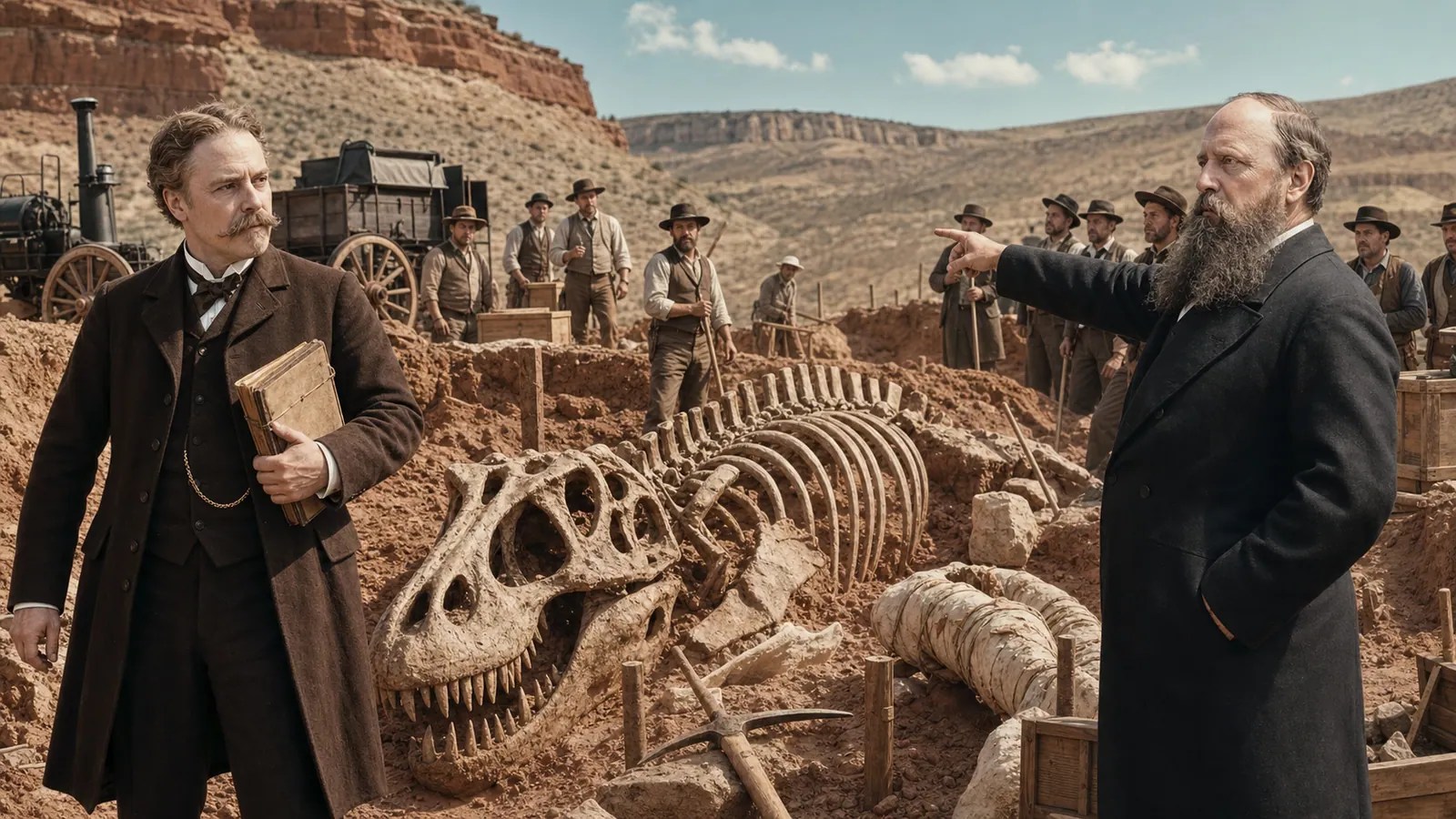
Edward Drinker Cope and Othniel Charles Marsh began as friendly paleontologists. By the end, they were spying on each other, stealing workers, attacking each other in newspapers, and racing to name dinosaurs before the other man could reach the printing press.
The relationship started falling apart in the late 1860s. Cope showed Marsh a fossil site in New Jersey, only to discover that Marsh had reportedly arranged for workers there to send future finds directly to him.
Then came Cope’s famous reconstruction of Elasmosaurus, a long-necked marine reptile. Cope placed the skull on the wrong end of the skeleton. The mistake was publicly exposed, and Cope was humiliated. The exact role Marsh played in revealing it has been debated, but it certainly did not improve the friendship.
Once rich fossil beds were discovered across the American West, the rivalry became the Bone Wars.
Both men hired crews to search for dinosaur remains. They rushed incomplete descriptions into print, accused each other of theft, and attempted to take control of promising excavation sites. Their collectors sometimes destroyed leftover fossils to prevent rival teams from finding them. Scientific care became secondary to making sure the other man did not win.
The chaos still produced remarkable discoveries. Their teams uncovered and described animals including Stegosaurus, Triceratops, Apatosaurus, and Diplodocus. They helped turn dinosaurs into a serious field of study and filled major museum collections.
They also damaged specimens, created years of confusion through rushed classifications, and spent huge amounts of money keeping the feud alive. Cope exhausted much of his fortune. Marsh lost influence and government support. Neither man walked away looking especially victorious.
That is why the Bone Wars takes the top spot. Other scientists fought over credit for one discovery. Cope and Marsh turned an entire branch of science into a personal competition and kept digging until they nearly buried themselves with it.
Leave a Reply