

Some objects get old. These got reputations.
Some objects are just objects. A doll is a doll. A painting is a painting. A diamond is an expensive rock with better lighting.
Then the stories start piling up.
Bad luck. Strange owners. Fires. Glass cases. Apology letters. Suddenly the object is not just old or valuable anymore. It has a reputation, which is basically a curse with better public relations.
Here are five cursed objects people still talk about.
#5 The Crying Boy Paintings
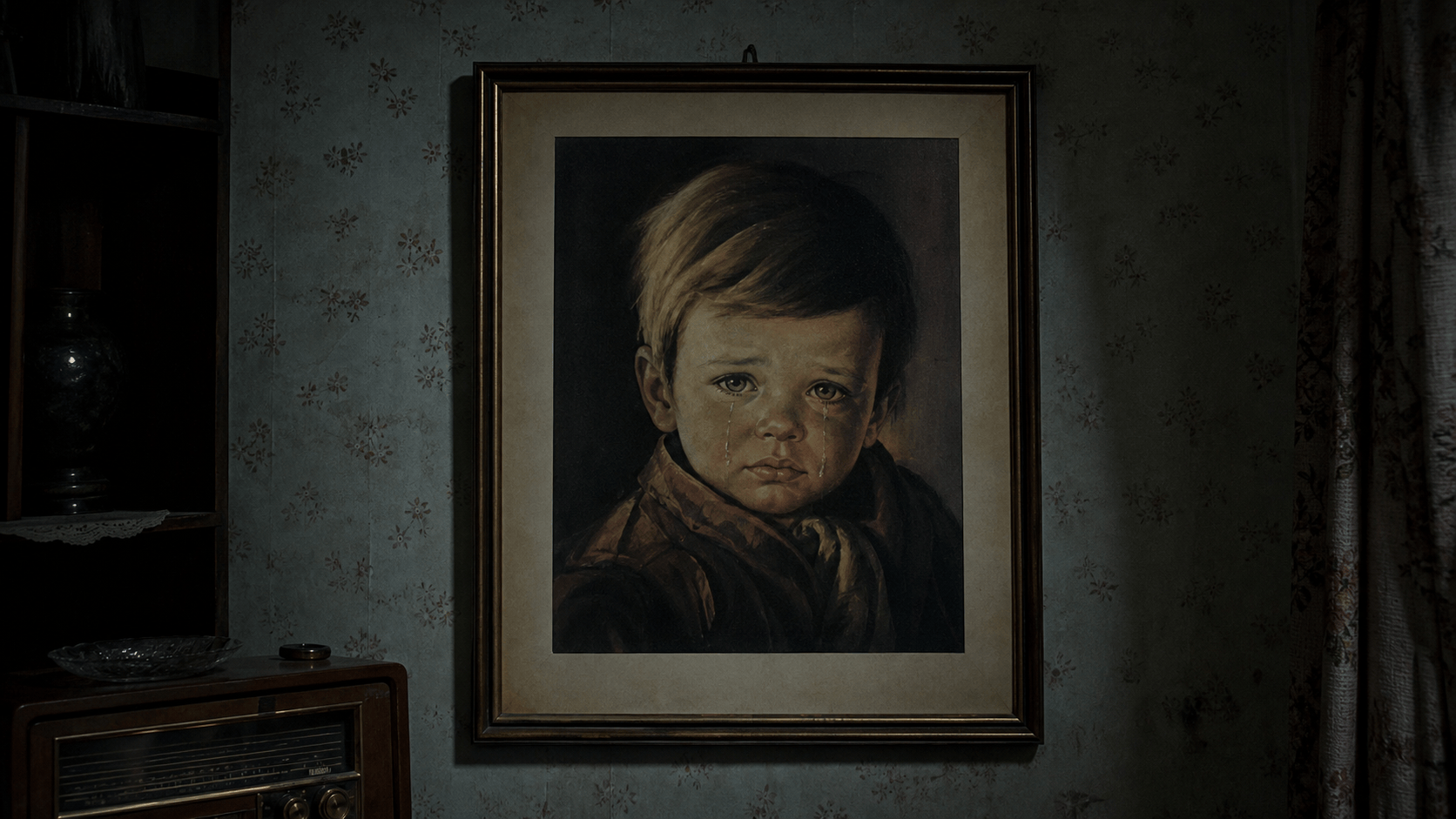
The Crying Boy paintings are a perfect example of how something can be technically harmless and still look like it wants to ruin your life. They were mass-produced prints of sad children, usually boys, with huge eyes, tear-streaked faces, and the general expression of someone who just learned adulthood exists.
The paintings became especially popular in Britain during the 1950s and 1960s. They were cheap, emotional, and dramatic enough to hang in living rooms without anyone saying, “Maybe decorating with distressed children is a weird choice.” Different versions existed, but they all carried the same mood: sorrow, innocence, and a faint sense that the picture might know where you keep your spare keys.
Then came the curse rumors.
In the 1980s, British newspapers began reporting a strange pattern. House fires would destroy homes, furniture, walls, and pretty much everything else that normally loses an argument with fire. But in some cases, the Crying Boy print allegedly survived with little or no damage. That was enough for the public imagination to sprint directly into traffic.
Soon, people started believing the paintings caused fires or brought bad luck into homes. Some owners got rid of them. Others destroyed them. Newspapers leaned into the panic, because “ordinary house fire” is sad, but “haunted child painting refuses to burn” is the kind of headline that puts on a little cape and flies by itself.
Skeptics later pointed out that the prints may have survived because of the materials used. Some were printed on hardboard, treated with varnish, and attached in ways that made them fall face-down during fires, protecting the image from the worst of the flames. Which is a very reasonable explanation. It is also much less fun than “vengeful wall child.”
Still, the legend stuck. The Crying Boy paintings remain one of those cursed objects people remember because they hit a very specific nerve. A sad child staring from the wall is already uncomfortable. Add fire, tabloid panic, and a rumor that the painting somehow survives disaster, and suddenly your home decor has become a suspect.
#4 Robert The Doll

Robert the Doll is proof that if a child’s toy looks unsettling enough, people will eventually blame it for everything short of bad weather. He is a small sailor-suited doll with a stiff face, dark eyes, and the powerful energy of something you would not want sitting across from you in a room after midnight.
The story begins in Key West, Florida, in the early 1900s. Robert belonged to a boy named Robert Eugene Otto, who went by Gene. According to legend, the doll was given to Gene when he was young, and the two became unusually attached. That part sounds normal enough. Children love toys. Toys become companions. Sometimes the companion looks like it has already seen three court cases and lost faith in humanity, but childhood is complicated.
Soon, strange stories began forming around the doll. Gene’s parents reportedly heard him talking to Robert and then hearing another voice answer back. Objects were said to move. Furniture was knocked over. Neighbors claimed they saw the doll moving from window to window when nobody was home. Whenever something went wrong, Gene allegedly blamed Robert.
Which, honestly, is a bold strategy. Most children blame imaginary friends for broken vases. Gene apparently escalated straight to “the sailor doll did it.”
As Gene grew older, Robert stayed with him. The doll eventually ended up in the Fort East Martello Museum in Key West, where he still lives today in a glass case. Visitors claim cameras malfunction around him, strange feelings come over them, and bad luck follows anyone who mocks or disrespects him. Some people even write apology letters to the museum after taking photos without permission or making jokes at Robert’s expense.
That is the part that makes the legend stick. Robert is not just a creepy doll in a museum. He has paperwork. Apology letters. A reputation. A whole customer service department for supernatural regret.
Skeptics can point out that the stories have grown over time, as stories tend to do when people keep feeding them. But Robert the Doll remains famous because he sits right in the uncomfortable gap between silly and deeply unpleasant. You know it is probably just a doll.
Probably.
#3 The Dybbuk Box
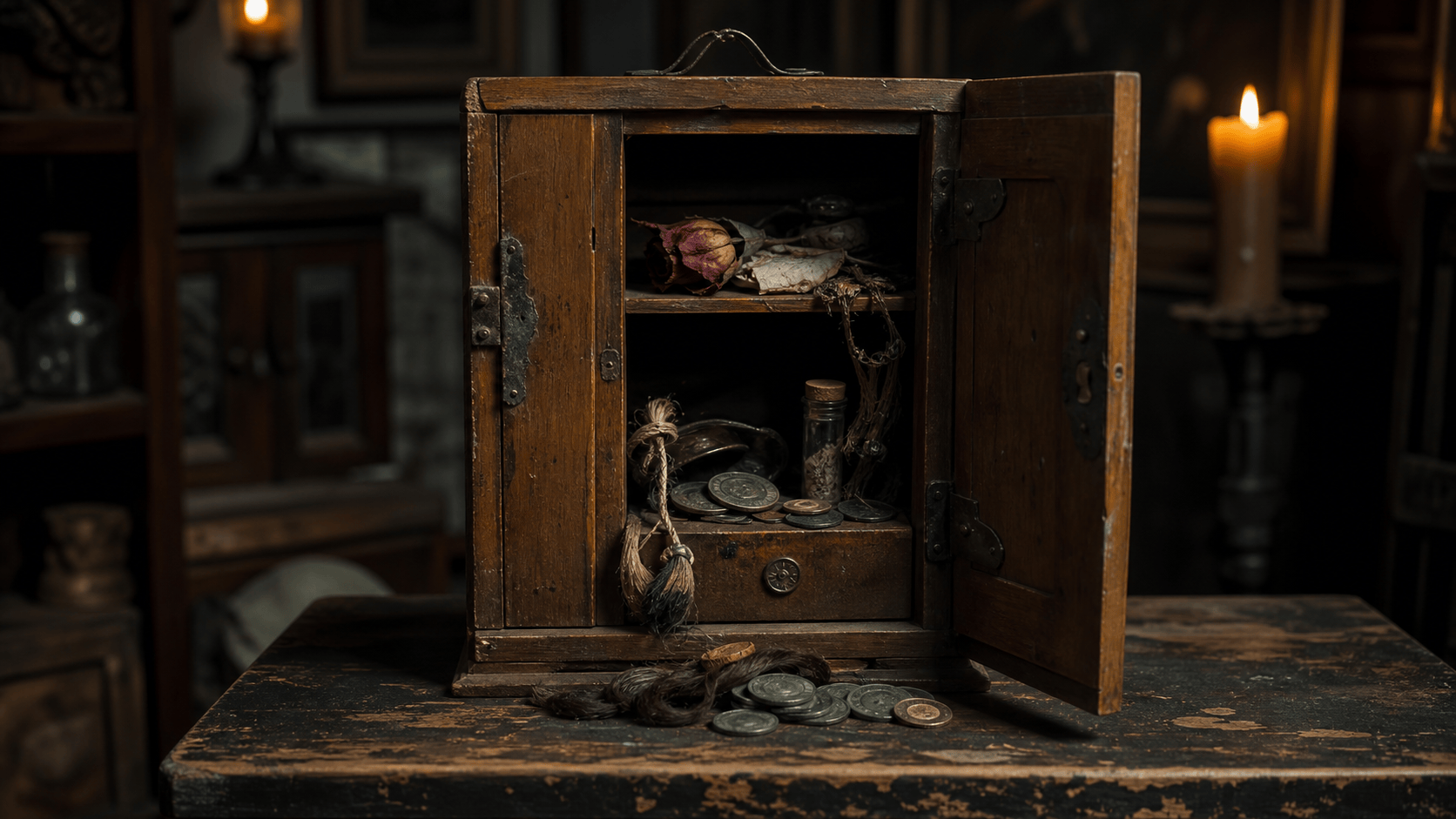
The Dybbuk Box is one of those cursed-object stories that feels almost too perfectly designed for the internet: mysterious antique, strange smells, bad dreams, unexplained illness, and a box you absolutely should not open. Basically, the kind of item that makes you wonder if “haunted wine cabinet” should be its own warning label.
The story became famous after a small wooden wine cabinet was sold online in the early 2000s. According to the listing, the box had once belonged to a Holocaust survivor and was said to contain a dybbuk, a restless or malicious spirit from Jewish folklore. Inside were odd items, including old coins, locks of hair, a dried flower, and other objects that made the whole thing feel less like furniture and more like a drawer from a nightmare with excellent branding.
People connected to the box claimed strange things began happening around it. Owners reported nightmares, bad luck, health problems, broken lights, strange odors, and the heavy feeling that something was wrong. One owner said he gave the box to his mother as a gift, and she suffered a stroke soon after. Which is the kind of coincidence that makes even reasonable people quietly move the object to another room.
The Dybbuk Box eventually became a full-blown modern legend. It inspired books, documentaries, movies, and endless online debate. Some people believe the box is genuinely dangerous. Others think it is a clever story that grew more powerful every time someone repeated it. That is the thing about cursed objects: sometimes the story is the real engine. You do not need proof when enough people are already leaning away from the box.
Skeptics have pointed out problems with the tale, including how much of it depends on one seller’s account and how easily fear can attach itself to an object once people expect it to be cursed. Fair. Also, still not opening the box.
Whether the Dybbuk Box is a real supernatural threat or just one of the best haunted-object stories of the internet age, it works because it feels specific. Not vague. Not generic. A wooden box. Strange contents. A dark backstory. A list of owners who allegedly regretted getting involved.
Some antiques come with scratches, dust, and maybe a weird smell. This one came with a mythology problem.
#2 Annabelle The Doll
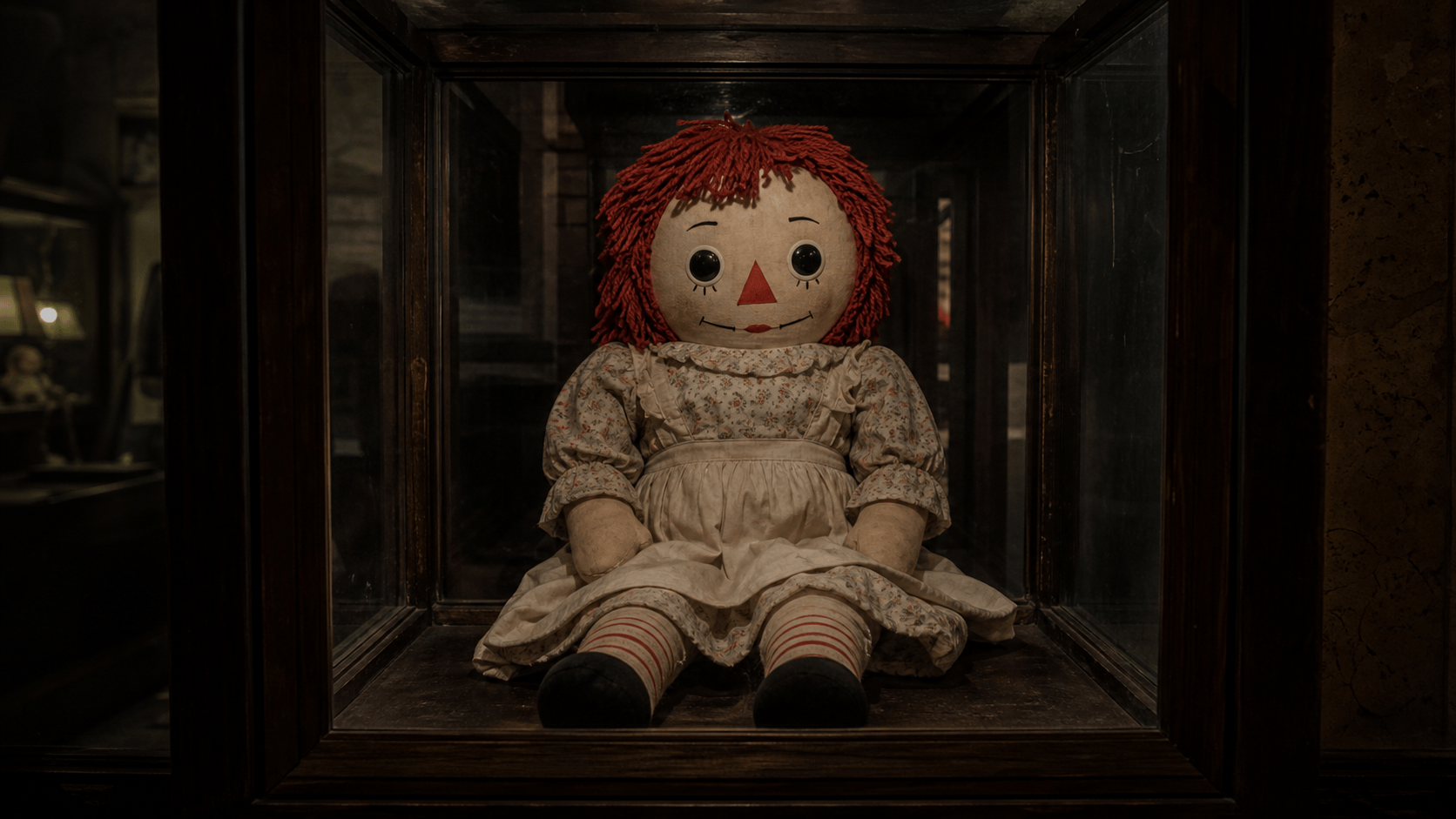
No list of cursed objects would be complete without Annabelle the Doll, mostly because this story has been everywhere. Movies, documentaries, paranormal shows, internet rabbit holes – if haunted objects had a celebrity wing, Annabelle would have her own dressing room and a very nervous security team.
Annabelle is one of the most famous haunted dolls in the world, which is impressive because she does not even look like the horror-movie version of herself. In real life, Annabelle is a Raggedy Ann doll, the kind of soft, red-haired toy that should belong in a nursery, not behind glass with warning signs and a reputation for ruining lives.
Her story became famous through paranormal investigators Ed and Lorraine Warren. According to their account, Annabelle belonged to a young nursing student in the 1970s. At first, the strange activity was small. The doll seemed to move positions. Notes reportedly appeared. The owner and her roommate began to feel like something was wrong, which is a polite way of saying the doll had failed the basic “stay where I left you” test.
The women were allegedly told by a medium that the spirit of a young girl named Annabelle had attached itself to the doll. That sounds almost sweet, until the story takes a hard left into absolutely not. The Warrens later claimed the doll was not possessed by a child at all, but by something darker pretending to be innocent. Because apparently even haunted dolls understand public relations.
After a series of disturbing incidents, the Warrens took Annabelle and placed her in their occult museum in Connecticut. She was kept in a glass case with warnings not to touch or mock her. Visitors and skeptics have claimed bad luck followed people who disrespected the doll, including accidents after leaving the museum. Whether those stories are true, exaggerated, or extremely convenient, they helped turn Annabelle into a legend.
Part of what makes Annabelle so unsettling is how ordinary she looks. She is not a cracked porcelain doll with dead glass eyes and tiny Victorian shoes. She is soft. Familiar. Almost cheerful. That somehow makes it worse. A scary doll looking scary is just doing its job. A friendly doll with a demon rumor feels like a betrayal from the toy department.
Skeptics argue that Annabelle’s story relies heavily on the Warrens’ version of events and has grown through books, interviews, and movies. Fair enough. But cursed objects do not always survive because they are proven. They survive because people keep telling the story, and because nobody wants to be the person who laughs at the doll and then has a suspiciously bad drive home.
#1 The Hope Diamond

The Hope Diamond is the kind of object that makes people say “beautiful” and “possibly doomed” in the same breath, which is a very specific lane for a gemstone. It is a deep blue diamond, massive, famous, and expensive enough to make your bank account feel personally insulted. Today it sits in the Smithsonian, where visitors can admire it safely behind glass, which feels appropriate for both security and vibes.
The diamond’s history stretches back centuries. It is believed to have originated in India, possibly from the Kollur Mine, before eventually making its way to Europe. Over time, it passed through royal hands, wealthy collectors, jewelers, and owners with very complicated financial situations. Somewhere along the way, the legend of a curse attached itself to the stone.
According to the stories, people connected to the Hope Diamond suffered terrible luck: bankruptcy, scandal, ruin, illness, and death. The most famous version claims it was stolen from a statue of a Hindu goddess, which supposedly triggered the curse. That detail is dramatic, memorable, and exactly the kind of thing curse legends love, even though historians are not all convinced it actually happened.
Still, the diamond’s real history gives the legend plenty to work with. One of its famous owners was King Louis XVI of France, who owned the larger blue diamond from which the Hope Diamond may have been cut. He and Marie Antoinette were later executed during the French Revolution. To be fair, the French Revolution had a lot going on, and blaming one jewel for it feels like giving a rock too much management credit. But cursed-object stories are not known for being emotionally restrained.
Later owners were also linked to misfortune, including financial collapse and personal tragedy. The diamond passed through the hands of wealthy families and dealers before being bought by jeweler Harry Winston, who eventually donated it to the Smithsonian in 1958. He sent it by registered mail, because apparently when you own a legendary cursed diamond, the funniest possible move is trusting the postal system.
Today, the Hope Diamond remains one of the most famous jewels in the world. Is it truly cursed? Probably not. But it has everything a good cursed object needs: beauty, blood-colored history, royal connections, rumors of theft, and enough unfortunate owners to make people suspicious.
Some objects become legends because they are terrifying. The Hope Diamond became one because it is gorgeous, expensive, and surrounded by the kind of bad luck that makes you wonder if maybe glass cases are not just for display.
If cursed objects are your kind of strange, haunted places with terrifying histories is probably your next uncomfortable stop.