

Some everyday foods did more than fill our plates, they carried strange beliefs, brutal trade fights, uncomfortable inventions, and surprisingly dark histories into our kitchens.
Some foods seem too normal to have a dark backstory. Ketchup sits next to fries. Graham crackers end up in lunchboxes. Corn Flakes wait politely in the cereal aisle, looking like they have never caused trouble in their lives.
But food history is rarely that innocent. Behind some of the most familiar things we eat are strange beliefs, violent trade fights, questionable health movements, and marketing claims that would make a modern label writer start sweating.
These are five everyday foods with origins that are weirder, darker, and much more uncomfortable than their current grocery store lives suggest.
#5 Coca-Cola

Coca-Cola is so normal now that it almost feels like part of the furniture of modern life. It is at restaurants, gas stations, movie theaters, birthday parties, sports events, and probably somewhere within twelve feet of a vending machine right now. But before it became the world’s most recognizable soda, Coca-Cola began as something much stranger: a medicinal tonic from the age when people were very comfortable putting suspicious ingredients into bottles and calling it health.
The drink was created in 1886 by John Stith Pemberton, a pharmacist in Atlanta. Pemberton had previously made a coca wine inspired by European tonic drinks, but when Atlanta passed temperance laws, he created a non-alcoholic version. The result was Coca-Cola, a syrup mixed with carbonated water and sold at soda fountains as a refreshing health drink.
The name came from two key ingredients: coca leaves and kola nuts. Coca leaves were associated with cocaine, while kola nuts provided caffeine. Early Coca-Cola did contain coca leaf extract, though the exact amount and effects are still debated. Either way, the idea of a soft drink being born from the world of patent medicine gives the whole thing a slightly unhinged charm. Modern soda ads show happy people on beaches. Early tonic culture was more like, “Are you tired, nervous, sad, or vaguely alive? Try this.”
Coca-Cola was marketed as a remedy for headaches, fatigue, and other everyday complaints. That was normal for the time. The late 1800s were packed with tonics, elixirs, and cure-alls promising to fix nearly everything except maybe the problem of trusting tonics, elixirs, and cure-alls.
Over time, Coca-Cola moved away from its medicinal image and became a mass-market soft drink. The company also changed how coca leaves were processed, removing cocaine from the ingredient. By the early 20th century, Coca-Cola was becoming less “pharmacy experiment” and more “global refreshment empire.”
That is what makes its origin so fascinating. Coca-Cola did not start as just a soda. It came out of a world of patent medicine, temperance, stimulant culture, and marketing claims that would now get a legal department to sprint across the room.
Today, it is a familiar drink. Back then, it was part refreshment, part remedy, and part reminder that history had absolutely no chill when it came to beverages.
#4 Nutmeg

Nutmeg seems like one of those quiet little spices that lives in the back of a cabinet and only gets invited out for holiday baking. It smells warm, cozy, and harmless. Basically the spice equivalent of a sweater. But its history is much less “grandma’s kitchen” and much more “people crossed oceans and committed atrocities over this tiny brown seed.”
For centuries, nutmeg grew almost exclusively in the Banda Islands, a small group of islands in what is now Indonesia. That made it incredibly rare in Europe, where spices were not just flavoring but luxury goods, status symbols, and supposed medicines. Nutmeg was believed to help with everything from digestion to plague prevention, because apparently medieval Europe’s medical plan was “add expensive spice and hope.”
By the 1600s, European powers were desperate to control the spice trade. The Dutch East India Company wanted a monopoly on nutmeg, and the Banda Islands became the center of a brutal struggle. In 1621, Dutch forces under Jan Pieterszoon Coen launched a violent campaign against the Bandanese people. Thousands were killed, enslaved, or driven from their homes. The Dutch then brought in enslaved and forced laborers to keep nutmeg production going.
All of this for a spice most people now grate over eggnog and then forget about for eleven months.
The dark part of nutmeg’s story is not just that it was valuable. Lots of things were valuable. It is that the demand for one small luxury item helped fuel colonization, violence, and forced labor on a devastating scale. A cozy spice cabinet favorite was once treated like a geopolitical prize.
Eventually, nutmeg trees were smuggled to other places, breaking the Dutch monopoly. The spice became easier to obtain, cheaper, and less tied to one tiny corner of the world. But the damage had already been done.
Today, nutmeg is ordinary. It sits in grocery stores, gets sprinkled into desserts, and makes people say things like “just a pinch.” History, unfortunately, heard “just a pinch” and responded with several centuries of horrifying overreaction.
#3 Corn Flakes
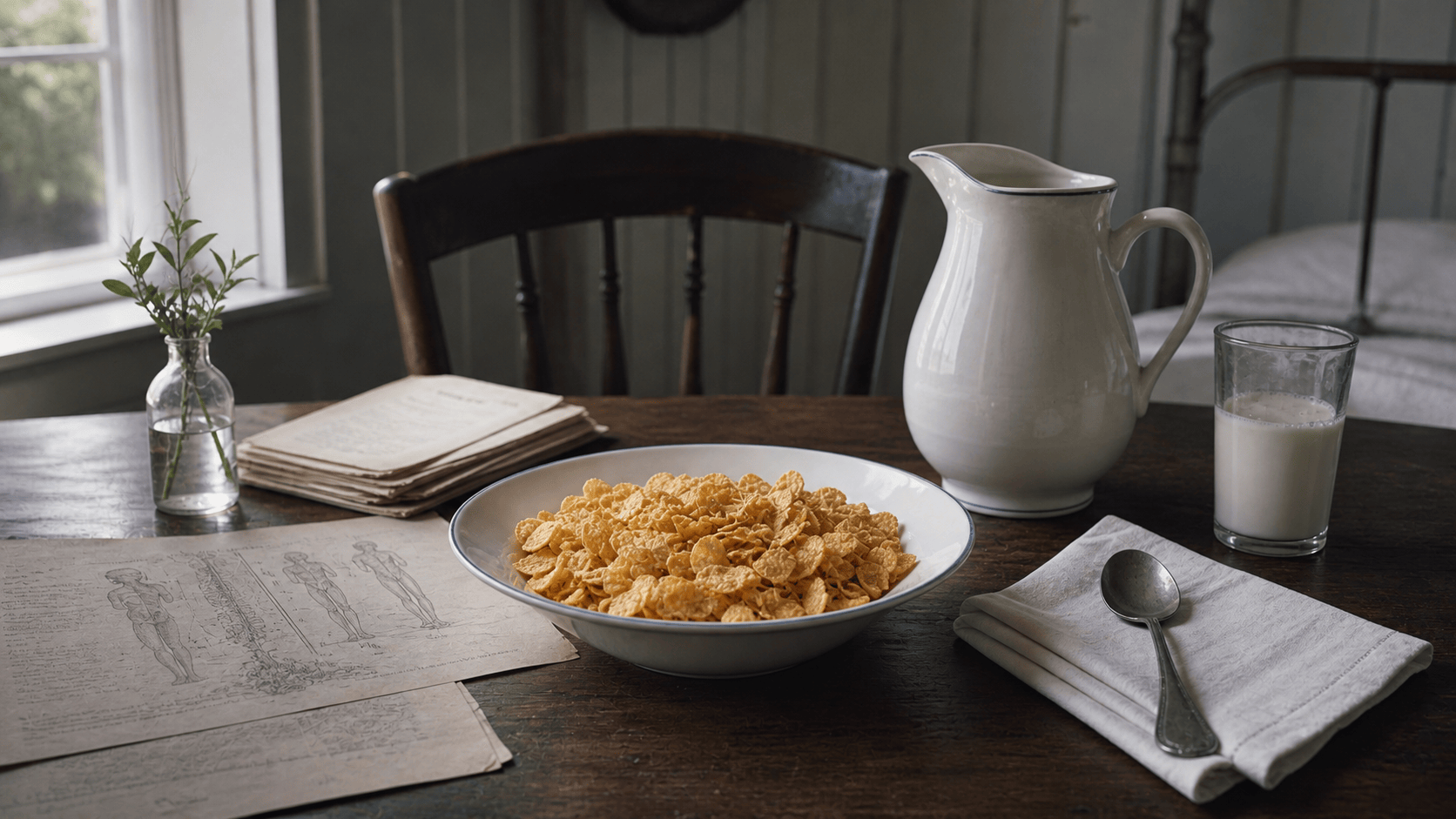
Corn Flakes are so plain that they almost feel like food designed by a committee that was afraid of flavor. They sit in the cereal aisle looking harmless, golden, and deeply unlikely to have a weird origin story. But they do. Because history has a gift for taking the most boring object in the room and quietly making it strange.
Corn Flakes were created in the late 1800s at the Battle Creek Sanitarium in Michigan, a health resort run by Dr. John Harvey Kellogg. The sanitarium promoted strict diets, exercise, fresh air, and a whole lifestyle built around physical and moral purity. It was part medical facility, part wellness retreat, and part place where joy probably had to sign in at the front desk.
Kellogg believed diet could shape behavior. He favored bland foods because he thought rich, spicy, or stimulating foods encouraged unhealthy impulses. Corn Flakes fit perfectly into that worldview: simple, plain, easy to digest, and about as emotionally dangerous as cardboard with better branding.
The cereal was developed by John Harvey Kellogg and his brother Will Keith Kellogg, though the brothers later disagreed over business and sugar. Will wanted to market the cereal more widely and make it more appealing to regular customers. John was less enthusiastic about turning his health-food experiment into a sweetened breakfast empire. Classic sibling conflict, except with flakes.
Eventually, Will Kellogg founded the company that helped turn Corn Flakes into a household staple. What began as part of a strict health and morality movement became one of the most famous breakfast cereals in the world. The blandness survived. The sermon mostly did not.
That is what makes Corn Flakes so funny and unsettling at the same time. They were not invented just because someone wanted a quick breakfast. They came from a movement that believed food could control the body, the mind, and even desire.
Today, people pour them into bowls half-asleep and eat them while checking their phones. But behind that ordinary crunch is a surprisingly intense origin story involving health reform, moral anxiety, sibling rivalry, and the bold belief that breakfast could discipline your soul.
#2 Graham Crackers
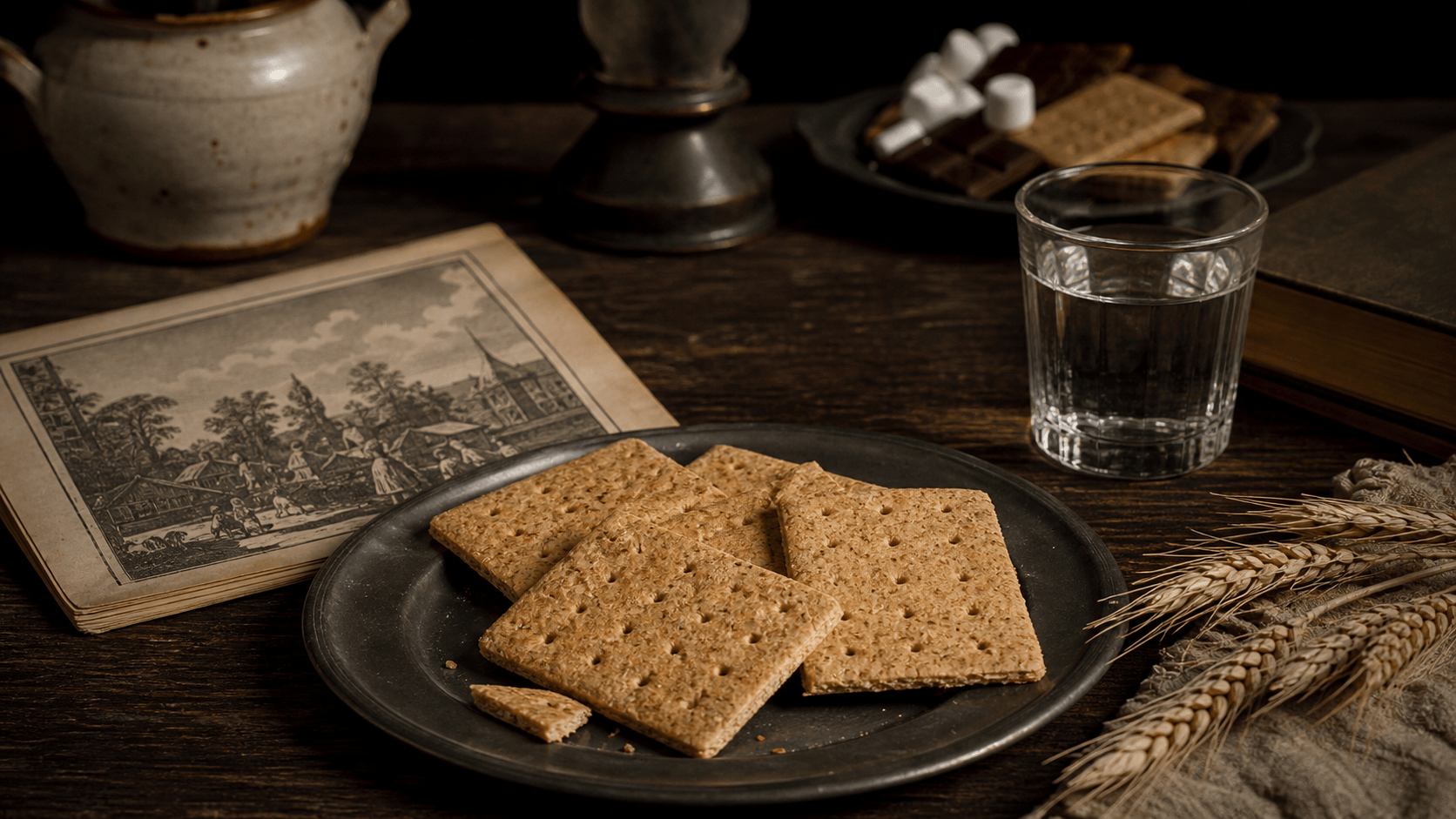
Graham crackers seem like one of the least threatening foods ever invented. They show up in lunchboxes, cheesecake crusts, and s’mores, where their main job is to hold chocolate and marshmallow together while everyone pretends the whole thing will not immediately collapse. They are sweet, mild, and deeply associated with childhood snacks.
Which makes their origin story much funnier.
Graham crackers were inspired by Sylvester Graham, a 19th-century Presbyterian minister and dietary reformer who believed that what people ate affected their physical and moral health. Graham promoted a strict lifestyle built around whole grains, simple foods, vegetarianism, cold baths, temperance, and avoiding anything he considered too stimulating. Basically, if fun had a flavor, he was against it.
One of Graham’s big ideas was that bland, wholesome food could help control human desire. He believed rich foods, meat, alcohol, spices, and indulgence encouraged unhealthy impulses. His followers, known as Grahamites, embraced coarse wheat flour and simple bread as part of a morally disciplined life. The original graham cracker was not the honey-sweet snack people know today. It was more like edible self-control.
The irony is almost too good. A food connected to suppressing pleasure eventually became a key ingredient in s’mores, one of the stickiest, sweetest, least restrained desserts humanity has managed to assemble around a campfire. Somewhere, Sylvester Graham probably sensed a disturbance in the whole-grain universe.
Over time, commercial food companies transformed graham crackers into something sweeter, lighter, and far more snackable. The moral crusade faded. The cracker stayed. Then sugar, cinnamon, chocolate, marshmallows, and capitalism arrived, looked at Graham’s anti-indulgence project, and politely backed a truck over it.
That is what makes graham crackers such a perfect dark-origin food. They are not dark because of violence or poison. They are dark because they came from a deeply anxious movement that tried to use food as a tool for controlling behavior.
Today, they are comfort food. Originally, they were part of a lifestyle that treated your pantry like a moral battlefield. Not bad for something now mostly used to keep melted marshmallow off your fingers.
#1 Sugar
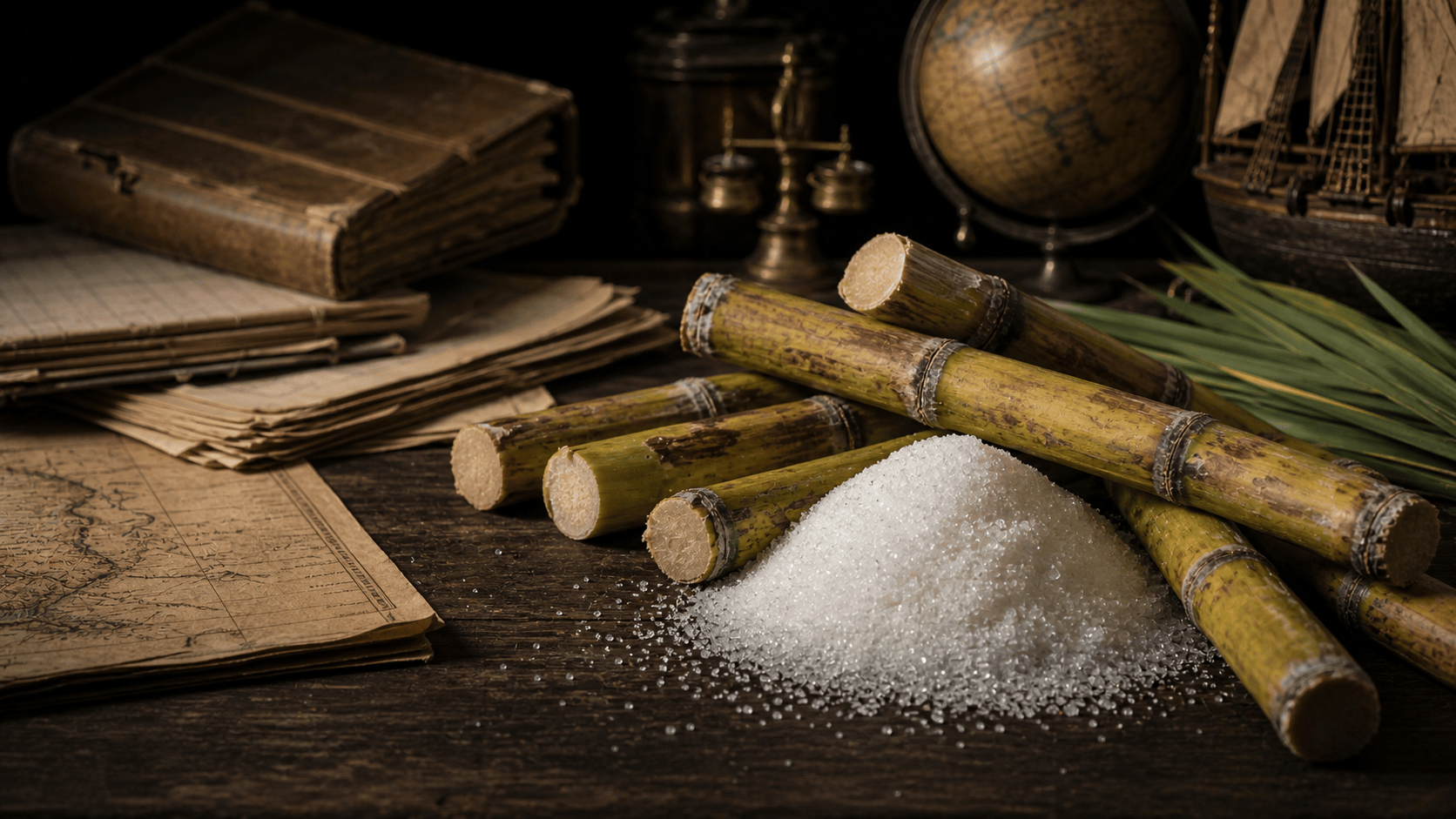
Sugar is so common now that it barely feels like a food with a history. It is in candy, cereal, soda, coffee, sauces, desserts, and probably at least three things in your kitchen pretending not to be dessert. It is sweet, cheap, everywhere, and very good at making people say, “Just one more,” right before lying to themselves.
But sugar’s history is not sweet at all.
For centuries, sugar was rare and expensive. It was treated as a luxury, a medicine, a status symbol, and a way for wealthy people to make their teeth worse while feeling impressive about it. In medieval Europe, sugar was so valuable that it appeared mostly on elite tables. Then European demand grew, and that demand helped reshape huge parts of the world.
Sugarcane production required brutal labor. As European powers built plantation economies in the Atlantic world and the Caribbean, sugar became deeply tied to slavery, colonialism, forced migration, and violence. Enslaved Africans were forced to work on sugar plantations under horrific conditions. The work was exhausting, dangerous, and often deadly. Fields had to be cut. Cane had to be crushed quickly. Boiling houses were hot, hazardous, and relentless. Sugar may have ended up in elegant cups of tea, but getting it there was anything but elegant.
That is the dark contradiction at the center of sugar. It turned sweetness into an empire. It helped drive global trade, built fortunes, transformed diets, and fueled systems of exploitation that caused suffering on a massive scale. A tiny spoonful of sweetness carried the weight of entire plantation economies behind it.
Over time, sugar became cheaper and more available. What had once been a luxury for the wealthy became an everyday ingredient. Today, people argue about sugar because of health, diet, and processed food. Those conversations matter, but they are only the newest chapter in a much older and darker story.
Sugar earns the number one spot because its history is not just strange or ironic. It is enormous. It changed economies, shaped empires, and left scars across continents.
Not bad for something that now hides in breakfast cereal like it has never done anything wrong.