

The instructions were not the problem. The product was.
What happens when a product everyone trusts turns out to be the danger?
These five were sold as medicine, decoration, and modern progress. By the time the warnings caught up with the advertising, some had already harmed thousands of people.
#5 Arsenic Wallpaper

In the late 1700s, Swedish chemist Carl Wilhelm Scheele created a vivid green pigment using copper and arsenic. It was bright, inexpensive, and far more attractive than many of the duller greens available at the time.
Naturally, it became fashionable.
Scheele’s Green and similar arsenic-based pigments appeared in wallpaper, clothing, artificial flowers, toys, and other household products throughout the 1800s. Victorian rooms could be covered in elaborate green patterns without anyone realizing that the walls contained a well-known poison.
The wallpaper did not need to be eaten to cause trouble. Pigment could flake away as contaminated dust, while damp conditions and certain molds could release arsenic compounds into the surrounding air. People living in these rooms reported headaches, nausea, breathing problems, skin irritation, and other symptoms that sometimes disappeared after the wallpaper was removed.
Doctors and newspapers gradually began warning the public, but manufacturers disputed the danger for years. Arsenic wallpaper remained popular partly because the symptoms could easily be blamed on illness, poor ventilation, or practically anything else found inside a Victorian house.
By the late 1800s, companies were advertising wallpaper as “free from arsenic.” It was meant to reassure customers, but it also revealed just how normal the alternative had once been.
#4 Radithor

Radithor was sold during the 1920s as a powerful health tonic capable of increasing energy, easing pain, and restoring vitality. What customers actually received was distilled water containing radium.
The name sounded scientific, the bottle looked respectable, and the advertising promised “perpetual sunshine.” That was apparently enough.
Industrialist and amateur golfer Eben Byers began drinking Radithor after injuring his arm in 1927. A doctor recommended it for the pain, and Byers initially believed it was helping. He reportedly consumed several bottles a day, eventually drinking well over 1,000 of them.
Then his teeth began falling out.
Byers developed severe radiation damage throughout his body. Parts of his jaw deteriorated, holes formed in his skull, and attempts to treat him could do little against the radium already stored inside his bones. He died in 1932 at the age of 51 and was buried in a lead-lined coffin because his remains were still radioactive.
His death attracted national attention and helped expose the broader market for radioactive medicines. Federal regulators soon acted against Radithor’s manufacturer, William J. A. Bailey, and products that had once been promoted as modern health treatments became symbols of dangerous medical fraud.
If you would like to read more about what once passed for legitimate care, these medical treatments from history were basically crimes.
#3 Elixir Sulfanilamide
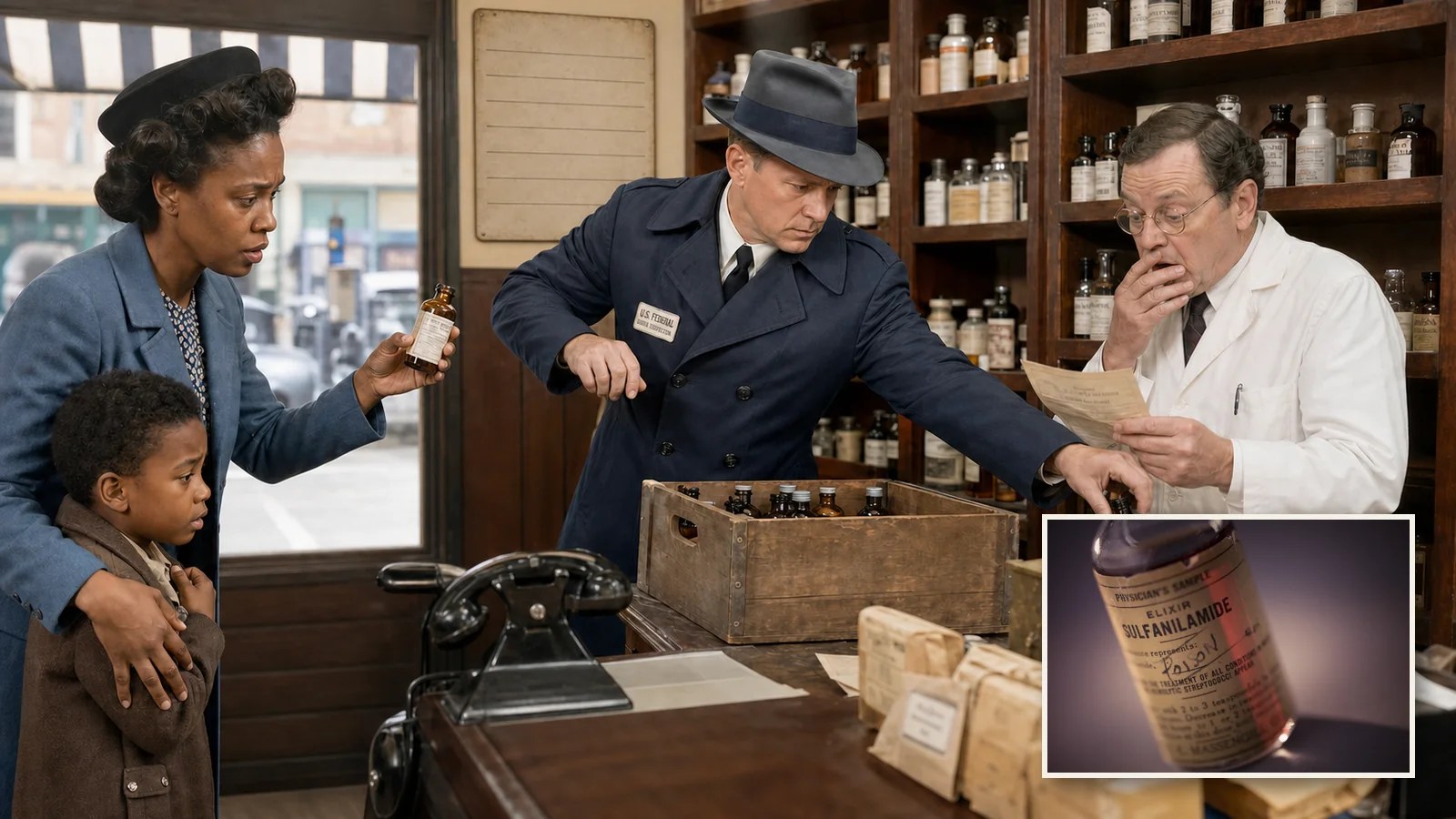
In 1937, the S.E. Massengill Company decided to create a liquid version of sulfanilamide, a drug used to treat bacterial infections. The medicine already existed in tablet and powder form, but customers wanted something easier to swallow.
A company chemist dissolved it in diethylene glycol, a toxic chemical now commonly associated with antifreeze. Raspberry flavoring was added to make the medicine more appealing.
The flavor was tested. The appearance was tested. The toxicity was not.
At the time, American law did not require manufacturers to prove that a new drug was safe before selling it. Massengill shipped hundreds of batches across the country, where doctors prescribed the sweet-tasting medicine to adults and children.
Patients soon developed severe abdominal pain, vomiting, convulsions, and kidney failure. More than 100 people died across 15 states, including many children who had been given the medicine for ordinary sore throats.
FDA inspectors raced to recover the bottles, tracking shipments through pharmacies, doctors, and sales records. The agency had limited authority, however. Officials could pursue the company for calling the product an “elixir” without containing alcohol, but not simply for selling an untested medicine that killed people.
Public outrage helped push Congress to pass the Federal Food, Drug, and Cosmetic Act in 1938. Drug manufacturers would now have to provide evidence of safety before putting new products on the market.
It had taken more than 100 deaths to turn that into a legal requirement.
#2 Leaded Gasoline

In the 1920s, automobile engines had a problem called knocking. General Motors researchers discovered that adding tetraethyl lead to gasoline made engines run more smoothly.
It solved the knocking problem by creating a much larger one.
The fuel was marketed under the friendlier name “Ethyl,” carefully avoiding the word lead. Almost immediately, workers producing the additive began suffering hallucinations, confusion, seizures, and violent behavior. In 1924, five workers died at a Standard Oil refinery in New Jersey. Other deaths followed at facilities in Ohio and elsewhere.
Despite the warning signs, the industry insisted the product could be handled safely. Researcher Thomas Midgley Jr. even held a public demonstration in which he poured the chemical over his hands and inhaled its fumes to reassure reporters. He had already experienced lead poisoning himself and reportedly needed time away from work to recover.
Leaded gasoline remained in widespread use for decades. Every car burning it released small amounts of lead into the air, where it settled into streets, soil, homes, and human bodies. Children were especially vulnerable because lead exposure can permanently affect brain development, learning, and behavior.
As evidence accumulated, regulators began forcing lead out of gasoline during the 1970s. Levels in the air dropped sharply as unleaded fuel became standard, and leaded gasoline for ordinary road vehicles was finally banned in the United States in 1996.
The earliest workers had shown how dangerous it was almost from the beginning. The rest of the public continued breathing it for generations.
#1 Thalidomide
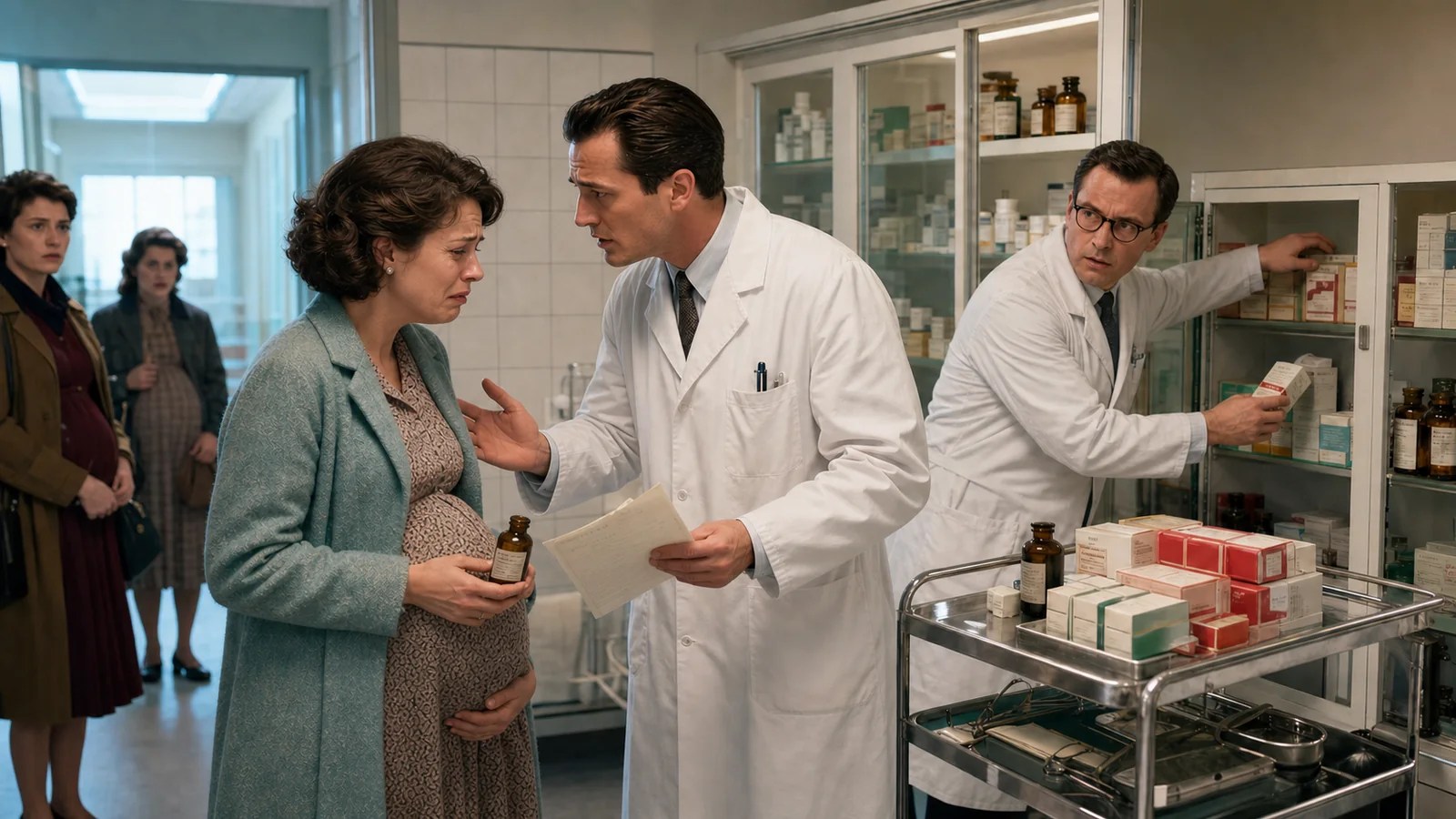
During the late 1950s, thalidomide was marketed across dozens of countries as a remarkably safe sedative. It was used for sleeplessness, anxiety, colds, and morning sickness during pregnancy. In some places, customers could buy it without a prescription.
The advertisements were confident. The evidence behind them was not.
When thalidomide was taken during a critical stage of pregnancy, it could interfere with fetal development. Babies were born with shortened or missing limbs, along with damage to their eyes, ears, hearts, and other organs. The drug was also linked to miscarriages and stillbirths.
More than 10,000 babies are estimated to have been affected worldwide. Around half died within months of being born. Survivors and their families were left dealing with the consequences long after thalidomide disappeared from pharmacy shelves.
The United States narrowly avoided the same scale of disaster because of FDA medical reviewer Frances Kelsey. The manufacturer sought approval to sell thalidomide under the name Kevadon, but Kelsey repeatedly demanded stronger safety evidence. She refused to approve it despite pressure from the company.
By late 1961, researchers in Germany and Australia had connected thalidomide to severe birth defects, and the drug was withdrawn from major markets. Kelsey was later honored by President John F. Kennedy for helping prevent a much larger American tragedy.
The disaster helped drive the 1962 Kefauver Harris Amendments, which strengthened drug testing, required evidence that medicines were effective, and introduced tighter oversight of clinical trials.
Thalidomide caused one of the worst medical disasters in modern history because patients did what they had been told was safe. That is what puts it at number one.
Fact-check sources: FDA history of Frances Kelsey and Science Museum history of thalidomide.