

Some discoveries are planned. Others happen because someone digs, trips, wanders, or opens the wrong wall and suddenly history starts acting weird.
The best discoveries are not always made by people wearing clean gloves and looking very official.
Sometimes they are made by farmers digging wells. Hikers crossing ice. Shepherds throwing rocks into caves. Teenagers following a dog into the ground, which is the kind of decision that usually ends with a parent yelling your full name.
That is what makes accidental discoveries so interesting. They feel like history got caught off guard.
One minute, someone is doing something ordinary. The next, they are standing in front of ancient art, buried armies, frozen bodies, hidden cities, or objects that make archaeologists quietly cancel their afternoon plans.
Here are seven creepy discoveries made by accident.
#7 Lascaux Cave Paintings

The Lascaux Cave Paintings were discovered because a group of teenagers followed a dog into a hole, which is either archaeology or the opening scene of a very stressful afternoon.
In 1940, near Montignac in southwestern France, a dog named Robot reportedly fell into or found an opening in the ground. His teenage owner and friends went exploring and discovered a cave covered in prehistoric paintings.
And not just a few rough doodles.
The walls were filled with animals: horses, bulls, deer, and other figures painted with surprising skill and movement. Some of the images are thousands of years old, created by people who clearly had more artistic talent than most of us have with unlimited undo buttons.
The discovery was huge. Lascaux became one of the most famous examples of Paleolithic cave art in the world.
But it also came with a problem.
Once people started visiting, the cave’s environment changed. Moisture, carbon dioxide, temperature shifts, and artificial lighting began damaging the paintings. Eventually, the original cave had to be closed to the public to protect it.
Which feels very human.
We found one of the greatest prehistoric art galleries ever made, then immediately became the thing it needed protection from.
Today, visitors mostly see replicas instead of the original cave. The real paintings remain carefully protected, hidden away again after briefly being dragged into modern attention.
Not a bad run for a discovery that started with a dog and a hole in the ground.
#6 The Dead Sea Scrolls

The Dead Sea Scrolls were discovered in the most casually dramatic way possible: someone threw a rock into a cave and history made a noise.
In the late 1940s, Bedouin shepherds near Qumran, close to the Dead Sea, found ancient scrolls hidden inside caves. According to the most famous version of the story, one shepherd tossed a stone into a cave and heard pottery break.
That is usually the sound of getting in trouble.
In this case, it was the sound of one of the most important archaeological discoveries of the 20th century.
Inside the caves were ancient manuscripts stored in jars. Over time, more scrolls and fragments were found in the surrounding area. The texts included biblical manuscripts, religious writings, community rules, and other documents connected to Jewish life during the Second Temple period.
The scrolls were roughly two thousand years old.
Which is a lot of pressure to put on a cave jar.
The discovery mattered because it gave scholars incredibly old copies of texts and a clearer look at the religious and historical world of the time. It also created decades of study, debate, preservation work, and the kind of academic arguments that probably sound polite until someone reaches for a footnote.
But the accidental part is what makes it feel unreal.
A shepherd was not looking for ancient manuscripts. He was doing ordinary work in a dry landscape, and then a cave turned out to be holding pieces of history older than most countries.
Not every accidental discovery starts with a grand expedition.
Sometimes it starts with a rock, a cave, and one very unlucky clay jar.
#5 Derinkuyu Underground City
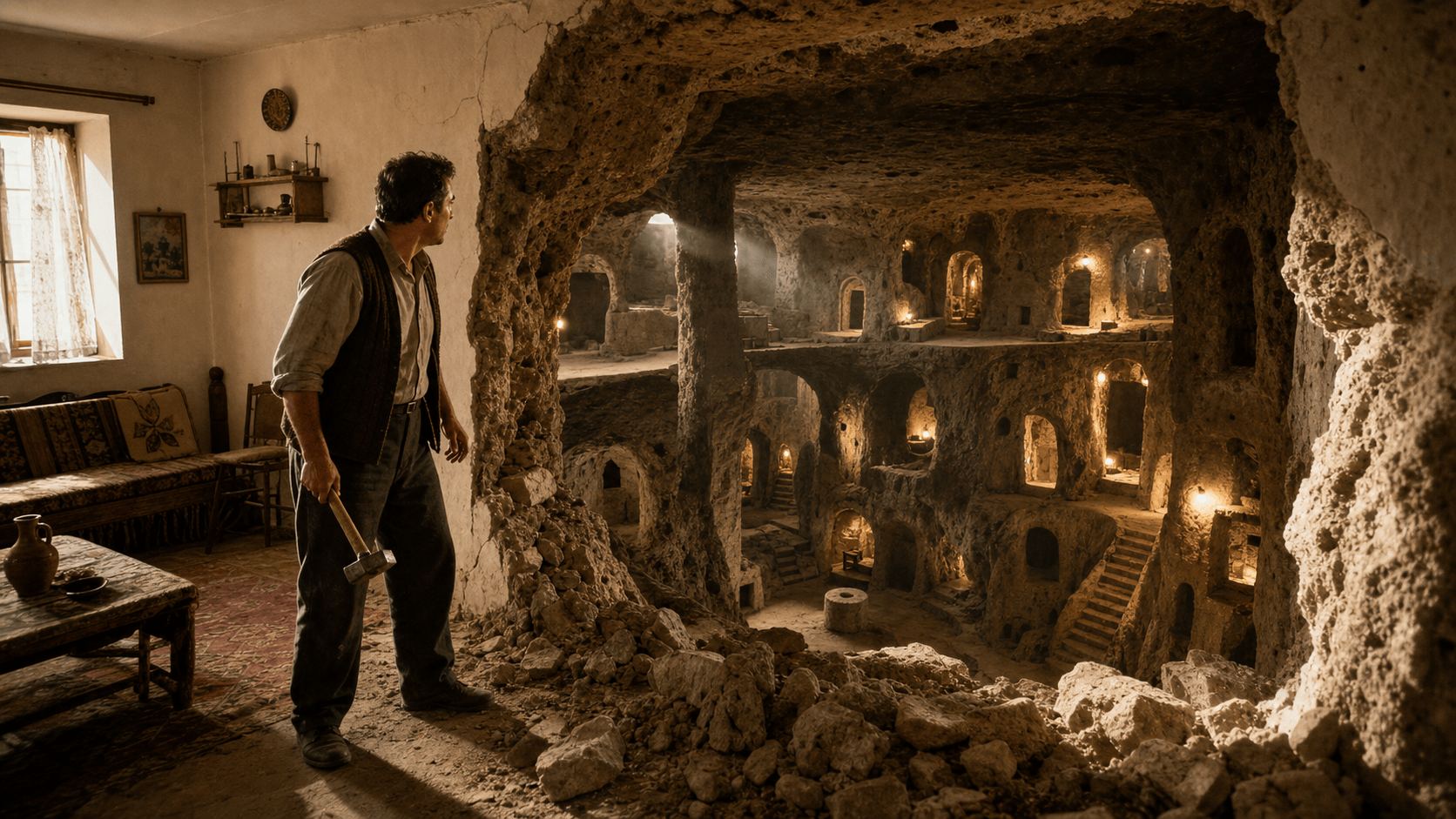
Derinkuyu sounds like the kind of place someone would invent for a fantasy novel, except it is real, underground, and honestly a little rude about how much space it has.
In Turkey’s Cappadocia region, Derinkuyu is a massive underground city carved into soft volcanic rock. It includes tunnels, rooms, ventilation shafts, storage areas, wells, stables, churches, and living spaces spread across multiple levels.
Basically, an entire city decided the surface was overrated.
The rediscovery story is the part that makes it perfect for this list. In the 1960s, a local man reportedly knocked down or opened a wall in his home and found a hidden passage. That passage led into the underground city.
Most people find old pipes behind a wall.
This man found a subterranean civilization with better planning than some modern apartment complexes.
Derinkuyu could shelter thousands of people and may have been used as a refuge during invasions or times of danger. Heavy stone doors could seal tunnels from the inside, which is both clever and deeply unsettling if you think about it for more than four seconds.
Today, Derinkuyu is one of the most famous underground cities in the world. Tourists can visit parts of it, but the idea still feels strange: a hidden city beneath ordinary homes, waiting behind walls like history had installed a basement nobody mentioned.
It is not just creepy because it is underground.
It is creepy because someone found it by accident and then had to realize their house was sitting on top of a whole other world.
#4 The Antikythera Mechanism
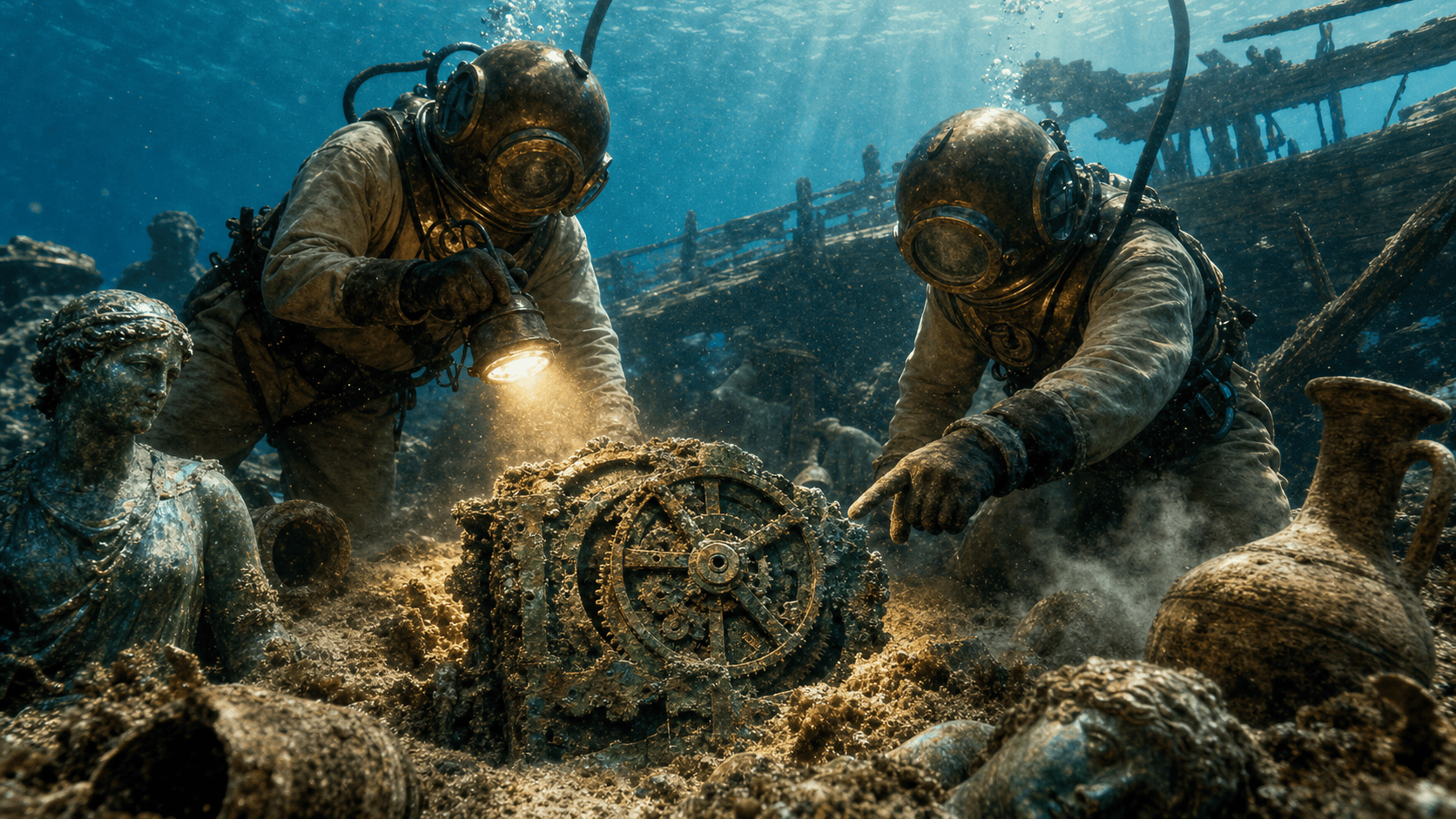
The Antikythera Mechanism is what happens when divers find an ancient shipwreck and accidentally make everyone reconsider how clever the ancient world was.
In 1901, sponge divers discovered a shipwreck near the Greek island of Antikythera. The wreck contained statues, coins, glassware, and other artifacts. Then researchers noticed a strange corroded object among the finds.
At first, it did not look like much.
Ancient mystery objects rarely arrive polished and dramatic. They usually show up looking like something your garage would reject.
But inside that lump were gears.
Carefully made gears.
The Antikythera Mechanism turned out to be an ancient Greek device used to track astronomical cycles, including the movements of the sun and moon. It is often described as an early analog computer, which is a very calm way of saying someone built a shockingly advanced machine more than two thousand years ago.
That is the creepy part, in a way.
Not creepy like ghosts. Creepy like realizing the past was much smarter than your textbook made it sound.
The mechanism showed that ancient engineers were capable of incredibly complex design. It also raised questions about what else may have existed and simply failed to survive.
Because if one object like this ended up at the bottom of the sea, how many others vanished completely?
The Antikythera Mechanism is less “jump scare” and more “quietly ruins your assumptions.”
Which is a much more durable kind of creepy.
#3 Otzi The Iceman
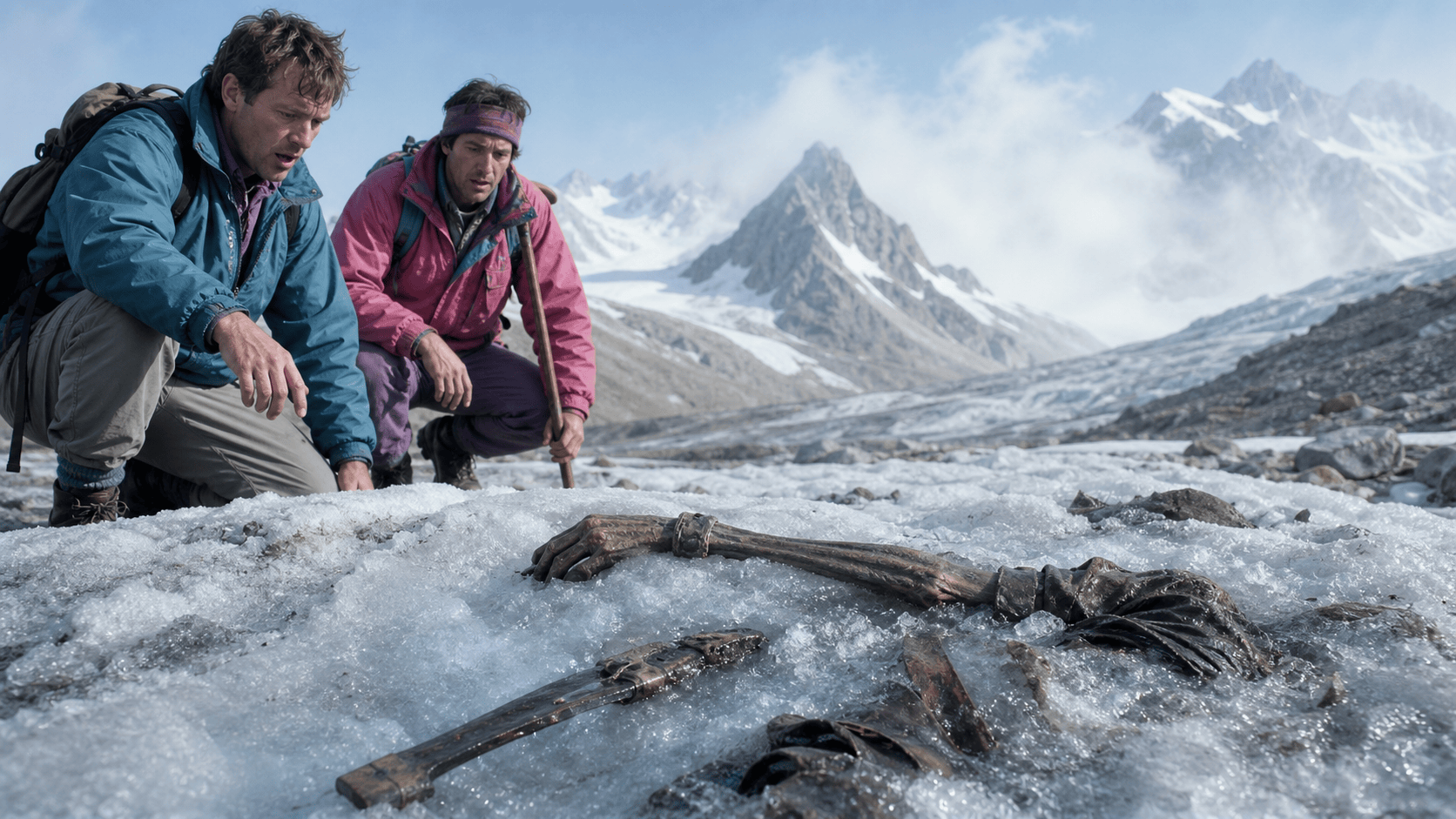
Otzi the Iceman was discovered by hikers who thought they had found a modern accident victim.
That was a fair guess.
Most people do not see a body in the Alps and immediately think, “Ah yes, a man from over five thousand years ago. Happens.”
In 1991, hikers in the Otztal Alps near the border of Austria and Italy spotted human remains melting out of the ice. Authorities initially believed the body belonged to a recent mountaineer. Then scientists took a closer look and realized they were dealing with something much older.
Much older.
Otzi lived around 3300 BCE. His body, clothing, tools, and equipment had been naturally preserved by ice. Researchers found a copper axe, arrows, clothing made from animal skins, and even tattoos on his body.
Then the story got darker.
Further study showed that Otzi had an arrowhead lodged in his shoulder. He also had injuries suggesting violence before his death. In other words, this was not just an ancient frozen body.
It may have been a very old cold case.
That is what makes Otzi so fascinating. He is not only a preserved person from the distant past. He is a person with belongings, wounds, meals, health problems, and a final day that still invites questions.
The hikers did not just find a body in the ice.
They found a man whose bad day outlasted several civilizations.
#2 The Terracotta Army

The Terracotta Army was discovered by farmers trying to dig a well, which is a very normal task until the ground starts handing you an emperor’s afterlife security detail.
In 1974, farmers near Xi’an, China, were digging when they uncovered fragments of clay figures. Archaeologists were called in, and the discovery quickly grew into something enormous.
Beneath the earth was an army.
Thousands of life-sized terracotta soldiers, horses, and chariots had been buried near the tomb of Qin Shi Huang, the first emperor of China. The figures were arranged in military formation, as if ready to protect the emperor in the afterlife.
Each soldier was different. Different faces, hairstyles, expressions, armor, and ranks.
Which is impressive, and also mildly intimidating. Most people are happy if they label their moving boxes correctly. Qin Shi Huang had a custom underground army.
The discovery became one of the most famous archaeological finds in the world. And it is still not fully explored. The emperor’s main tomb remains largely unopened, partly because of preservation concerns and partly because ancient tombs have a habit of being chemically unpleasant.
There are legends about mercury rivers inside the tomb, and modern testing has found unusually high mercury levels in the surrounding soil. So yes, even the dirt seems to be saying, “Maybe take your time.”
The Terracotta Army is creepy because of its scale.
One farmer’s well led to thousands of silent soldiers staring out from the ground, like history had been waiting in formation.
#1 The Tollund Man
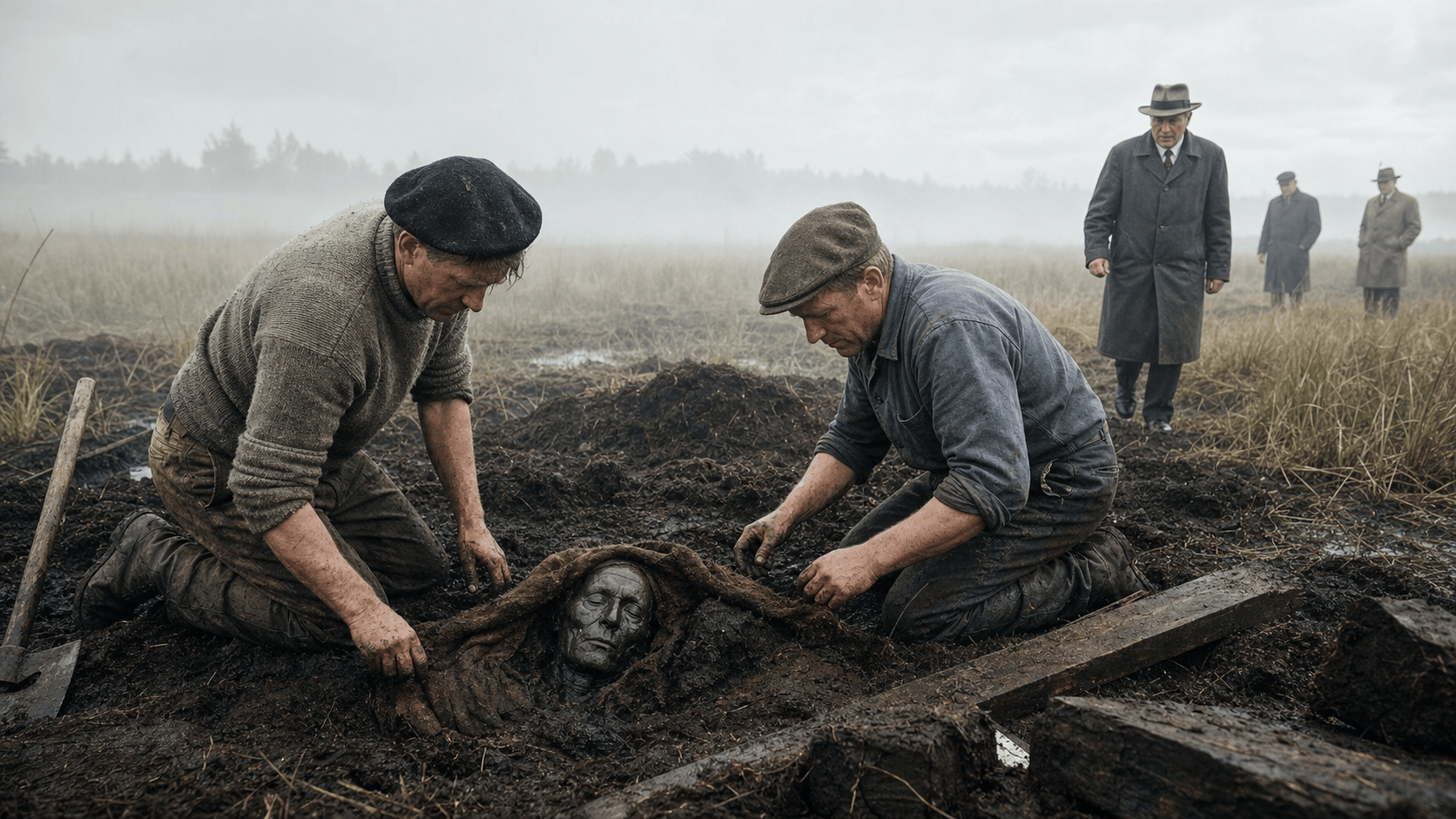
The Tollund Man was discovered by peat cutters in Denmark in 1950, and at first, people thought they had found a recent murder victim.
That reaction makes sense.
He was so well preserved that his face still looked human in a way that ancient remains usually do not. His closed eyes, stubbled chin, and calm expression made him look less like an archaeological find and more like someone who had fallen asleep in the wrong century.
Then researchers realized he was much older.
The Tollund Man lived during the Iron Age, more than two thousand years ago. His body had been preserved by the acidic, low-oxygen conditions of the bog. His skin, face, and even details of his last meal were still intact.
But the discovery was not just eerie because he was preserved.
It was eerie because of how he died.
A leather noose was found around his neck, and scholars generally believe he was hanged, possibly as part of a ritual sacrifice. That means the peat cutters did not just uncover a body. They uncovered the final moment of a person from an ancient world, preserved with uncomfortable clarity.
Bog bodies are strange because they make the past feel too close.
Bones feel distant. Ruins feel distant. A face does not.
The Tollund Man gets the number one spot because he is not creepy in a loud way. He is creepy in the quietest possible way: a man from two thousand years ago, still looking like someone you could almost wake up.
Leave a Reply