

Sometimes the clues do not solve the disappearance. They just make everyone more uncomfortable.
A missing person case is already hard to sit with. But some disappearances leave behind details that seem to point in every direction at once.
A car abandoned on a dark road. A lighthouse left empty during a storm. Reports of sightings that may or may not mean anything. A fire that should have ended one way, but left a family wondering if something else happened entirely.
These cases are not strange because there are no clues.
They are strange because the clues refuse to behave.
Here are five disappearances where the evidence only made things more confusing.
#5 The Sodder Children

The Sodder children case begins with a house fire and somehow gets more confusing from there.
On Christmas Eve in 1945, the Sodder family home in Fayetteville, West Virginia, caught fire. George and Jennie Sodder escaped with four of their children. Five others were believed to still be inside: Maurice, Martha, Louis, Jennie, and Betty.
At first, the tragedy seemed clear.
A house burned. Children were missing. Everyone feared the worst.
But then came the details that made the family question everything.
No clear remains of the five children were found in the ashes. The family’s ladder, which could have helped reach the upper floor, was missing from its usual place. Their trucks, which had worked earlier, would not start. The phone line did not work. The fire department arrived hours later. For a grieving family desperate for answers, none of that felt small.
Then came the reported sightings.
Over the years, people claimed they had seen the missing children after the fire. Some tips were weak. Some were strange. None brought the children home. The Sodders eventually put up a billboard with photos of the five children and offered a reward, hoping someone would finally explain what happened.
Officially, the children were declared dead. But George and Jennie Sodder never fully accepted that answer.
That is what makes this case so hard to shake. It is not just the fire. It is the way the evidence left just enough space for doubt.
And once doubt gets into a case like this, it tends to stay there.
#4 Maura Murray
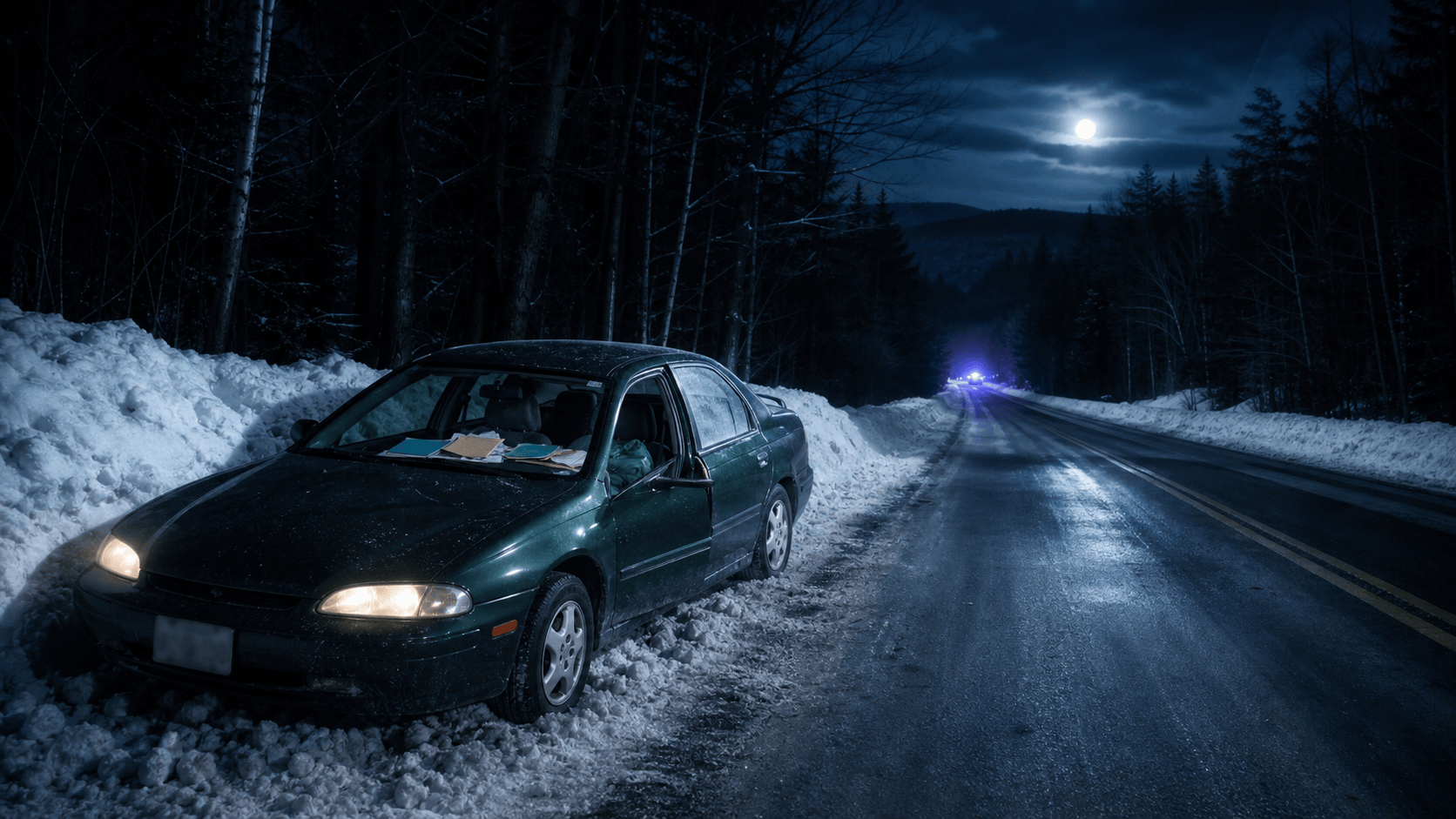
Maura Murray’s disappearance is one of those cases where every detail seems important, and somehow none of them are enough.
On February 9, 2004, Maura, a 21-year-old nursing student at the University of Massachusetts Amherst, disappeared after crashing her car on Route 112 in Haverhill, New Hampshire.
Before the crash, there were already strange details.
Maura had emailed professors and her work supervisor saying there had been a death in the family, though her family later said that was not true. She packed belongings into her car, withdrew cash, bought alcohol, and drove north. Where she was going is still uncertain.
Then came the crash.
Her car was found damaged on a rural road. A nearby resident spoke with her briefly and offered to call police. Maura reportedly said she had already called AAA, though there was little or no cell service in the area. By the time police arrived, she was gone.
Some of her belongings were still in the car. There was no clear sign of where she went next.
That is where the case starts splitting into theories.
Maybe she walked into the woods and became lost. Maybe someone picked her up. Maybe she was trying to disappear voluntarily. Maybe something else happened entirely. Each theory has problems, which is probably why the case has stayed so frustrating for so long.
Searches, tips, podcasts, documentaries, and online discussions have kept Maura’s name in public view. But despite all that attention, no confirmed answer has been found.
What makes the case so unsettling is how quickly everything narrows down.
A crashed car. A few minutes. A rural road.
And then nothing.
#3 The Flannan Isles Lighthouse Keepers
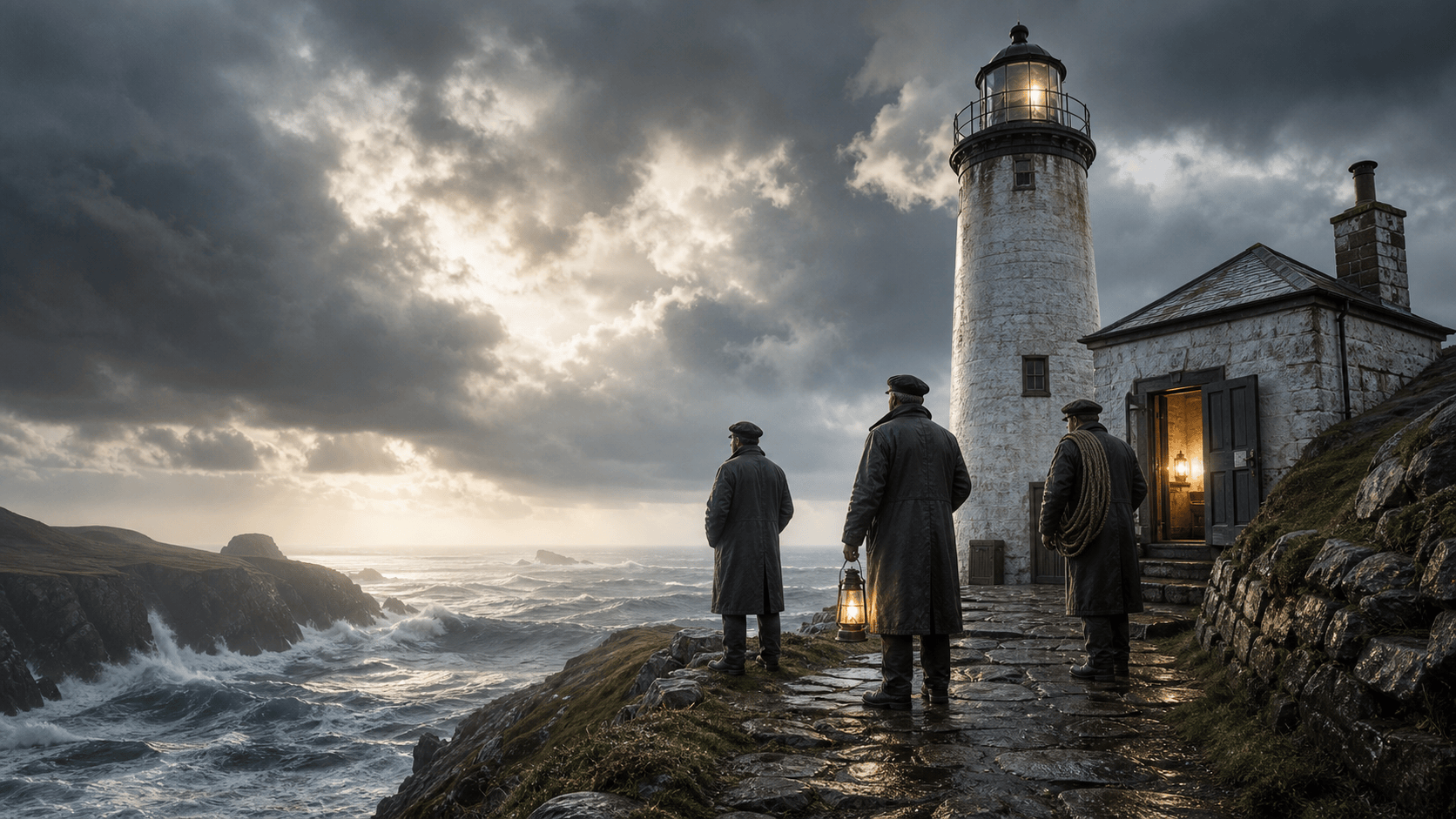
The Flannan Isles lighthouse mystery has everything a disappearance story needs: isolation, bad weather, an empty building, and the ocean being extremely unhelpful.
In December 1900, three lighthouse keepers vanished from Eilean Mòr, a remote island in Scotland’s Flannan Isles. Their names were James Ducat, Thomas Marshall, and Donald McArthur.
The first sign that something was wrong came when a passing ship noticed the lighthouse was not working. When the relief crew finally reached the island on December 26, the keepers were gone.
Inside the lighthouse, things were unsettling because they were almost normal.
The lamps had been cleaned and refilled. The beds were unmade. Some waterproof clothing was missing. There was no sign of the men anywhere on the island.
Outside, investigators found storm damage near the landing area. Railings were bent. Equipment had been disturbed. The official explanation was that the men were probably swept away by a sudden wave while trying to secure gear near the cliffs.
That is the reasonable answer.
It is also the kind of reasonable answer that leaves just enough room for people to keep arguing for more than a century.
No bodies were ever found. No one saw exactly what happened. And because the lighthouse sat alone on a remote island surrounded by rough sea, the mystery had plenty of space to grow.
The Flannan Isles case is probably not supernatural.
But it does have one of the creepiest ingredients in any disappearance: a place where people should have been, and suddenly were not.
#2 The Beaumont Children

The Beaumont children case is one of Australia’s most painful unsolved disappearances, and it is hard to talk about without feeling the weight of it.
On January 26, 1966, Jane, Arnna, and Grant Beaumont went to Glenelg Beach near Adelaide, South Australia. It was Australia Day, the weather was hot, and the beach was crowded. The children had visited the beach before, and the trip did not seem unusual.
They were expected home around noon.
They never came back.
What made the case even more disturbing were the witness sightings. Several people reported seeing the children near the beach with an unidentified man. He was described as being in his mid-thirties, with fair to light-brown hair, a thin face, and a tanned complexion. Some witnesses said the children seemed relaxed around him, which only made the question harder: did they know him, or had he somehow gained their trust?
There were other details too. Reports placed the children at a nearby shop and around the beach area after they should have already been heading home. One witness later said he saw them walking away calmly, holding hands and laughing, though the timing of that sighting became uncertain.
That is the part that makes the case so haunting.
The clues did not point cleanly in one direction. They created a shape, but not an answer.
Despite huge searches, national attention, suspects, theories, and decades of investigation, no confirmed trace of Jane, Arnna, or Grant has ever been found.
The Beaumont children’s disappearance changed how many Australian parents thought about safety. It turned an ordinary beach trip into one of the country’s most remembered mysteries.
And after all these years, the hardest part is still the simplest one.
They were seen.
Then they were gone.
#1 Amelia Earhart

Amelia Earhart’s disappearance is famous enough that it almost feels less like a mystery and more like a permanent part of history’s furniture.
In 1937, Earhart was trying to fly around the world with navigator Fred Noonan. They had already made it most of the way when they set out from Lae, New Guinea, toward Howland Island, a tiny island in the central Pacific.
Tiny is doing a lot of work there.
Howland Island was so small that finding it from the air was difficult even under good conditions. Earhart and Noonan were flying over open ocean, relying on navigation, radio contact, and fuel that was not going to politely wait around forever.
Then the messages became worrying.
Earhart radioed that they were running low on fuel and could not see the island. One of her last known transmissions said they were flying on a line of position, trying to locate Howland. After that, contact was lost.
The official explanation is that Earhart and Noonan likely ran out of fuel and crashed into the Pacific near Howland Island.
That may be the truth.
But the clues have never stopped people from wondering.
There were reported post-disappearance radio signals. There were theories about nearby islands, especially Nikumaroro. There were searches, possible artifacts, debated photographs, and enough speculation to keep the mystery alive for decades.
Some theories are serious. Some are less serious. Some feel like they arrived wearing a very large hat and carrying no evidence.
But Earhart’s disappearance remains powerful because it has everything: a famous aviator, a dangerous flight, a tiny island, strange signals, and an ocean big enough to swallow almost any answer.
The simplest explanation may still be the right one.
The problem is that the Pacific has never been great at returning receipts.
Leave a Reply