

Before governments worried about the internet, they were busy protecting society from bikinis and sliced bread.
Governments have spent centuries protecting people from crime, disorder, and invasion. They have also protected them from bikinis and pre sliced bread.
Here are seven normal things that ended up on the wrong side of the law.
#7 Sliced Bread
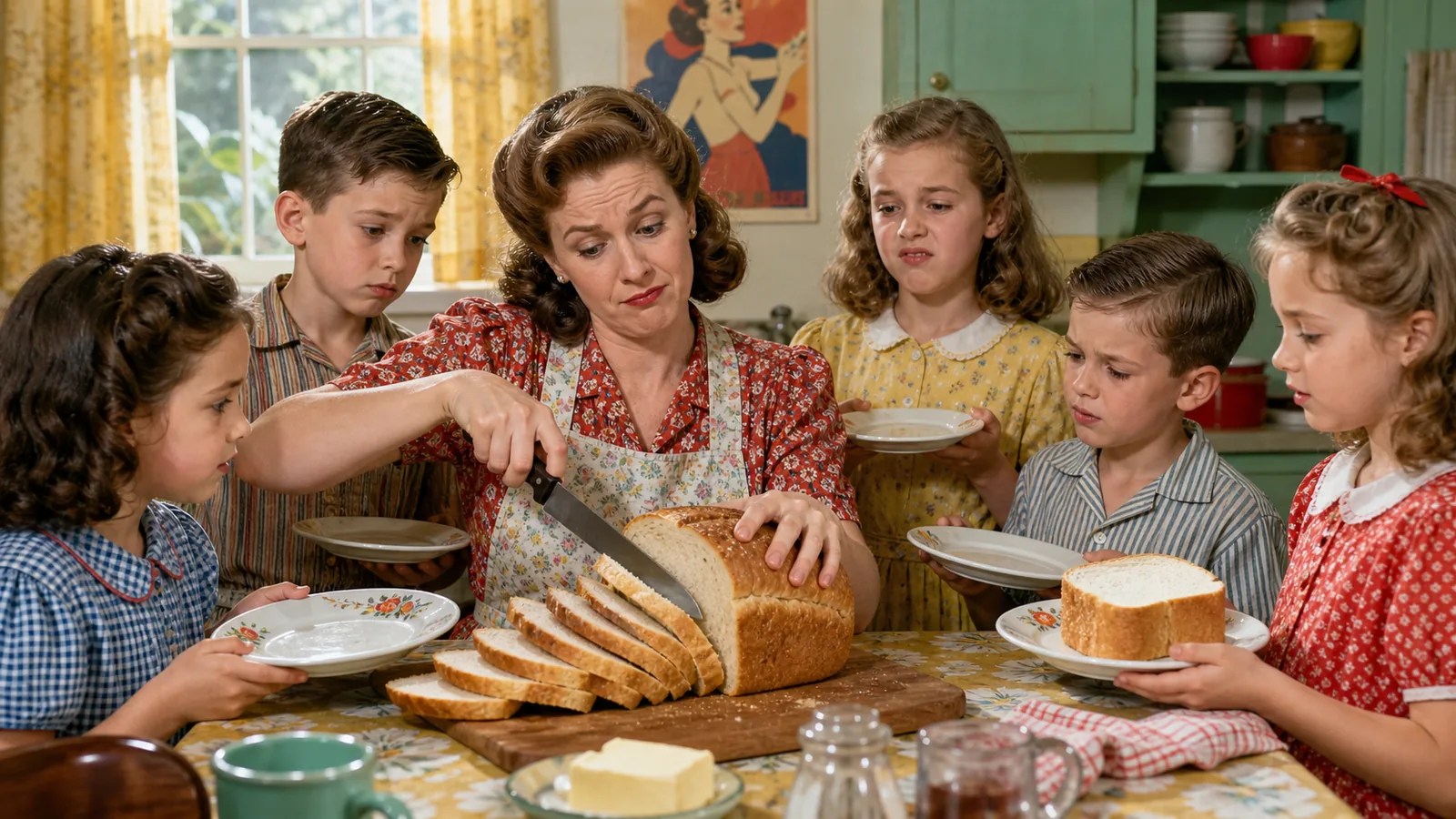
In January 1943, the United States government banned bakeries from selling pre sliced bread.
The country was deep into World War II, and officials were searching for ways to conserve materials. Pre-sliced loaves required thicker waxed-paper packaging to prevent the bread from drying out, so the War Food Administration believed banning factory slicing could reduce paper consumption. There were also concerns about conserving steel used to manufacture slicing machines, although existing bakery equipment was not being collected or dismantled.
The order took effect on January 18. Bakeries could continue selling bread, but customers had to slice it themselves at home.
This did not go over particularly well.
Pre-sliced bread had been widely available since the late 1920s, and families had grown accustomed to its convenience. Cutting enough uniform slices for several children every morning took time, created crumbs, and required a decent bread knife. One frustrated mother wrote to The New York Times explaining that she had to cut more than twenty slices for breakfast each day.
The ban also created practical problems for bakeries. Many had already purchased slicing machines, and leaving that equipment unused did little to recover the metal supposedly needed for the war effort. Meanwhile, the expected savings in waxed paper failed to justify the public irritation.
The government reversed the order on March 8, 1943, less than two months after it began.
America accepted rationing, shortages, and enormous wartime sacrifices. Being told to start manually slicing every sandwich was apparently where patience began wearing thin.
#6 Pinball Machines
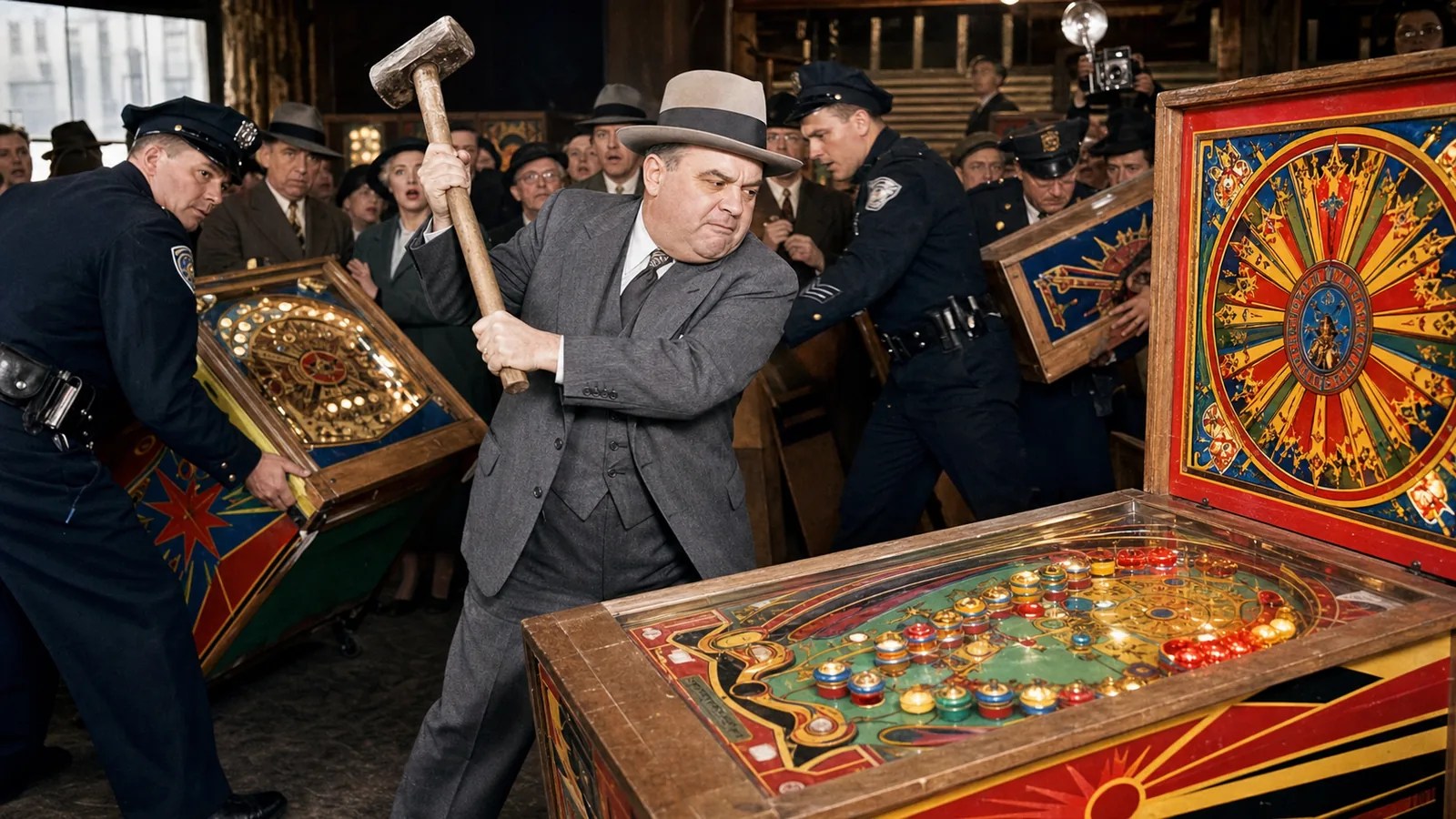
In 1942, New York City decided that pinball was not harmless entertainment. It was gambling, a threat to children, and apparently serious enough to require police raids.
Early pinball machines were different from the ones most people recognize today. They had no player-controlled flippers, so after launching the ball, players had limited influence over where it landed. Some machines also awarded free games that could be exchanged unofficially for money or prizes. To city officials, that made them gambling devices with brighter lights.
Mayor Fiorello La Guardia became the public face of the crackdown. He argued that the machines were taking nickels and dimes from schoolchildren while directing money toward organized crime. On January 21, 1942, the city outlawed pinball machines in public places.
Police raided bars, bowling alleys, candy stores, and amusement centers. Thousands of machines were confiscated. La Guardia even posed for photographs while smashing them with a sledgehammer, because quietly removing an arcade game would not have communicated sufficient moral urgency.
Pinball remained illegal in New York City for 34 years, even after flippers gave players far more control. The ban finally faced a serious challenge in 1976, when writer and skilled player Roger Sharpe demonstrated the game before the City Council.
Sharpe announced where he intended to send the ball, pulled the plunger, and made the shot. His demonstration helped prove that modern pinball involved skill rather than pure chance, and the council voted to legalize it.
For decades, New York treated pinball machines like contraband. In the end, the law was undone by one man playing a very important game. The Strong National Museum of Play preserves more of the history behind the campaign to overturn the ban.
#5 Coffee
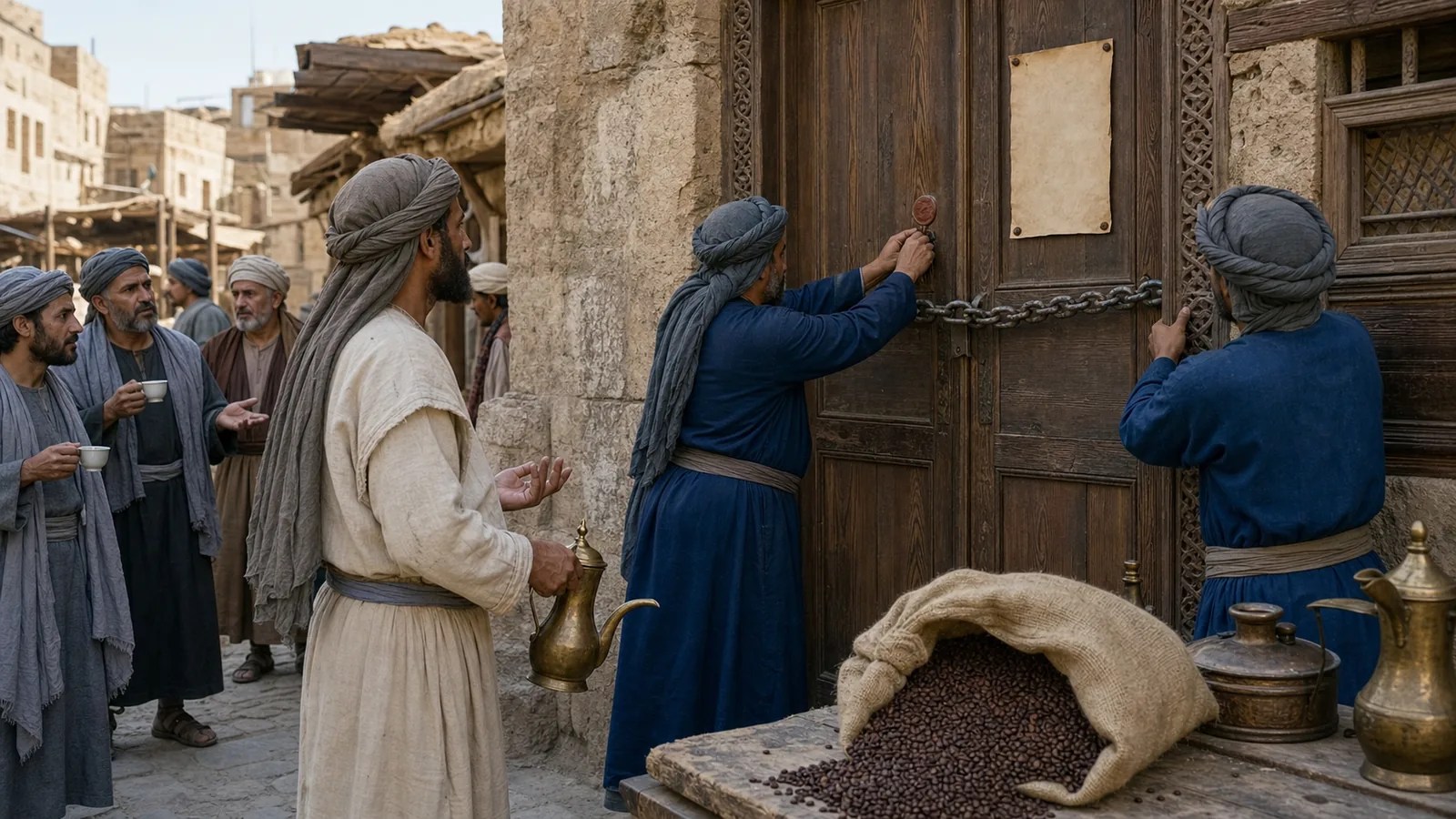
By the early 1500s, coffeehouses had become popular gathering places in Mecca. People came to drink coffee, listen to music, play games, and talk for hours. That last part may have worried officials most.
In 1511, authorities in Mecca closed the city’s coffeehouses and prohibited the drink. Coffee was still relatively new, and religious scholars debated whether its stimulating effects made it an intoxicant. Critics also claimed it could damage the body or encourage behavior they considered improper.
Coffeehouses presented a larger problem. They allowed people from different backgrounds to gather outside mosques, homes, and official spaces. Customers exchanged news, discussed politics, and occasionally criticized the people governing them. From an authority’s perspective, a room full of alert citizens talking late into the night was not exactly relaxing.
Accounts commonly identify the governor Khair Beg as the driving force behind the ban. He reportedly gathered legal and medical opinions against coffee before ordering shops closed. The decision was soon challenged by higher authorities in Cairo, who rejected the reasoning behind it.
The prohibition did not last. Coffee continued spreading across the Ottoman world, and coffeehouses became important centers of social life. Governments would try restricting them again, usually because of the conversations and political activity happening inside.
Officials claimed the problem was the drink. Their repeated attempts to close the places where people drank it suggest they were worried about something else.
#4 Women Wearing Trousers

In 1800, Paris issued an ordinance requiring any woman who wanted to “dress like a man” to obtain permission from the police. In practical terms, women could not legally wear trousers in public without official approval and a medical certificate.
This was not simply a fight over fabric. Trousers were associated with male authority, physical independence, and the revolutionary working class. Women adopting them challenged the rigid social order that French officials were trying to restore after the Revolution.
Some women ignored the rule. Others applied for permission because trousers made their jobs easier or allowed them to ride horses, travel, and move around without dragging several layers of clothing through nineteenth-century Paris.
The rules eventually loosened. Women were permitted to wear trousers while holding the reins of a horse and, later, while riding a bicycle. Apparently, trousers became less threatening when the woman wearing them was attached to transportation.
By the twentieth century, the ordinance was no longer enforced. Women wore trousers openly, fashion changed, and French law embraced legal equality between men and women. The old restriction remained buried in government records, however, creating reports that wearing trousers was technically still illegal for Parisian women.
In 2013, the French Ministry of Women’s Rights clarified that the ordinance was incompatible with modern equality protections and had already been implicitly repealed. A French Senate record explains the strange legal history behind it.
For generations, women were told trousers were improper, unfeminine, or even threatening to public order. Eventually, society moved on and left the ordinance sitting in the archives, where it belonged.
#3 Football

In medieval England, football looked less like an organized sport and more like a disagreement involving an entire village.
There were few standardized rules, no carefully marked field, and sometimes no clear limit on how many people could participate. Rival groups pushed a ball through streets and across fields while tackling, shoving, and occasionally damaging whatever happened to be in the way. Shops, homes, and bystanders were expected to survive the match as best they could.
In 1314, King Edward II supported a proclamation banning football in London. The order complained about the “great noise” caused by people struggling over large balls and warned that the games could lead to serious trouble. Anyone caught playing risked imprisonment.
Edward II was not the last ruler to take aim at the sport. Later English kings repeatedly restricted football because it was violent, disruptive, and competed with archery practice. England depended heavily on trained archers for warfare, and officials were not thrilled that men were spending their free time chasing a ball instead of preparing to launch arrows at France.
The restrictions did not eliminate football. People kept playing it in towns and villages, sometimes openly and sometimes despite local authorities trying to stop them. The game was simply too popular to disappear because a royal order said everyone should find a more militarily useful hobby.
Football eventually developed standardized rules, designated fields, and referees. Governments got the archery practice they wanted for a while, but football was the activity people chose to keep.
#2 Bikinis
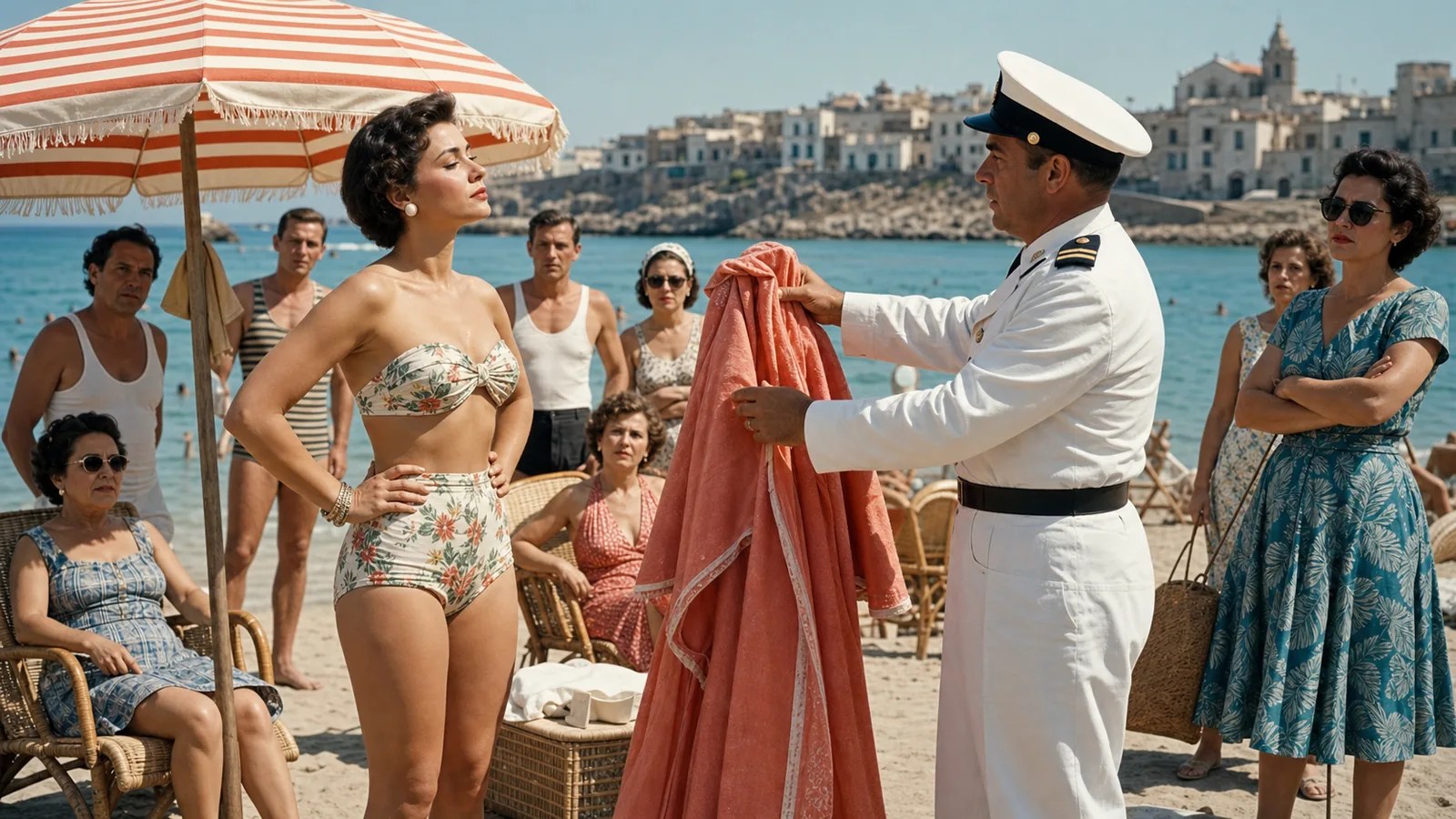
When the modern bikini appeared in 1946, it was marketed as something explosive. That was not subtle branding. Designer Louis Réard named it after Bikini Atoll, where the United States had recently conducted atomic bomb tests.
The swimsuit was so revealing by contemporary standards that Réard reportedly struggled to find a professional model willing to wear it. Micheline Bernardini, a dancer at a Paris casino, eventually introduced it to the public.
Governments were less enthusiastic. Spain and Italy prohibited bikinis on public beaches, while restrictions also appeared in Belgium, Portugal, Australia, and parts of the United States. Officials treated the swimsuit as a threat to public decency rather than a slightly smaller arrangement of fabric.
Spain enforced particularly strict standards under Francisco Franco’s dictatorship. Police and religious authorities monitored beaches, and women wearing swimsuits considered too revealing could be ordered to cover themselves or leave.
The rules became harder to maintain as European tourism grew. Coastal towns wanted foreign visitors, and those visitors were arriving with their own ideas about beachwear. Benidorm’s mayor, Pedro Zaragoza, recognized that enforcing conservative clothing rules was not helping his town compete for vacation money.
In 1952, Zaragoza authorized bikinis on Benidorm’s beaches. The backlash reportedly became serious enough that he traveled hundreds of kilometers by Vespa to seek support from Franco directly. The gamble worked, and Benidorm eventually became one of Spain’s most famous resort destinations.
The bikini continued spreading through movies, magazines, and popular culture until governments largely abandoned the fight. Tourism, fashion, and millions of determined sunbathers had already settled the argument.
#1 Christmas

In 1647, England’s Puritan-controlled Parliament effectively abolished Christmas as an official feast day.
Puritans considered the holiday insufficiently biblical and disliked its connections to older Catholic traditions. They were also appalled by how people celebrated it. Christmas in seventeenth-century England involved heavy drinking, gambling, public feasts, games, and crowds moving between houses demanding food or money. It was less quiet family dinner and more annual neighborhood takeover.
Parliament ordered shops and markets to remain open on December 25. Churches were not supposed to hold special Christmas services, and everyone was expected to treat the occasion like an ordinary workday.
Many people refused. Shops closed anyway, illegal services were held, and protests broke out in several towns. In Canterbury, resistance to the restrictions helped trigger a riot in 1647. Protesters decorated doorways with holly, played football in the streets, and confronted local officials attempting to enforce the rules.
The campaign crossed the Atlantic as well. In 1659, the Puritan government of Massachusetts Bay made celebrating Christmas a punishable offense. Anyone caught feasting, avoiding work, or otherwise observing the holiday could be fined five shillings. The original law is preserved by the Massachusetts Trial Court Law Libraries.
England’s restrictions disappeared after the monarchy was restored in 1660. Massachusetts repealed its ban in 1681, although Christmas remained unpopular in parts of New England for generations.
Governments had banned clothing, drinks, games, and food before. Banning Christmas was more ambitious. Officials were trying to make an entire population wake up on December 25 and agree that nothing special was happening. People did not cooperate.
Leave a Reply