

The strangest witness in a crime case is not always a person. Sometimes it is a watch, a map, or a speck of plant dust.
Crime stories usually have the same familiar clues: fingerprints, witnesses, security cameras, someone lying badly enough to deserve a trophy.
But every now and then, a case turns on something much stranger.
A fitness tracker. A satellite image. A trace of pollen. A family tree built from DNA. The kind of evidence that sounds less like a detective found it and more like technology wandered into the room late and quietly fixed the whole thing.
These are five cases where investigators solved, or helped solve, a mystery using technology no one expected to become the key witness.
#5 The Phone Data in the Idaho Murders

The 2022 University of Idaho murders were already horrifying before the technology side of the investigation came into focus.
Four students, Madison Mogen, Kaylee Goncalves, Xana Kernodle, and Ethan Chapin, were killed in an off-campus home in Moscow, Idaho. For weeks, the case seemed to sit in that awful space where everyone knew something terrible had happened, but nobody outside the investigation knew where the answer was coming from.
Then the pieces started to stack up.
Investigators looked at surveillance footage showing a white Hyundai Elantra near the crime scene. They examined DNA found on a knife sheath. They used genetic genealogy to help point toward a suspect. And they looked at cell phone records to build a larger picture of movement before and after the murders.
That is what makes this case fit the list. It was not one magic gadget solving everything in a neat little TV moment. It was modern investigation working like a net: cameras, phone data, DNA, databases, and old-fashioned police work pulling tighter around the same person.
Bryan Kohberger was arrested in December 2022. In July 2025, he pleaded guilty and was sentenced to four consecutive life terms without the possibility of parole.
It is a grim case, so the humor stays outside the room on this one. But the technology angle is still striking. A car on camera, a phone’s movement, and DNA on a small object helped turn a seemingly impossible search into a case with an answer.
#4 The Fitbit Timeline
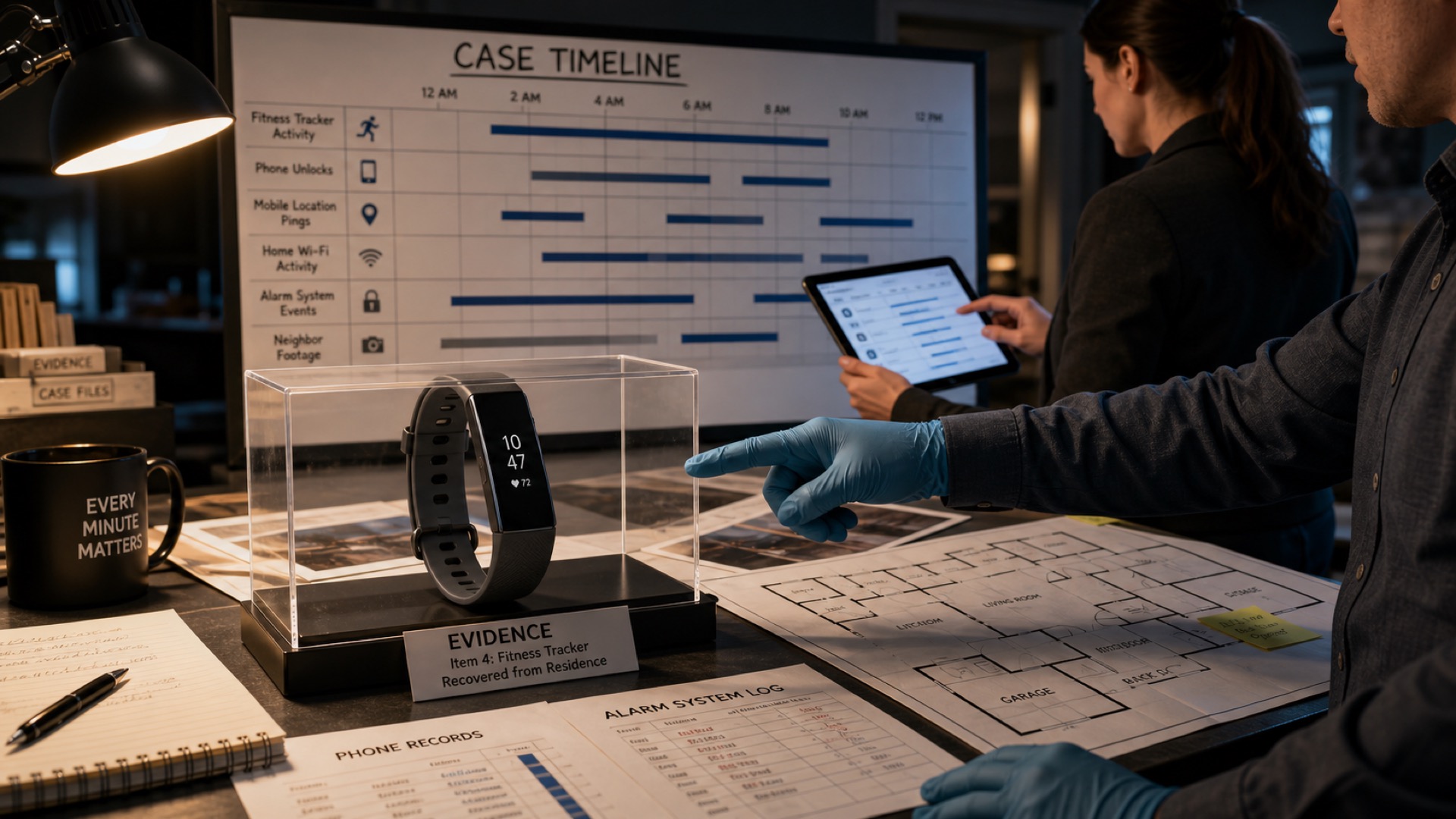
When Richard Dabate told police what happened to his wife, Connie, the story was dramatic.
According to him, a masked intruder had broken into their Connecticut home in December 2015, killed Connie, attacked him, and left him tied up. It sounded like the kind of home invasion story that would send investigators looking for a stranger.
Then Connie’s Fitbit had something to say.
The fitness tracker showed movement after the time Richard claimed she had already been killed. That mattered because it did not just slightly bump into his timeline. It walked right through it wearing sneakers.
And it was not the only technology pointing in that direction. Prosecutors also used evidence from phones, the home alarm system, and other digital records to argue that Richard’s version of events did not match reality.
In 2022, Richard Dabate was convicted of murder, tampering with evidence, and making a false statement. He was later sentenced to 65 years in prison.
The Fitbit did not solve the case by itself. That is important. Real investigations are messier than a neat gadget commercial. But it became one of the strangest witnesses in the room: a small device quietly recording steps while a murder timeline fell apart.
#3 The Pollen That Pointed to a Crime Scene
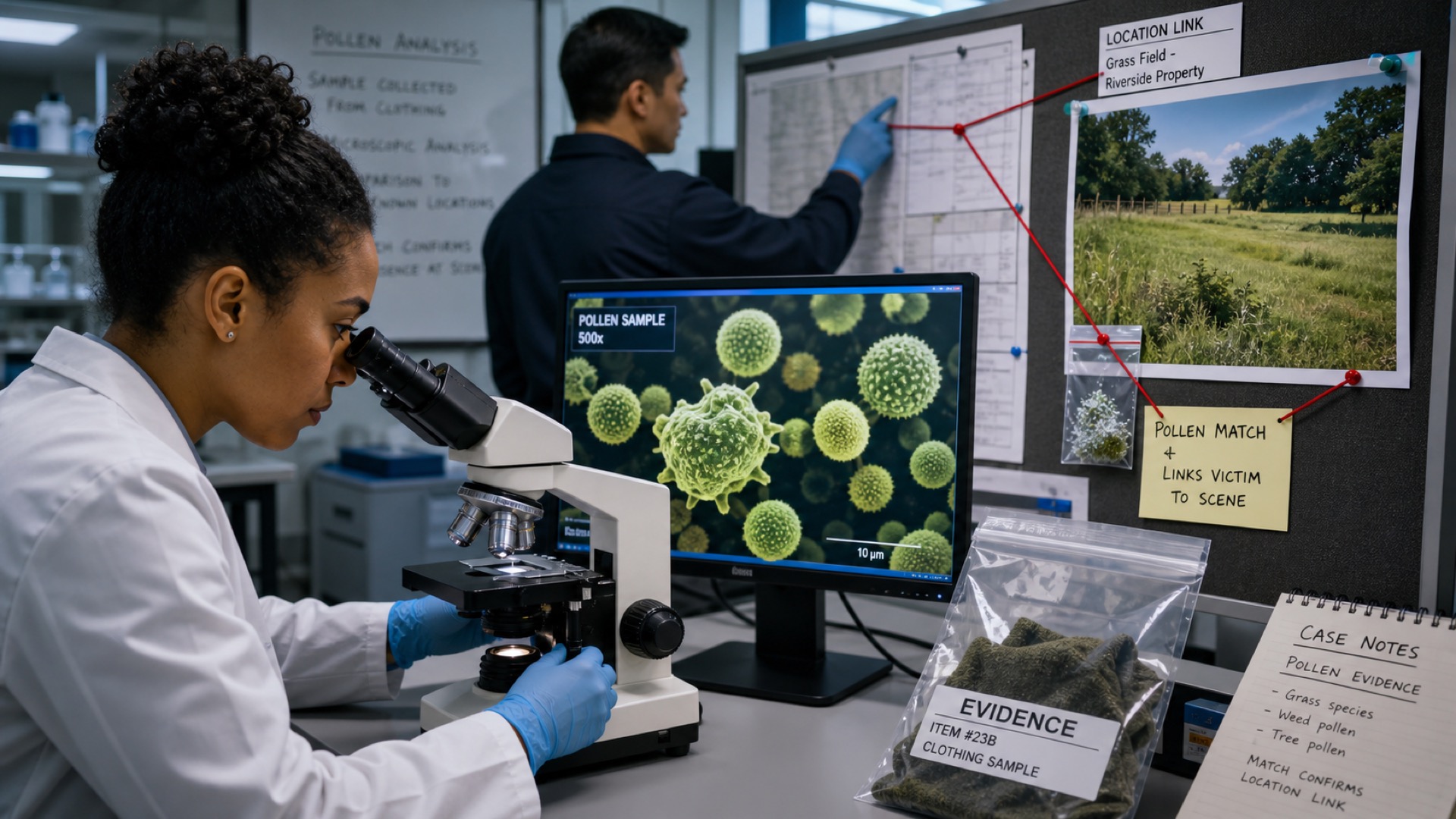
Pollen sounds like the least intimidating evidence possible.
It is tiny. It floats around. It makes people sneeze. It does not exactly walk into court wearing sunglasses and say, “I know where the body was.”
But in the murder investigation of Mellory Manning in New Zealand, pollen became a serious clue.
Manning was killed in Christchurch in 2008, and investigators needed to figure out where the attack had happened. That is where forensic palynology came in, which is the study of pollen and spores. Fancy name. Very small evidence.
Scientists found rare pollen on Manning’s clothing. According to trial reporting, that same rare mutated grass pollen was also found at a property police believed was connected to the crime scene. That mattered because pollen can be surprisingly local. Certain plants leave behind tiny biological fingerprints of a place.
In other words, the clue was not a weapon, a confession, or a dramatic footprint in the mud.
It was plant dust.
And somehow, plant dust helped investigators connect a victim to a location. That is the strange thing about forensic science. Sometimes the evidence that looks like nothing is the thing quietly pointing at everything.
#2 The Car on Google Earth

William Moldt disappeared in Florida in 1997 after leaving a nightclub.
He was 40 years old. He had called his girlfriend to say he was heading home. Then he vanished, and for more than two decades, the case went cold.
The strange part is that the answer was sitting in a pond the whole time.
In 2019, a former resident of a Wellington, Florida neighborhood was looking at the area on Google Earth when he noticed what looked like a car underwater. He contacted someone who lived nearby, and a drone was used to confirm that, yes, there really was a vehicle in the pond.
When authorities pulled it out, they found human remains inside. They were later identified as Moldt’s.
This one is a little different from the others because it was not a murder case being cracked by some futuristic lab test. It was a missing person case finally answered by satellite imagery, a curious person zooming around online, and a drone checking what everyone else had missed.
That is what makes it so strange. No one set out to solve a 22-year-old disappearance that day. Someone just looked at a map closely enough and saw what had been hiding in plain sight.
#1 The Golden State Killer DNA Breakthrough
For decades, the Golden State Killer case felt like one of those crimes that might never get an ending.
The attacks stretched across California in the 1970s and 1980s. Different areas knew him by different names: the East Area Rapist, the Original Night Stalker, the Visalia Ransacker. Investigators had DNA, but for years, that did not mean what it means now. They could connect crimes to each other, but they could not connect them to a name.
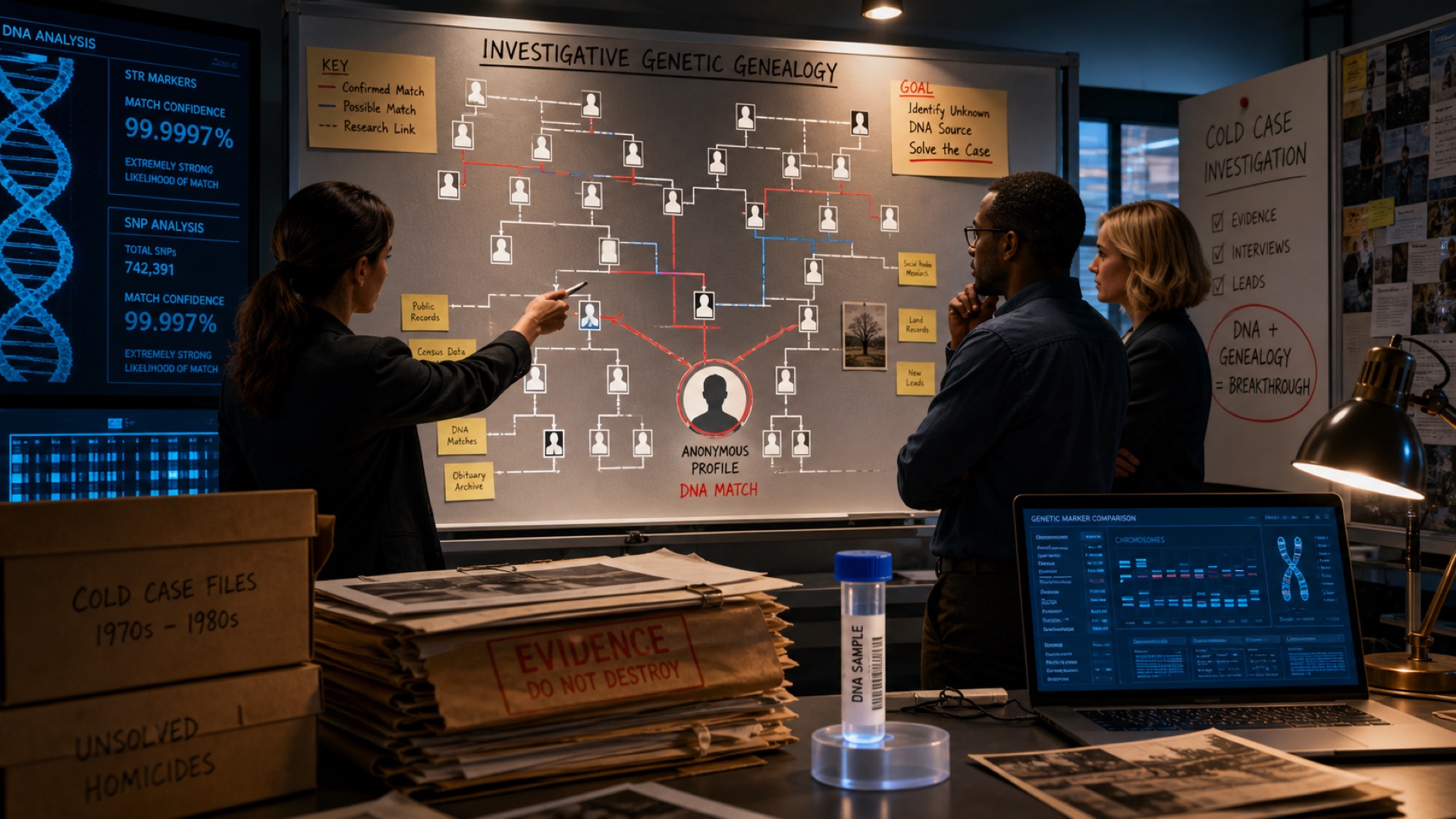
Then investigative genetic genealogy changed the case.
Instead of only comparing crime-scene DNA to a traditional law enforcement database, investigators used genealogy research to look for distant relatives. From there, they built family trees, narrowed down possibilities, checked age and location, and eventually focused on Joseph James DeAngelo.
Police then confirmed the match using DNA collected from items DeAngelo had discarded.
In 2018, more than 30 years after the last known murder tied to the case, DeAngelo was arrested. In 2020, he pleaded guilty to 13 murders and 13 kidnapping-related charges, and he was sentenced to life in prison without the possibility of parole.
This gets the number one spot because it was not just one case being solved. It was a before-and-after moment. After this, cold cases all over the country started looking different.
A family tree, a database, and a DNA sample did what decades of fear and frustration could not. They gave the case a name.