

The clues were ordinary. What they revealed changed the entire investigation.
How much can one ordinary object really prove?
In the right investigation, quite a lot. The five objects on this list helped challenge alibis, connect suspects to crime scenes and reshape entire trials. None looked remarkable at first. Most could have been thrown away without a second thought. Instead, they ended up in evidence bags.
#5 The Cat Hair on the Jacket

When Shirley Duguay disappeared from Prince Edward Island in October 1994, investigators found signs that something violent had happened inside her abandoned car. Her body was discovered several months later in a shallow grave.
Nearby, police recovered a plastic bag containing a man’s leather jacket and a pair of shoes. The jacket was stained with Duguay’s blood, but it also carried something less expected: more than two dozen white cat hairs caught in the lining.
One investigator remembered seeing a large white cat at the home of Douglas Beamish’s parents. Beamish was Duguay’s estranged common-law partner and had become a suspect in her murder. The cat’s name was Snowball.
Scientists compared DNA from the hairs on the jacket with a sample taken from Snowball. The profiles matched. Because researchers had never used feline DNA this way in a criminal trial, they also tested other cats from Prince Edward Island to show that the match was not simply common among the local cat population.
That kind of forensic surprise has appeared in several cases solved by technology no one expected, but in 1994, using a household pet’s DNA in court was something genuinely new.
The cat hair did not stand alone. Investigators also had blood, footwear evidence and other material connecting Beamish to the crime. Still, Snowball’s DNA helped tie him directly to the jacket. Beamish was convicted of second-degree murder in 1996, and the case became the first criminal trial to use nonhuman DNA as evidence.
#4 The Belt in the Selfie

A few hours before 18-year-old Brittney Gargol was found dead beside a road near Saskatoon, Canada, she posed for a selfie with her friend Cheyenne Rose Antoine.
It looked like an ordinary photograph from a night out. Both women faced the camera, and Antoine wore a large black belt around her waist.
That belt became one of the most important pieces of evidence in the case.
Investigators found a matching belt near Gargol’s body. Police believed it had been used to strangle her, but Antoine initially denied responsibility. She claimed the two women had visited several bars before Gargol left with an unidentified man.
Her online activity did not help that story.
After Gargol had already died, Antoine posted a message on her Facebook page asking where she was and saying she hoped she had arrived home safely. It appeared concerned until investigators began comparing it with witness statements, location information and the photograph taken earlier that evening.
A friend eventually told police that Antoine had arrived at their home after the killing and admitted that she had fought with Gargol. The selfie supplied the visual connection: Antoine had been wearing the same distinctive belt found near the body only hours later.
Antoine pleaded guilty to manslaughter in 2018 and received a seven-year prison sentence. The photograph did not capture the crime itself. It captured the object she could not explain away.
#3 The £5 Note in Jean Jordan’s Handbag
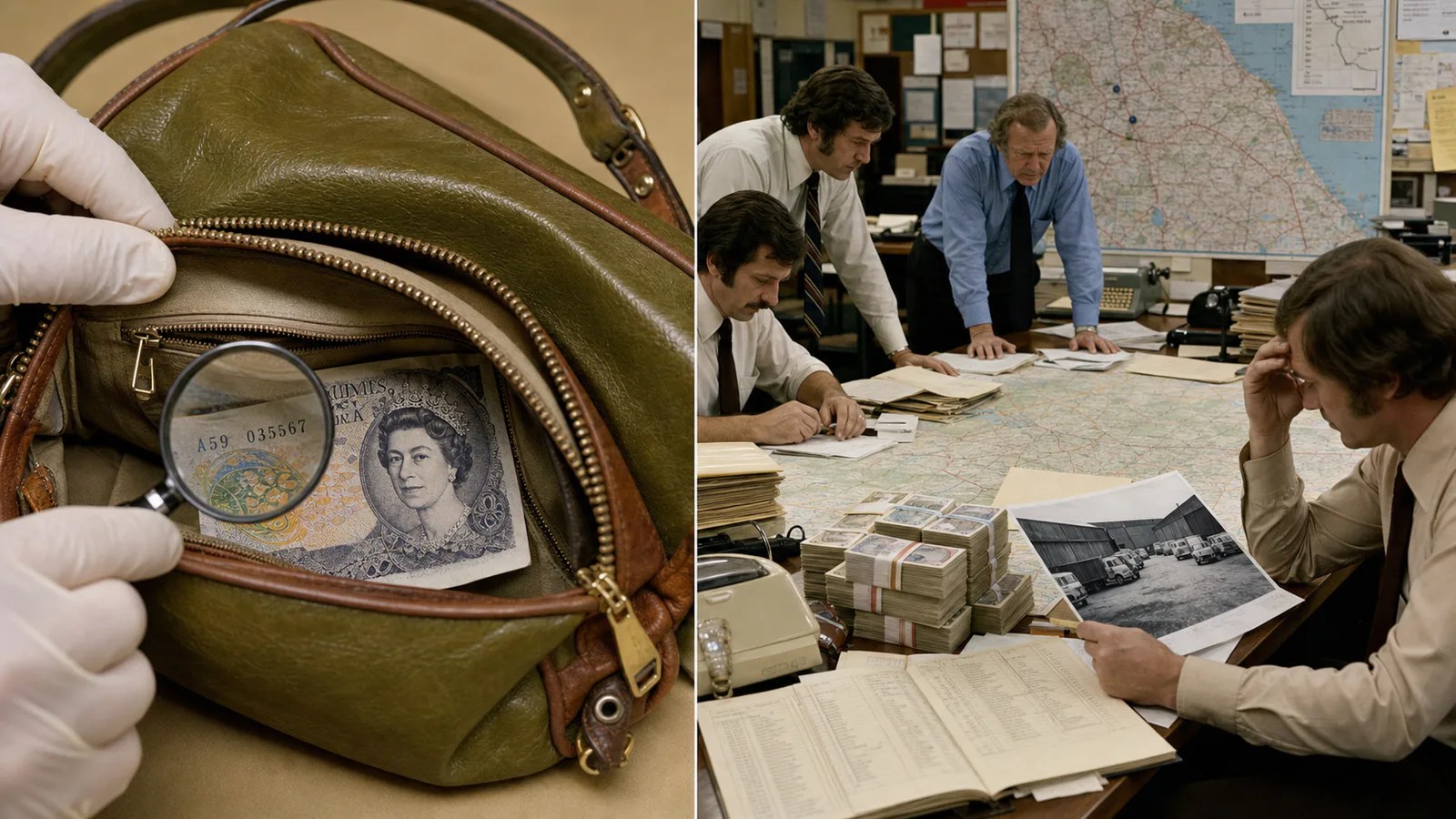
When 20-year-old Jean Jordan was murdered in Manchester in October 1977, police found a newly issued £5 note hidden inside a compartment of her handbag.
The serial number made it traceable.
Investigators learned that the note belonged to a batch recently delivered to several Midland Bank branches near Bradford. Those notes had been collected by local companies and distributed inside employee pay packets, giving police a limited group of workplaces to examine.
One of them was T. & W.H. Clark, the transport company where Peter Sutcliffe worked as a lorry driver.
Police visited Sutcliffe’s home on November 2, 1977, and questioned him about the night Jordan was killed. His wife supported his claim that he had been home. Officers returned six days later, searched the house and questioned him again, but they found nothing they considered strong enough to pursue.
The £5 note had brought investigators directly to the man they were searching for. They simply did not know it yet.
The wider investigation became overwhelmed by thousands of statements, poor recordkeeping and later fixation on hoax letters and a recording supposedly sent by the killer. Sutcliffe’s appearance and background repeatedly placed him close to the evidence, but information gathered during separate interviews was not handled effectively.
Sutcliffe was finally arrested in January 1981 after police found him with a sex worker and discovered weapons nearby. He confessed to murdering 13 women.
By then, investigators had interviewed him nine times. The £5 note had brought them to his door during the first one.
#2 The Camera in the Washing Machine
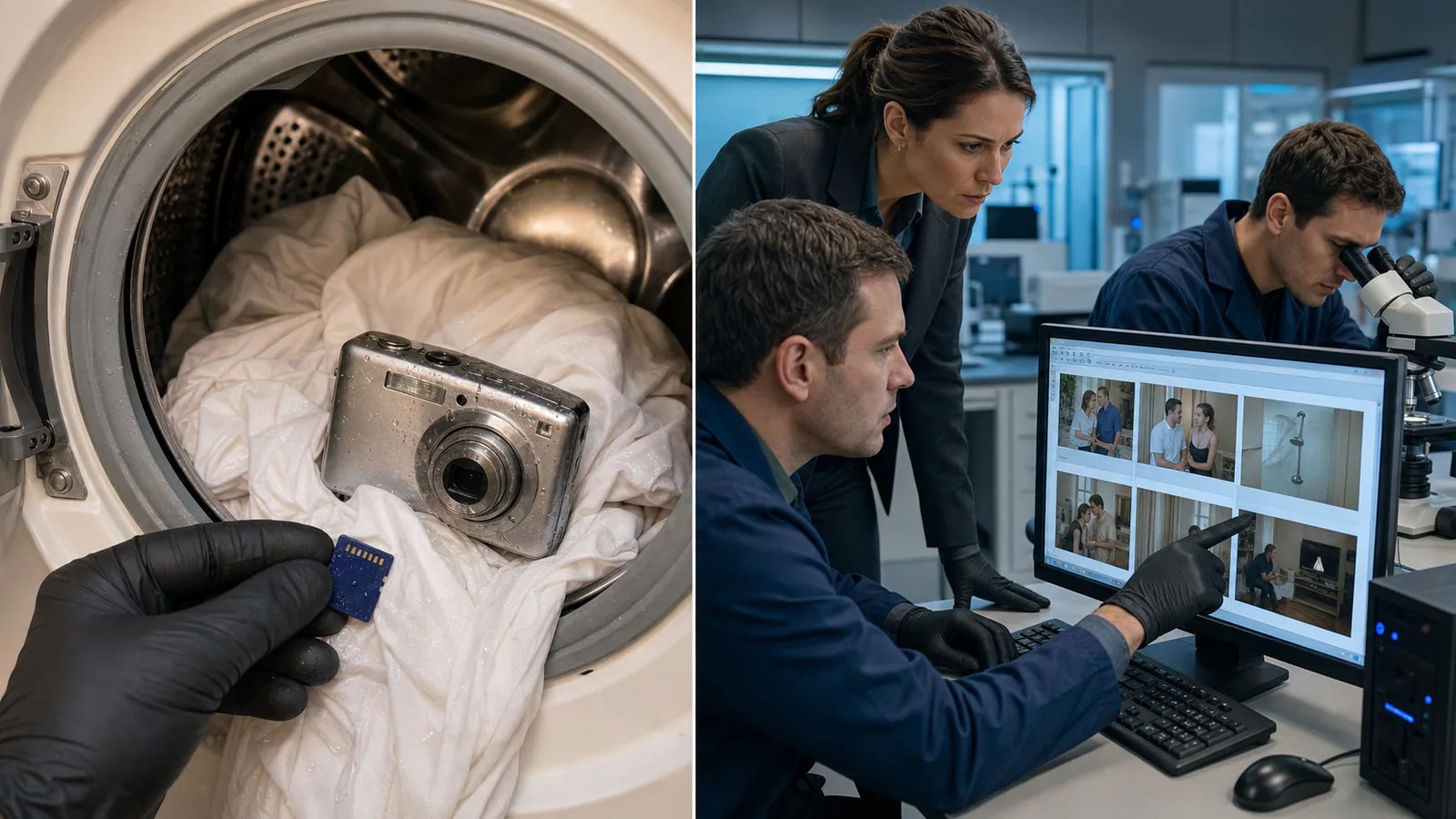
When Travis Alexander was killed inside his Arizona home in June 2008, investigators found a digital camera mixed with bedding inside the washing machine.
Someone had deleted the photographs and attempted to damage the camera. The memory card, however, still worked well enough for forensic technicians to recover what had been erased.
The photographs created a timeline that was difficult to argue with.
Several images showed Jodi Arias inside Alexander’s house on the day he died. Others showed Alexander in the shower shortly before the attack. The camera had also captured accidental images during the confusion that followed, including one taken only minutes later.
Arias initially told investigators that she had not visited Alexander that day. After the recovered photographs proved otherwise, her account changed. She then claimed that masked intruders had entered the house. Her story later changed again when she argued that she had acted in self-defense.
The camera was not the only evidence against her. Investigators also recovered DNA and a bloody palm print containing genetic material from both Arias and Alexander. But the photographs made it impossible for her to maintain her original claim that she had never been there.
Arias was convicted of first-degree murder in 2013 and later sentenced to life in prison without the possibility of parole. The camera remained one of the clearest pieces of evidence placing her inside the house and documenting the final hours before Alexander’s death.
#1 The Gloves That Took Over a Trial
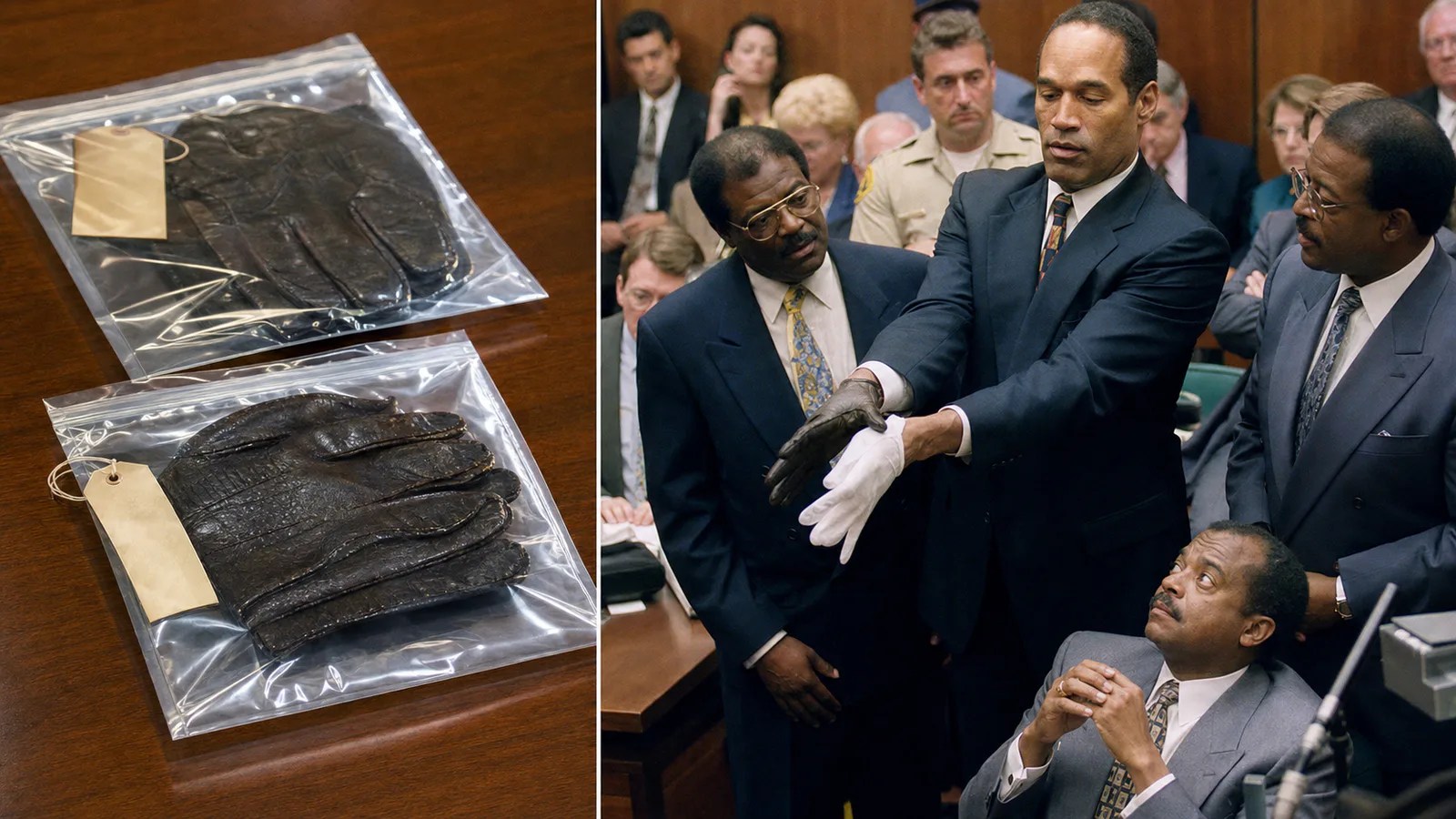
Few pieces of evidence have ever dominated a courtroom quite like the leather gloves from the O.J. Simpson trial.
After Nicole Brown Simpson and Ron Goldman were killed in Los Angeles in June 1994, investigators found one dark leather glove at the crime scene. Detective Mark Fuhrman later found its matching partner outside Simpson’s home.
Prosecutors believed Simpson had worn the gloves during the killings. They presented blood, hair and fiber evidence connecting them to Simpson and both victims. On paper, the pair appeared to provide a physical link between the crime scene and his property.
Then the prosecution asked Simpson to put them on.
In front of the jury and television cameras, Simpson pulled latex gloves over his hands and struggled to fit the leather gloves over them. They appeared too small. The prosecution argued that moisture, blood and laboratory handling could have affected the leather, while the defense turned the demonstration into the defining moment of the trial.
During closing arguments, defense attorney Johnnie Cochran delivered the line that followed the case everywhere: “If it doesn’t fit, you must acquit.”
The gloves were supposed to make the prosecution’s case easier to understand. Instead, the demonstration strengthened the defense’s claims that the evidence had been mishandled or planted. Concerns surrounding the collection of evidence, along with Fuhrman’s credibility, gave jurors reasons to doubt the prosecution’s version of events.
Simpson was acquitted of the murders in 1995. Two years later, a civil jury found him liable for the wrongful deaths of Brown Simpson and Goldman.
The gloves never provided the simple courtroom answer prosecutors expected. They became the image most people still remember from the entire case.
Leave a Reply