

Courtrooms were built for justice, not necessarily for arguments about footlong sandwiches and imaginary fighter jets.
Some lawsuits sound ridiculous at first. Then you look a little closer and realize the real story is usually stranger than the headline. Sometimes the case is about false advertising. Sometimes it is about principle. Sometimes it is about a missing pair of pants and an amount of money that makes everyone pause for a second.
Some of these cases sit in the same neighborhood as historical facts that sound made up, except these came with court filings, lawyers, and someone having to say all of it out loud in a legal setting.
Here are five lawsuits that sound like jokes, but were very real.
#5 The Subway Footlong Lawsuit

At some point, everyone has had a disappointing sandwich. Usually, you complain for six seconds, eat it anyway, and move on with your life like a functioning member of society.
The Subway “Footlong” lawsuit went a little further than that.
In 2013, Subway faced lawsuits after customers claimed some of its Footlong sandwiches were not actually twelve inches long. The whole thing started after a photo of a sandwich next to a measuring tape went viral, because apparently the internet was ready for bread-based legal drama.
On the surface, it sounds ridiculous. A courtroom. Lawyers. A sandwich being measured like it is evidence in a murder case.
But the real issue was not just one sad lunch. The lawsuit argued that Subway advertised a specific size, and customers expected the sandwich to match that promise. Subway later said the word “Footlong” was more of a descriptive name than an exact measurement, which is a bold position when the word “foot” is right there wearing a tiny legal hat.
The case eventually led to a settlement agreement where Subway agreed to take steps to make sure the bread was at least twelve inches. Later, an appeals court criticized part of the settlement because the lawyers were getting paid while the customers did not really receive much.
So yes, the Footlong lawsuit sounds like a joke.
But it was also a real reminder that if a company makes a promise big enough to print on the menu, somebody somewhere might bring a ruler.
#4 The Red Bull “Gives You Wings” Lawsuit

The Red Bull lawsuit sounds fake because everyone knows energy drinks do not literally give you wings.
If they did, airports would be a disaster. Also gyms. Also college libraries during finals week.
But the real lawsuit was not about someone cracking open a can, standing on a roof, and waiting for aviation to happen. The actual complaint was about advertising. Plaintiffs argued that Red Bull’s marketing suggested the drink could improve things like concentration, reaction speed, and performance more than a normal caffeine product.
That is less cartoonish, but honestly still pretty funny when the slogan involved imaginary wings.
In 2014, Red Bull agreed to settle a class-action lawsuit for millions of dollars, while denying that it had done anything wrong. Customers who qualified could receive either cash or Red Bull products.
So no, nobody successfully sued because they failed to sprout feathers.
The case was really about how far a brand can push a catchy slogan before someone asks, “Okay, but what exactly are you promising here?” And once lawyers start asking that question, even a can of energy drink has to sit up straight.
#3 The Froot Loops Fruit Lawsuit
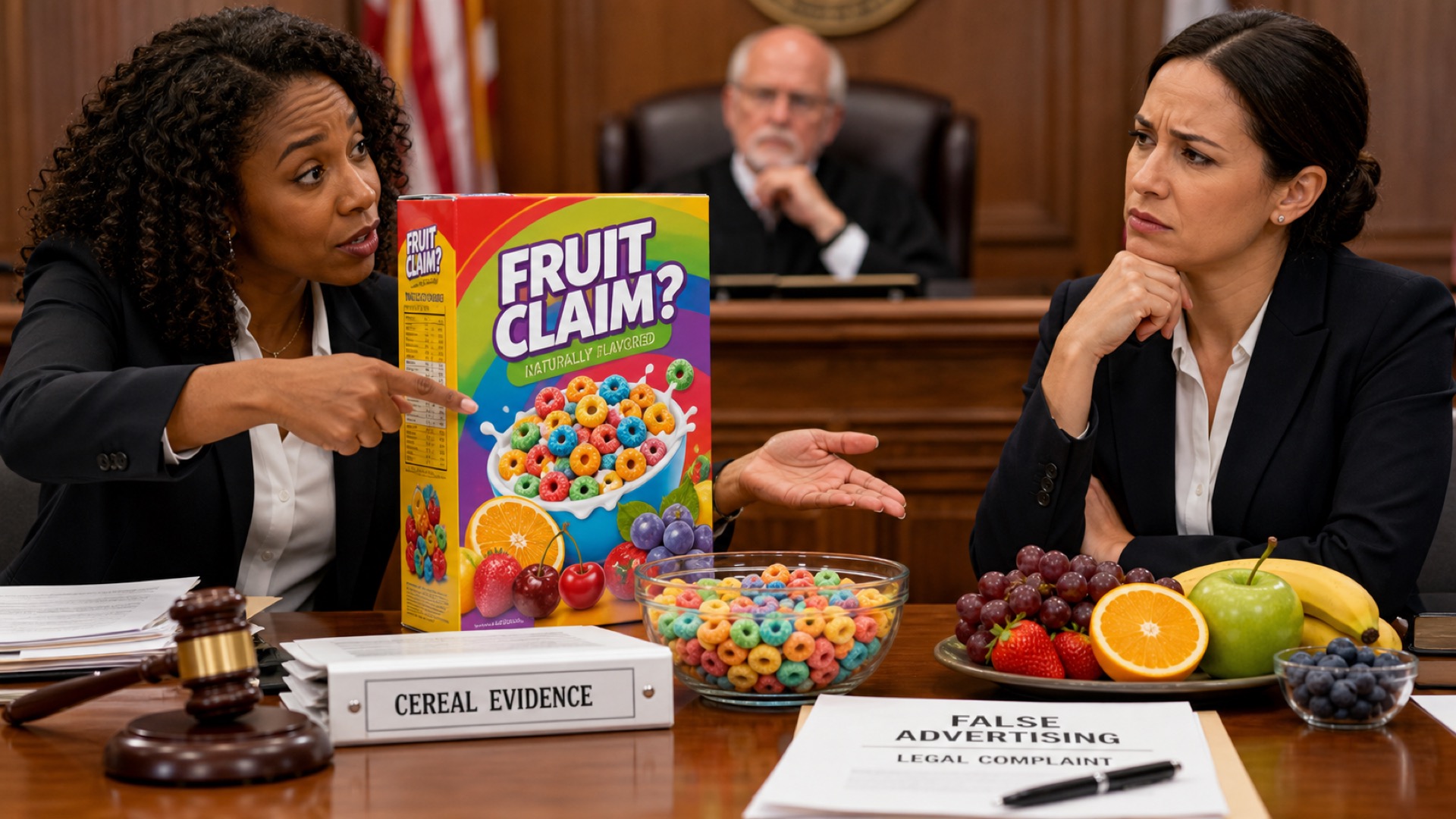
The Froot Loops lawsuit is one of those cases where the headline does most of the damage by itself.
A lawsuit claimed that the cereal’s name and packaging could mislead people into thinking Froot Loops contained actual fruit. Not fruit flavor. Not fruit-adjacent breakfast optimism. Actual fruit.
The court did not buy it.
One major problem was right there in the name: “Froot” is not spelled “fruit.” That may feel like a small detail, but legally speaking, it matters. The court found that a reasonable consumer would not look at a box of brightly colored cereal rings and think, yes, this is where the orchard ended up.
And honestly, that seems fair.
Froot Loops are many things. Colorful. Sugary. Aggressively committed to circles. But they do not exactly give off “fresh produce section” energy.
The case was dismissed, but it still belongs here because it sounds like a parody of a lawsuit someone would invent to make fun of lawsuits. Except it was real. It had filings. It had arguments. It had a court needing to explain, in legal terms, that cereal called “Froot” was not secretly promising a bowl of chopped strawberries.
#2 The $54 Million Pants Lawsuit

A missing pair of pants is annoying.
Maybe even very annoying, depending on the pants. Maybe they fit perfectly. Maybe they made you look like a person who had everything under control. That is rare. We should respect it.
But in 2005, a dispute over a pair of pants turned into something much bigger than dry-cleaning frustration.
Roy Pearson, an administrative law judge in Washington, D.C., sued a small dry-cleaning business after claiming they lost his pants. The amount he demanded eventually reached around $54 million, which is a number that makes you stop reading and check if you accidentally added three zeroes in your head.
The case involved consumer protection laws and a sign in the shop that said “Satisfaction Guaranteed.” Pearson argued that the business had failed to live up to that promise. The dry cleaners, meanwhile, were stuck defending themselves in a lawsuit that had somehow turned one missing pair of pants into a legal marathon.
In 2007, the court ruled against Pearson. He did not get the millions. The dry cleaners won the case, but the owners still had to deal with years of stress, legal costs, and public attention over something that started with clothing.
That is why this case is so strange. It was not just “man mad about pants.” It was a tiny customer complaint inflated until it looked like it needed its own weather system.
Most people lose pants and move on.
This lawsuit put them on trial.
#1 The Pepsi Fighter Jet Lawsuit

In the 1990s, Pepsi ran a commercial for its points program.
The idea was simple. Buy Pepsi products, collect points, redeem them for branded stuff. T-shirts. Sunglasses. Jackets. Normal promotional items. The kind of thing that says, “I drink soda and enjoy outerwear.”
Then the commercial showed something much less normal: a Harrier fighter jet.
The ad jokingly listed the jet at 7,000,000 Pepsi Points. Most people understood that as a joke, because most people do not expect a soft drink company to casually hand over military aircraft between beach towels and baseball caps.
John Leonard saw it differently.
He noticed that Pepsi’s catalog allowed people to buy extra points for cash. So he and investors calculated the cost, sent Pepsi a check, and tried to claim the jet. Pepsi refused, saying the commercial was obviously not a real offer.
Leonard sued.
The case made it all the way to federal court, where the judge sided with Pepsi. The court ruled that no reasonable person would believe the commercial was seriously offering a fighter jet. Also, the actual catalog did not include the jet, which is a pretty important detail when you are trying to order military hardware from a soda promotion.
This gets the number one spot because it has everything: advertising, loophole energy, corporate sarcasm, and a man trying to redeem soda points for a vehicle designed to hover over battlefields.
It was not just a lawsuit.
It was someone looking at a joke and saying, “Okay, but what if we invoice the joke?”
Leave a Reply