

Some kids’ games are cute until you ask where they came from.
A lot of classic kids’ games feel harmless because we learned them before we knew enough to ask questions.
Then you look into the origins.
Suddenly the songs, rules, and playground rituals start looking a little less random. Some came from old traditions. Some were shaped by violence, fear, superstition, or adults being extremely normal about teaching children strange things.
Here are five classic kids’ games with disturbing origins.
#5 Ring Around The Rosie
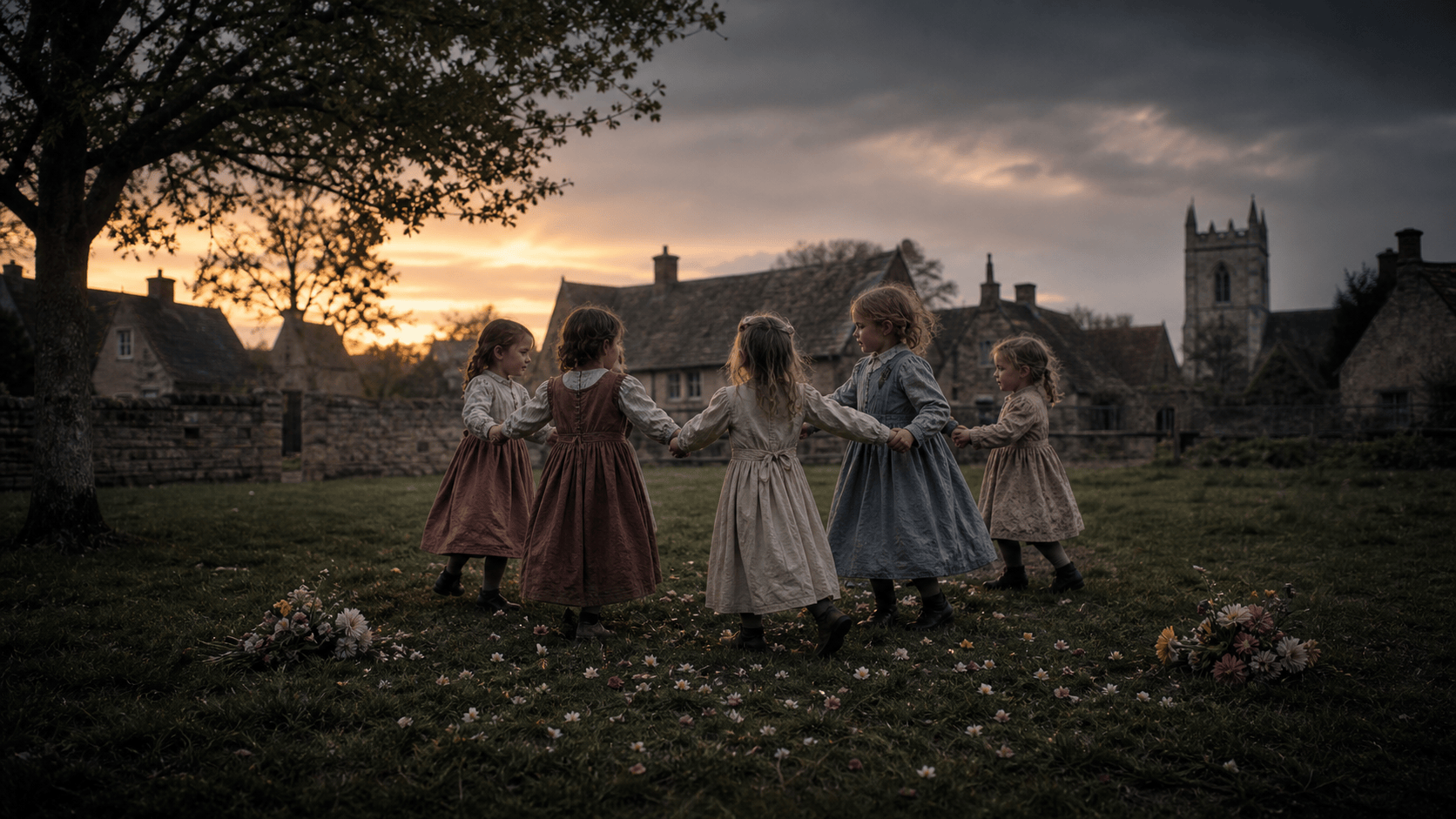
“Ring Around the Rosie” seems harmless enough. Kids hold hands, walk in a circle, sing a little rhyme, and then fall down at the end like tiny theater majors.
Simple. Cute. Mildly chaotic.
But the rhyme has picked up a much darker reputation over the years.
The popular story is that “Ring Around the Rosie” is really about the plague. In that version, the “ring” refers to a rash. “Rosie” points to red marks on the skin. “Pocket full of posies” refers to flowers people carried to cover the smell of sickness. And “we all fall down” means death.
Which is a lot for a game usually played by children who still need help opening juice boxes.
The catch is that historians are not fully convinced. The plague explanation may be more folklore than fact, and the rhyme might not be old enough to connect neatly to the Black Death. Like a lot of creepy childhood stories, it may have picked up the darkest explanation later because people heard a strange old rhyme and immediately added disaster.
Still, even if the plague theory is not proven, it says something that the game fits the rumor so well. A circle. A chant. Everyone falling down at the end.
That is not exactly the part you notice when you are six.
It is very much the part you notice when you grow up and realize half of childhood was just singing suspicious songs in public.
#4 Hangman

Hangman is one of those games that somehow became normal because it involved spelling.
The rules are simple. One person thinks of a word. The other person guesses letters. Every wrong guess adds another piece to a little stick figure until, eventually, the drawing becomes a full execution scene.
You know. For vocabulary.
The game probably became popular because it was easy to play anywhere. All you needed was paper, a pencil, and the quiet confidence that nobody would stop and say, “Wait, why are we drawing a public hanging?”
But the image behind the game comes from something very real. Hanging was once a common form of execution, and public executions were treated as events. People gathered. Vendors sold food. Entire crowds showed up to watch someone die, because history is often just humanity failing the vibe check in different outfits.
Today, most people play Hangman without thinking much about it. It is just a classroom game, a rainy-day game, a quick way to kill time.
That phrase feels a little unfortunate here.
Still, once you actually look at the setup, it is hard to unsee it. One of the first word games many kids learned was basically: guess the letters correctly, or this tiny drawn man gets sentenced by punctuation.
#3 Dodgeball

Dodgeball is one of those childhood games that feels like it was designed by someone who thought gym class needed more betrayal.
The rules are not complicated. Throw a ball at someone. Avoid getting hit. Pretend this is a normal educational activity and not a socially approved way to find out who has both aim and unresolved feelings.
Games based on throwing, dodging, and quick reaction have been around for a long time. That part makes sense. Before rubber gym balls and squeaky floors, being able to avoid something flying at your body was a pretty useful life skill.
The darker side is how easily dodgeball turns into humiliation.
Anyone who played it in school probably remembers the basic emotional structure. The athletic kids became temporary warlords. The quieter kids tried to disappear near the back wall. Someone always got hit in the face even though the teacher had just said, “Not in the face.”
A flawless system, clearly.
Over time, dodgeball has been criticized for encouraging bullying, targeting weaker players, and turning gym class into a public ranking system with bruises. Not every game of dodgeball is cruel, of course. Some people loved it. Some still do.
But it is hard to ignore the setup. A room full of children are handed projectiles and told the goal is to eliminate each other.
That is not exactly “team building.”
It is gym class pretending not to be a battlefield.
#2 Tug Of War
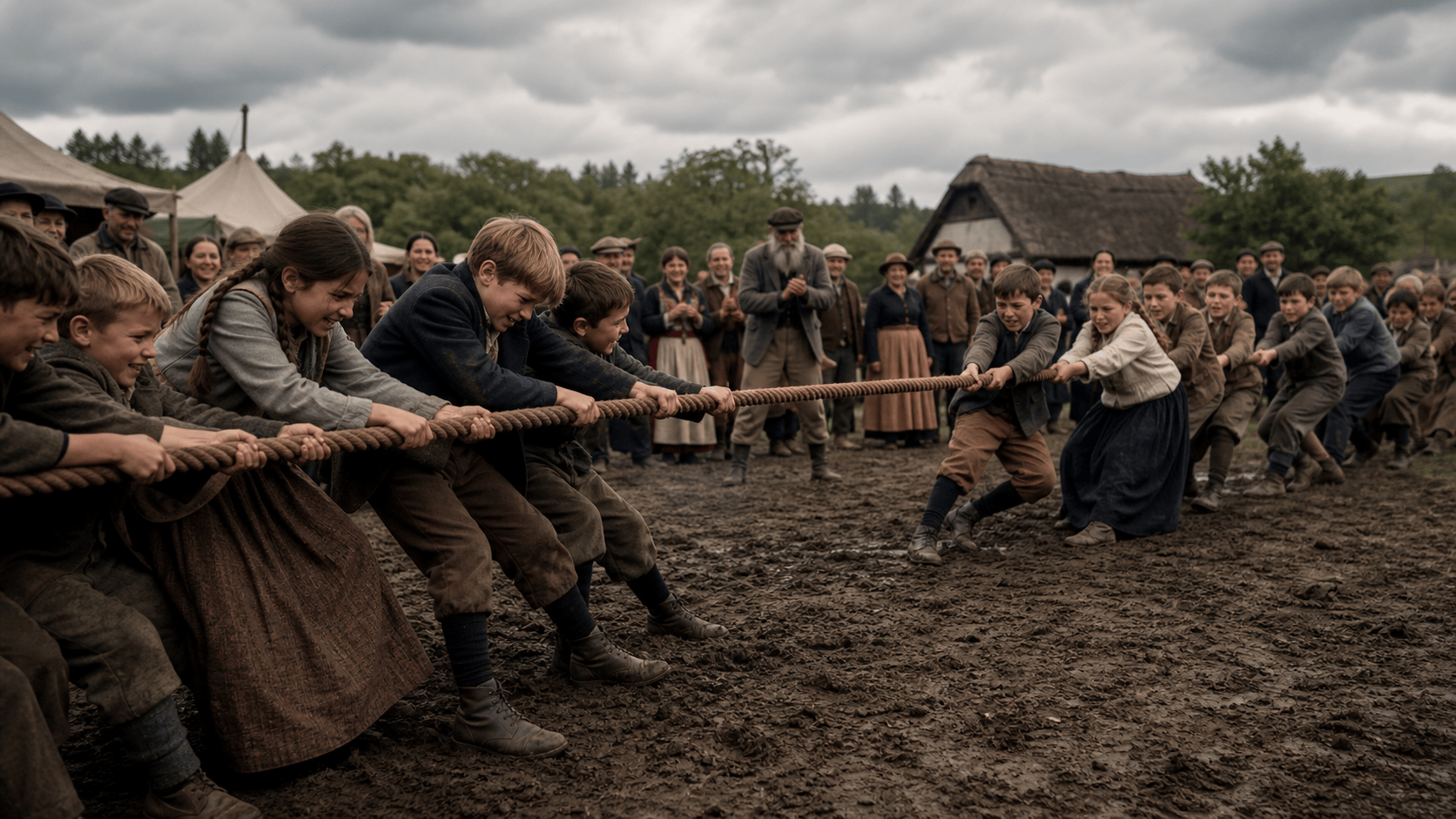
Tug of War seems like one of the simplest games ever invented. Two groups grab opposite ends of a rope, pull as hard as they can, and wait for one side to lose balance, dignity, or both.
There is not much strategy at first glance. Mostly rope. Mostly yelling.
But the game is much older than the summer camp version. Forms of Tug of War have been played for centuries across different cultures, including in parts of Asia, Europe, and Africa. In some places, it was more than a strength contest. It was tied to rituals, military training, seasonal celebrations, and symbolic battles between opposing forces.
Sometimes those forces were things like rain and drought. Sometimes they represented rival groups. Sometimes it was just people proving who could pull harder without immediately becoming a ground decoration.
The darker side is that Tug of War was not always harmless. Older versions could be rough, dangerous, and deeply competitive. Even today, serious games can lead to injuries when people use the wrong rope, wrap it around their hands, or treat “pulling on a rope” like it needs the emotional intensity of a courtroom confession.
The game looks simple because the equipment is simple. But the meaning behind it has not always been.
Sometimes a rope was just a rope.
And sometimes it was a whole community turning struggle into a contest.
#1 London Bridge is Falling Down
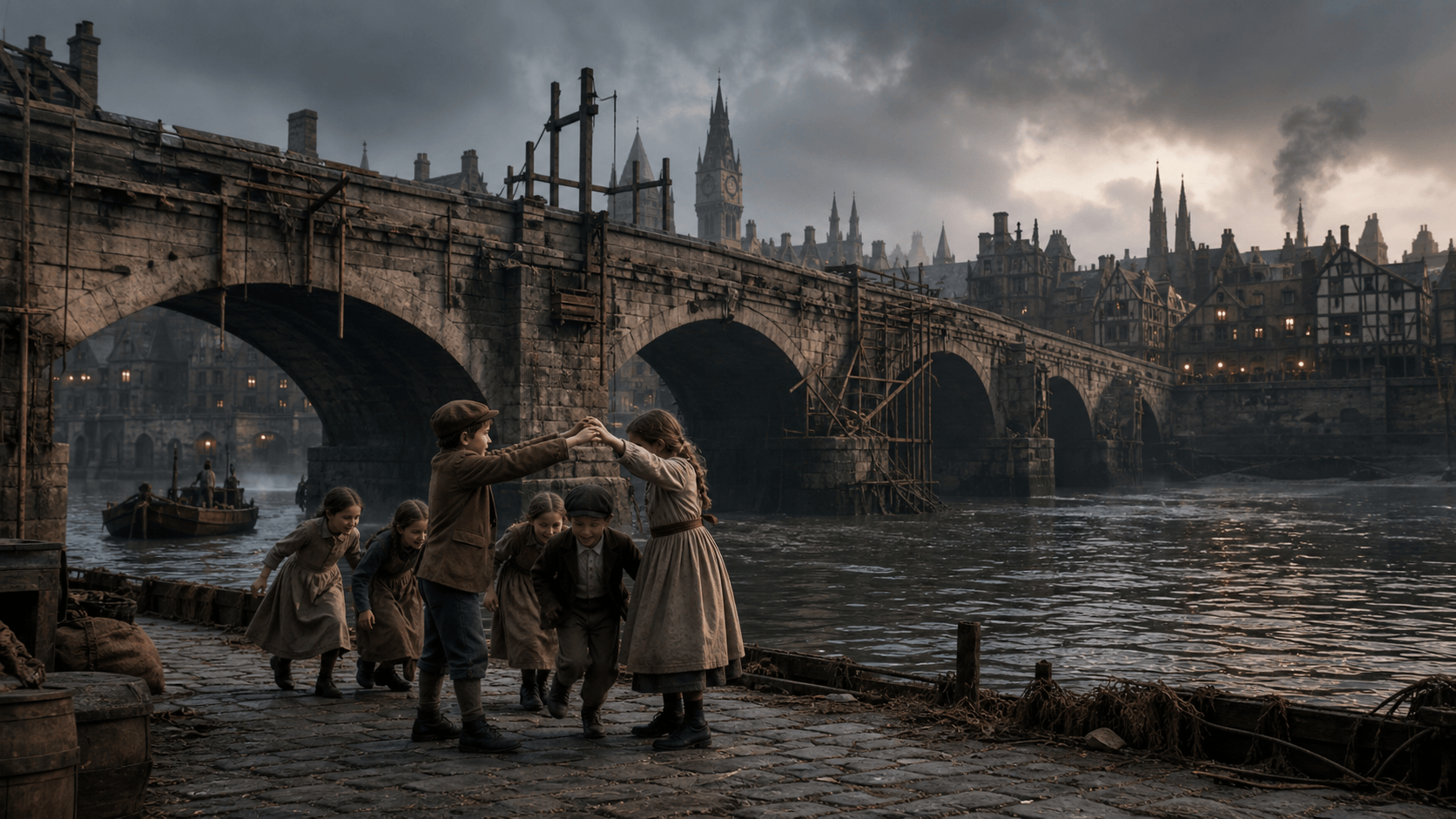
“London Bridge Is Falling Down” sounds like a harmless children’s song until you stop and remember what it is actually about.
A bridge falling down.
Not a butterfly. Not a picnic. Not a friendly little duck learning shapes. A major piece of public infrastructure failing in song form.
The rhyme may have been inspired by the many problems London Bridge faced over the centuries. The bridge was damaged, rebuilt, attacked, repaired, and replaced more than once. Fires, wars, decay, bad construction, and the general stress of medieval city life all played a part. Basically, London Bridge had the maintenance history of a cursed rental property.
Then there is the darker folklore.
Some folklorists have connected the song to an old belief called immurement, where a person was supposedly sealed inside a structure as a sacrifice to keep it standing. Folklorist Alice Gomme suggested this theory in the 1890s, and it was later repeated by Iona and Peter Opie in their work on children’s songs and games.
To be clear, there is no solid proof that children were buried inside London Bridge. That part belongs to folklore, not confirmed history.
Still, the fact that this legend attached itself to a children’s song says a lot. People heard a rhyme about a bridge collapsing and somehow decided it needed possible human sacrifice in the footnotes.
Old children’s games are like that. Even when the darkest explanations are debated, they often reveal what people were afraid of: sickness, punishment, violence, collapse, and the uneasy feeling that the world was always one bad beam away from disaster.
So yes, it is catchy.
It is also a song about structural failure that children turned into a game.
History really does have range.
Leave a Reply