

These famous remains were lost for centuries. Then science finally gave them their names back.
#5 Matthew Flinders
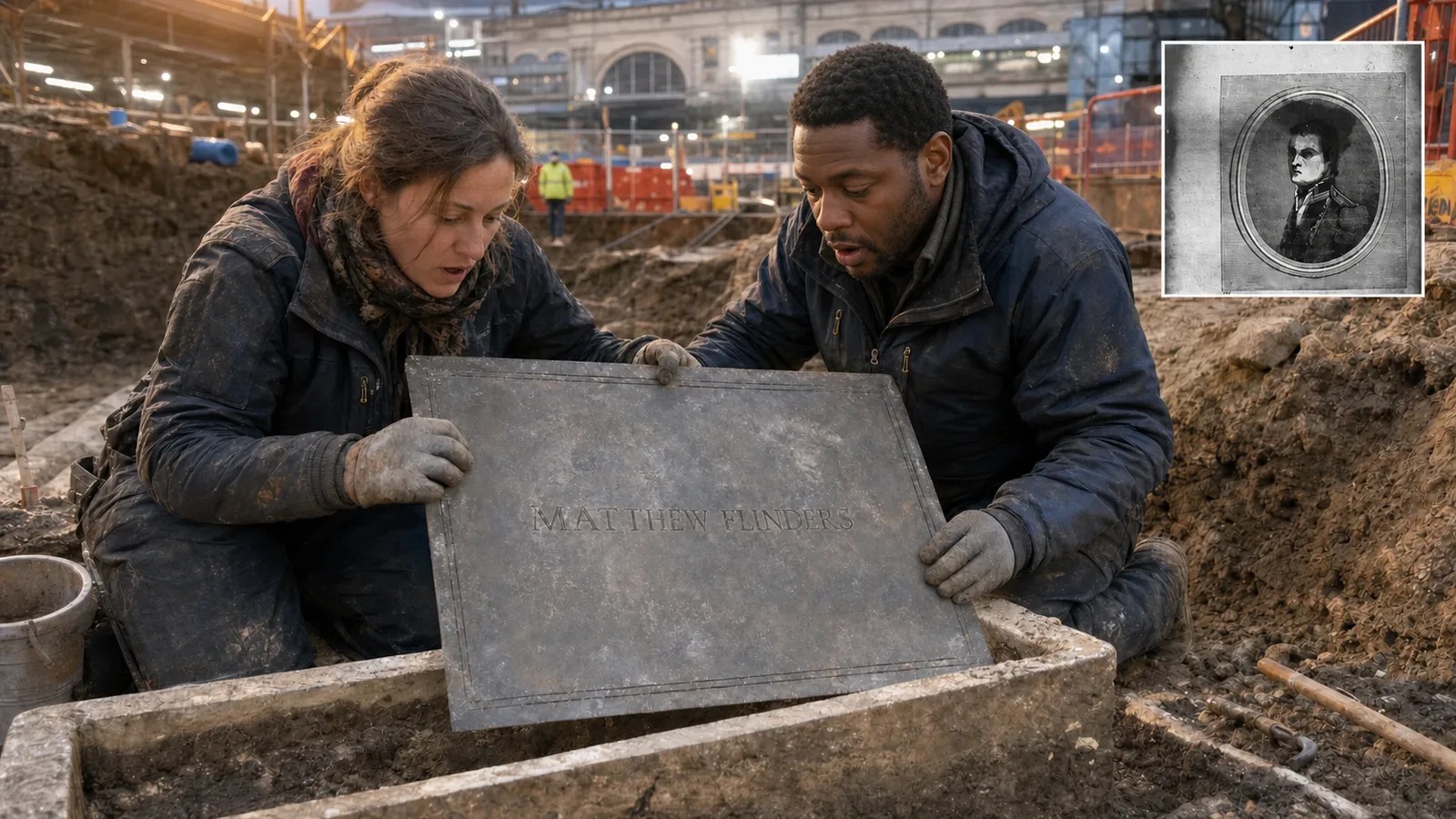
Matthew Flinders spent years mapping coastlines, only for history to lose track of his own grave.
The British navigator led the expedition that completed the first recorded circumnavigation of Australia. He also helped popularize the name “Australia” through his maps and writings. When he died in 1814 at just 40 years old, he was buried at St. James’s burial ground in London.
Then Euston Station expanded over part of the cemetery. Flinders’ headstone disappeared, and his precise burial location was lost among tens of thousands of graves.
In 2019, archaeologists excavating the site ahead of construction work uncovered a coffin with a lead identification plate resting on top. Unlike many other coffin plates at the site, this one had survived well enough to read. It carried Flinders’ name, removing any real mystery about who had been found.
His remains were finally returned to Donington, Lincolnshire, and reburied in July 2024. Two centuries after his grave disappeared beneath a changing London, Matthew Flinders had a marked resting place again.
#4 Queen Eadgyth
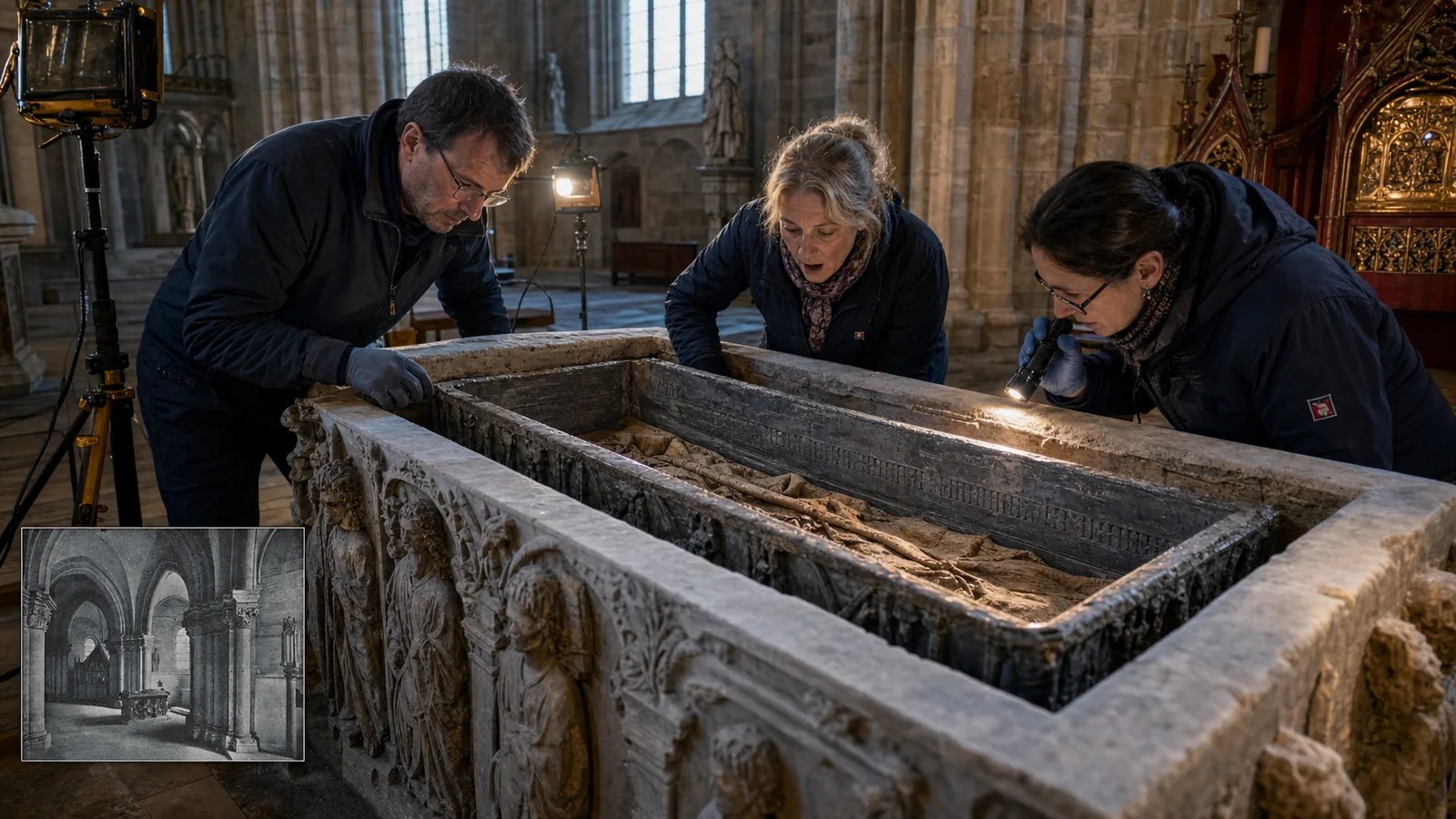
For centuries, the elaborate tomb of Queen Eadgyth inside Germany’s Magdeburg Cathedral was believed to be empty.
Eadgyth was the granddaughter of Alfred the Great, half-sister of King Æthelstan, and wife of Otto the Great. Born in England around 910, she moved to the German kingdom as a teenager and remained there until her death in 946.
During work inside the cathedral in 2008, archaeologists opened her stone monument and found a lead coffin. An inscription claimed it contained Eadgyth’s remains, which had been moved there in 1510.
The label was helpful, but archaeologists were not about to trust a 500-year-old inscription without checking.
Tests showed that the bones belonged to a woman who died between 30 and 40 years old. Isotope evidence preserved in her teeth also indicated that she had spent her childhood moving around southern England before relocating to the area around Magdeburg. That closely matched what historians already knew about Eadgyth’s life.
In 2010, researchers confirmed the identification with a high degree of confidence. After more than a thousand years and several changes of address, one of England’s earliest surviving royal remains had been found exactly where her tomb said she was.
#3 Diane de Poitiers

Diane de Poitiers was one of the most powerful women in 16th-century France. She was also the longtime mistress and political adviser of King Henry II, despite being about 20 years older than him.
After her death in 1566, Diane was buried in an elaborate tomb at Anet. That arrangement lasted until the French Revolution, when her coffin was opened and her remains were removed. Her bones were thrown into a grave near the local church, where they remained for more than two centuries.
Researchers excavated the site in 2008 and found the remains of an older woman. Several details matched Diane, including severe arthritis, missing teeth, and a healed fracture of the tibia and fibula. Historical accounts recorded that she had broken her leg in a riding accident shortly before her death.
Then the investigation took a stranger turn.
Tests found exceptionally high levels of gold in hair associated with Diane. She was reportedly known to consume preparations containing drinkable gold, which was promoted at the time as an elixir for preserving youth and beauty. Researchers suggested that chronic gold poisoning may have weakened her health and possibly contributed to her death.
If swallowing gold already sounds extreme, some medical treatments from history were even worse.
In 2010, Diane’s identified remains were returned to her original tomb at Anet, 215 years after revolutionaries removed them.
#2 Nicolaus Copernicus
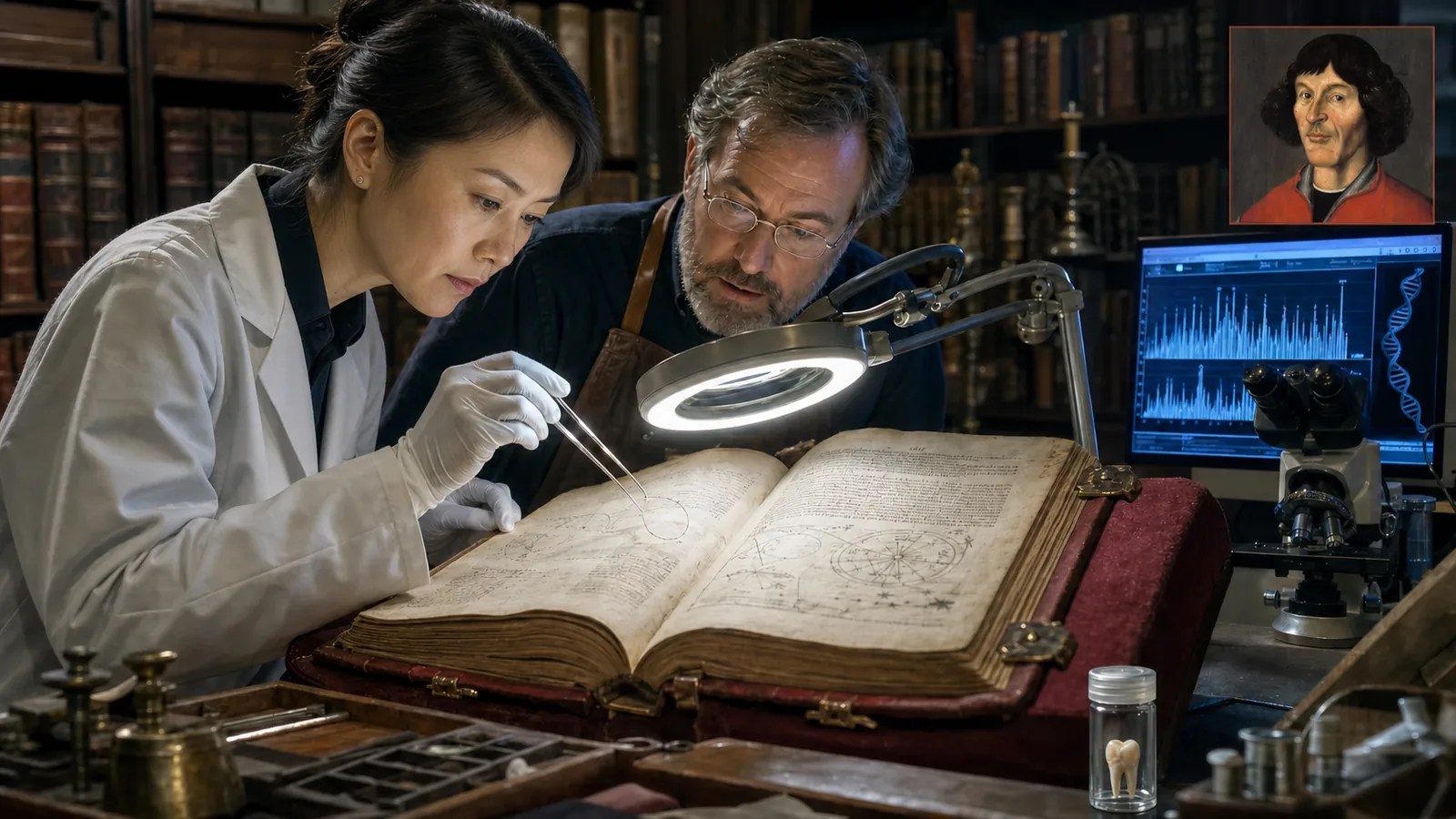
Nicolaus Copernicus changed humanity’s understanding of the universe. Then humanity lost track of where he was buried.
The astronomer died in 1543 and was laid to rest inside Frombork Cathedral in Poland, where he had served as a canon. His grave was never clearly marked, and later damage and alterations to the cathedral made finding it even harder.
In 2005, archaeologists searched beneath the section of the cathedral where Copernicus was believed to have served. They uncovered part of a skeleton, including a skull belonging to a man who had died at roughly 70 years old, the same age Copernicus was at his death.
A facial reconstruction produced features resembling surviving portraits, but that alone could not settle the case. Researchers needed something far more specific.
They found it inside one of Copernicus’s old astronomy books.
Several loose hairs had survived between its pages at Uppsala University in Sweden. DNA analysis found that two of those hairs shared the same mitochondrial profile as the remains from the cathedral. Combined with the burial location, age, and facial reconstruction, the evidence strongly supported the identification.
Copernicus was reburied beneath a new black granite marker at Frombork Cathedral in 2010. This time, nobody left the grave anonymous.
#1 King Richard III

Of all the people on this list, Richard III had the most unlikely hiding place. The missing king of England was buried beneath a parking lot.
Richard was killed at the Battle of Bosworth Field in 1485, ending both his short reign and the Plantagenet dynasty. His body was taken to Leicester and buried at Greyfriars, a Franciscan friary. When the friary was demolished during the English Reformation, the exact location of his grave disappeared with it.
For centuries, stories circulated that Richard’s remains had been dug up and thrown into a river. In reality, they never left the site.
An archaeological search began beneath a Leicester parking lot in August 2012. The team soon uncovered a skeleton inside the remains of the old friary church. It belonged to a man in his early thirties with severe scoliosis and multiple injuries consistent with death in battle.
The strongest evidence came from mitochondrial DNA. Researchers traced living maternal-line relatives of Richard’s sister, Anne of York, and compared their DNA with the skeleton. The results supported the identification, and in February 2013, the University of Leicester announced that the remains belonged to Richard III beyond reasonable doubt.
Richard was reburied at Leicester Cathedral on March 26, 2015. His first burial had been hurried, unmarked, and eventually forgotten. His second came with a week of ceremonies and thousands of people gathering to see the lost king finally laid to rest.
Richard III excavation photograph by zaphad1, licensed under CC BY 2.0. Cropped and incorporated into an original composite.

Leave a Reply