

Apparently, “try not to die at work” eventually needed to be written into law.
Some workplace rules exist because people fought for them. Others exist because a disaster made the old way impossible to defend.
These five jobs were so dangerous that they helped push workplace safety into law.
#5 Child Chimney Sweeps

For generations, British chimney sweeps used children to clean flues that were too narrow for adults. Some began the work before they were ten years old.
The children, known as climbing boys, squeezed through cramped passages filled with soot, heat, and almost no room to turn around. They suffered burns, breathing problems, twisted joints, and a form of cancer strongly associated with the trade. Getting stuck could mean suffocation.
Parliament passed laws restricting the practice during the 1800s, but enforcement was weak. Master sweeps continued hiring children because brushes and mechanical equipment apparently lacked the convenience of a terrified child.
Then came the death of George Brewster.
In February 1875, the boy, who was about 14, was sent into a chimney flue near Cambridge. He became trapped and was pulled out in a dying condition. An inquest found that he had suffocated, with soot blocking his lungs and windpipe.
His death caused public outrage and gave reformer Lord Shaftesbury fresh evidence that the existing laws were failing. Later that year, Parliament passed the Chimney Sweepers Act of 1875. It required chimney sweeps to be licensed and made police responsible for enforcing earlier restrictions on child labor.
Britain had tried to stop children from climbing chimneys before. George Brewster’s death helped force the country to finally enforce it.
#4 Match Factory Workers
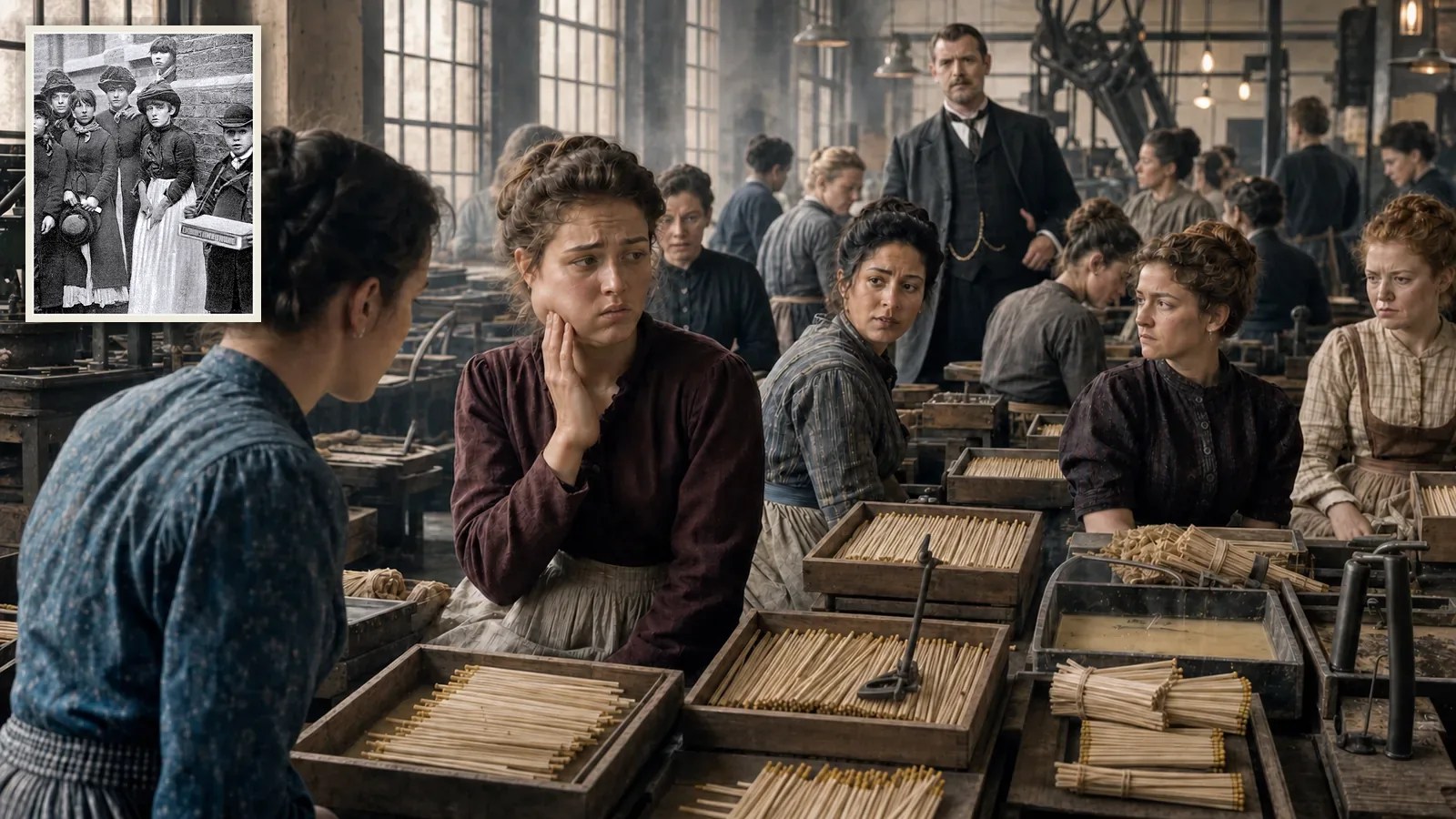
A box of matches was cheap. Making one could cost a worker part of her jaw.
During the 1800s, many match factories used white phosphorus, also called yellow phosphorus, because it produced matches that lit easily. Workers handled the chemical for long hours in poorly ventilated rooms, breathing fumes and getting phosphorus dust on their hands, clothing, and food.
The resulting illness became known as “phossy jaw.”
It could begin with toothaches and swelling before attacking the jawbone itself. In severe cases, parts of the bone died and had to be removed. Workers were left disfigured, unable to eat normally, or dead from complications.
Many of the people doing this work were young women. At London’s Bryant & May factory, employees also dealt with low wages and fines for minor offenses. In 1888, hundreds of workers walked out during the Matchgirls’ Strike. They won concessions over pay and penalties, formed a union, and drew national attention to conditions inside the industry.
The chemical danger did not disappear immediately. In 1893, the British government introduced special rules requiring affected factories to improve ventilation and sanitation, undergo certification, and report cases of phosphorus poisoning. Illnesses continued, partly because workers feared losing their jobs if they admitted they were sick.
Britain finally passed the White Phosphorus Matches Prohibition Act in 1908. When it took effect in 1910, manufacturers could no longer use white phosphorus in matches.
The matches had always been inexpensive. The workers were the ones covering the difference.
#3 Coal Miners

Coal mining was never mysterious about being dangerous.
Miners worked beneath thousands of tons of rock, surrounded by coal dust, methane gas, unstable tunnels, machinery, and explosives. A single spark could ignite an underground blast. A collapsed passage could cut workers off from the surface. Even miners who avoided a sudden disaster could develop black lung after years of breathing coal dust.
The death toll was enormous.
In 1907, an explosion at the Monongah mines in West Virginia killed at least 362 workers, making it the deadliest mining disaster in American history. Public outrage over Monongah and other disasters helped lead to the creation of the United States Bureau of Mines in 1910.
That was a start, but the agency initially focused more on research and training than enforcement. Mining disasters continued, and safety laws remained limited.
Then, on November 20, 1968, an explosion tore through the Farmington No. 9 mine in West Virginia. Seventy-eight miners were killed. Fires continued underground, rescue attempts failed, and the mine eventually had to be sealed with many of the victims still inside.
The disaster pushed Congress toward the Federal Coal Mine Health and Safety Act of 1969. The law required regular inspections, introduced mandatory penalties, strengthened safety standards, established limits on coal dust, and created benefits for miners disabled by black lung disease.
The dangers of coal mining had been obvious for generations. Farmington made them much harder for lawmakers to keep accepting.
#2 Radium Dial Painters
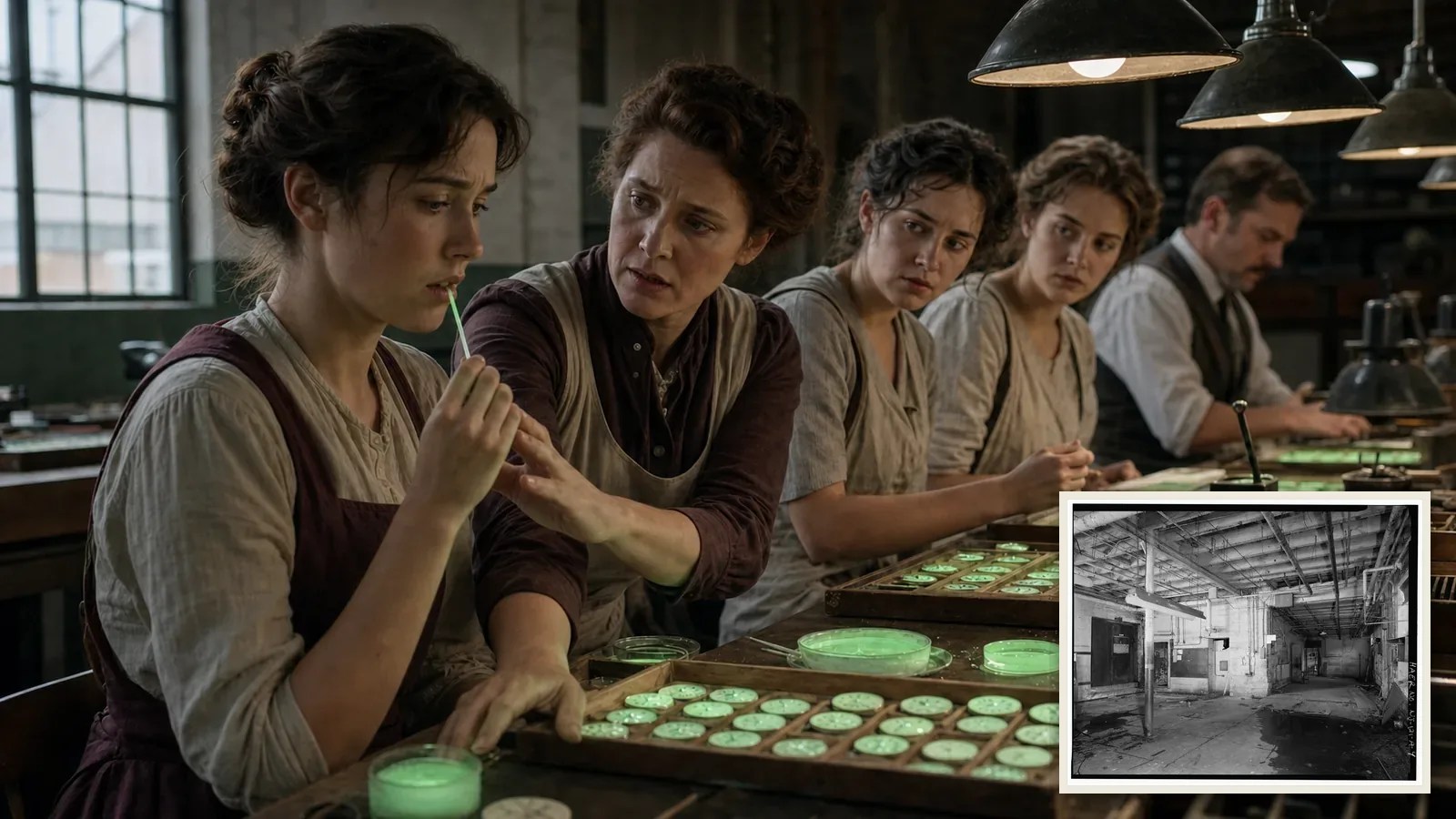
The job looked almost glamorous.
During the 1910s and 1920s, young women were hired to paint watch and instrument dials with luminous paint containing radium. The numbers glowed in the dark, the work paid relatively well, and traces of the paint sometimes left workers’ clothing and hair sparkling after their shifts.
To keep their brushes pointed, the women were instructed to shape the bristles with their lips. The routine became known as “lip, dip, paint.”
Each time they did it, they swallowed a small amount of radium.
Because the body treats radium somewhat like calcium, it settled into their bones. Workers developed anemia, fractures, tumors, and severe damage to their teeth and jaws. Some became sick years after leaving the factory, creating a convenient argument for companies that claimed too much time had passed to prove where the illness began.
Grace Fryer, a former painter at the United States Radium Corporation in New Jersey, spent two years searching for a lawyer willing to take her case. In 1927, she and four other women filed suit. All five were seriously ill.
The case ended in a settlement in 1928. Each woman received $10,000, annual payments, and coverage for medical expenses. Other dial painters, including workers in Illinois, continued pursuing compensation and recognition for radium poisoning.
Their cases helped establish that employers could be held responsible for occupational diseases that appeared slowly rather than through one obvious accident. They also contributed to stronger radiation protections and a broader understanding of workplace exposure.
The women had been told the paint was safe. Their bodies, and eventually the courts, proved otherwise.
#1 Triangle Shirtwaist Workers

On March 25, 1911, hundreds of employees reported for work at the Triangle Shirtwaist Factory in New York City. Most were young immigrant women making fashionable blouses on the upper floors of the Asch Building.
By the end of the afternoon, 146 workers were dead.
The fire began in a scrap bin and spread quickly through fabric, paper patterns, and wooden worktables. Workers rushed toward the exits, only to find some routes blocked and one crucial door locked. The exterior fire escape collapsed under the weight of people trying to escape.
Firefighters arrived, but their ladders could not reach the highest floors.
With flames closing in behind them, dozens of workers jumped from the windows. People gathered below could do little except watch.
The factory’s owners, Max Blanck and Isaac Harris, survived by reaching the roof. They were later charged with manslaughter but acquitted. The defense argued that prosecutors could not prove the owners knew the door was locked at the time of the fire.
The public response did not end with the trial.
New York created the Factory Investigating Commission, which examined thousands of workplaces and exposed dangerous conditions far beyond the Triangle factory. Its work helped produce 20 new laws covering fire exits, building access, ventilation, sanitation, machinery, and other workplace hazards.
Frances Perkins witnessed the fire from nearby and became deeply involved in the reforms that followed. She later served as the first woman to become United States Secretary of Labor.
Triangle takes the number one spot because it did more than reveal one unsafe factory. It changed how an entire country thought about an employer’s responsibility to keep workers alive.
The reforms mattered. They also arrived too late for 146 people who should have been able to walk out of work that afternoon.
Leave a Reply