

History has lost plenty of things, but treasure seems to be the one people take personally.
#5 The Beale Treasure
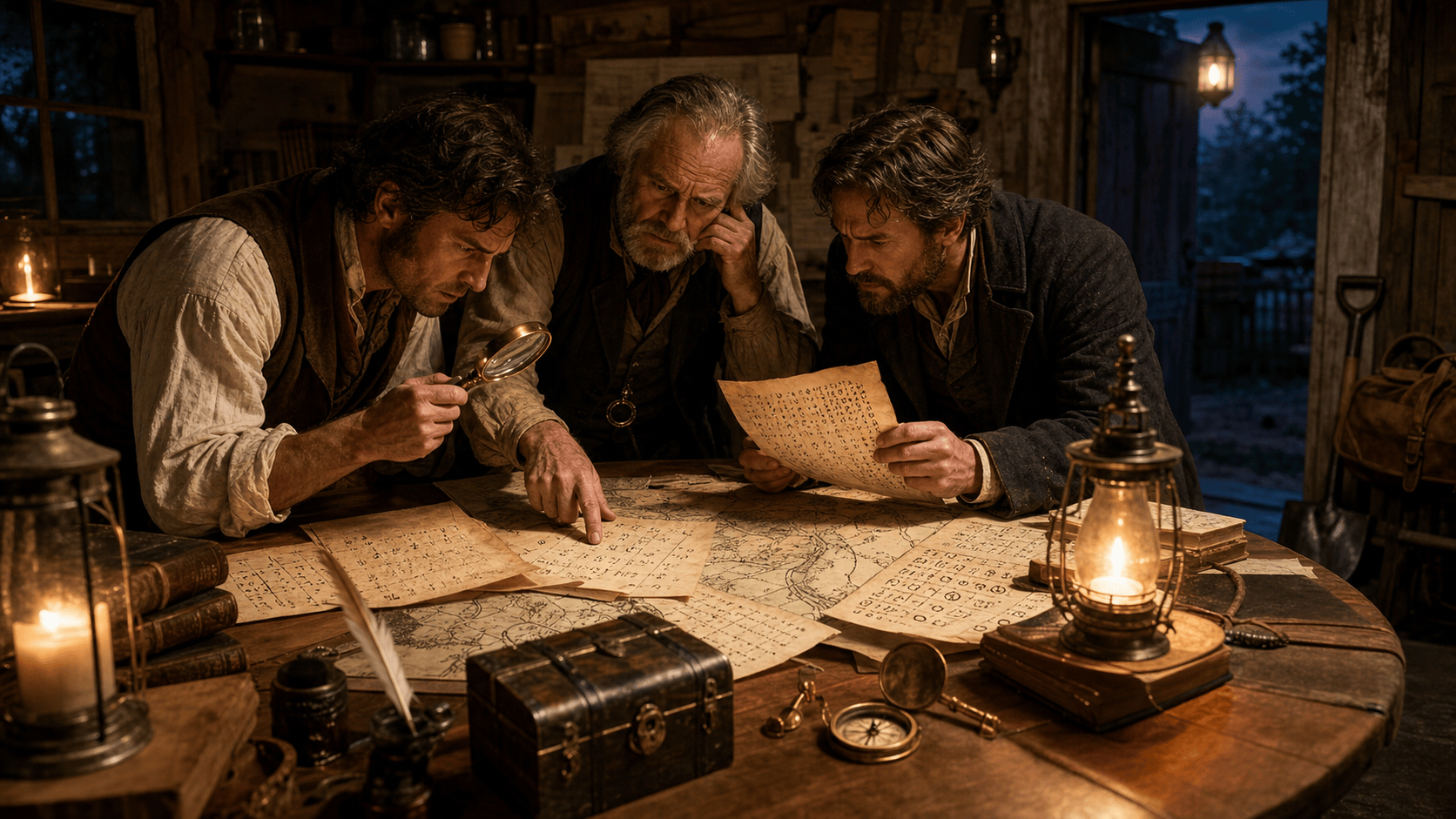
The Beale Treasure is what happens when buried gold meets paperwork, and somehow the paperwork becomes the more annoying part.
The story begins in the 1800s with a man named Thomas J. Beale, who supposedly discovered a huge treasure out west with a group of companions. According to the legend, they transported the treasure back east and buried it somewhere in Bedford County, Virginia.
Then, because simply saying where he put it would have been too generous, Beale allegedly left behind three coded messages.
One was supposed to reveal the location of the treasure. Another described what was buried. The third listed the names of the people who owned shares in it.
Only one of the three codes has reportedly been solved.
Naturally, it was not the one with the location.
The decoded message described a massive cache of gold, silver, and jewels, supposedly worth a fortune. The unsolved ciphers, meanwhile, have kept treasure hunters, codebreakers, skeptics, and very patient people with shovels busy for generations.
The problem is that the whole thing might be a hoax. Some researchers believe the Beale Papers were created as a clever 19th-century puzzle or scam. Others think there may be a real story buried under the legend, which is exactly the kind of sentence that keeps people making bad weekend plans.
No confirmed treasure has ever been found.
But the Beale Treasure keeps surviving because it offers the perfect trap: a fortune that might exist, hidden behind a code that almost seems solvable.
That is not just a mystery.
And for some people, “Almost Solvable” is all the encouragement they need.
#4 The Lost Dutchman’s Gold Mine
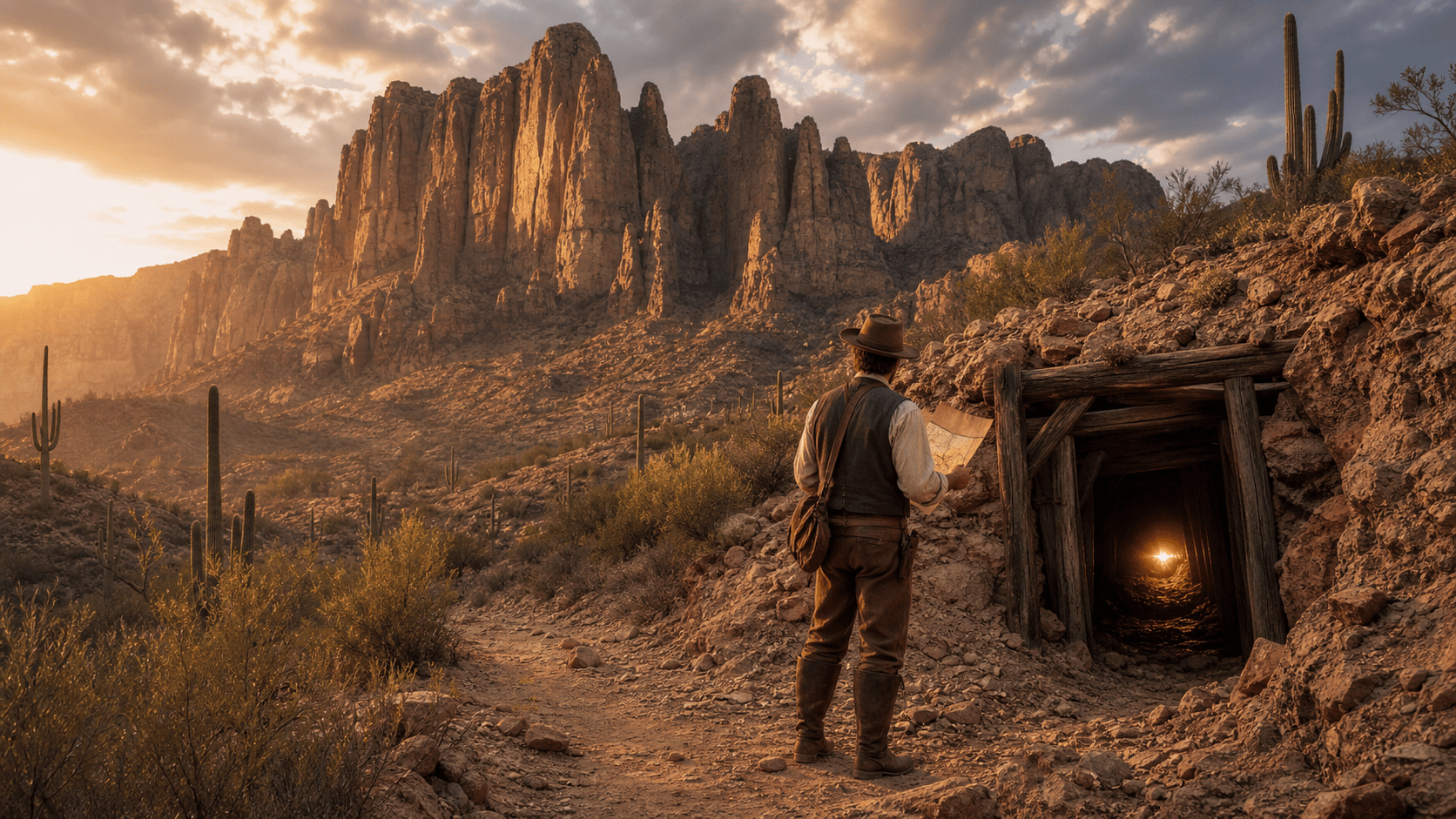
The Lost Dutchman’s Gold Mine is one of America’s most stubborn treasure legends, which is impressive considering the competition includes pirates, coded maps, and people confidently digging holes in the wrong places.
The mine is said to be hidden somewhere in Arizona’s Superstition Mountains. That name already sounds like the mountains hired a branding consultant who specialized in bad omens.
According to the legend, a German immigrant named Jacob Waltz discovered or inherited knowledge of a rich gold mine in the 19th century. Waltz was often called “the Dutchman,” because in older usage, “Dutch” was sometimes used for Germans. Language, like treasure hunting, occasionally takes the scenic route.
Before his death in 1891, Waltz supposedly revealed clues about the mine’s location. After that, the story grew teeth.
Treasure hunters poured into the Superstition Mountains looking for the mine. Some came back empty-handed. Some got lost. Some died. Over time, the legend picked up extra layers: hidden maps, suspicious deaths, Apache gold, cursed mountains, and enough conflicting directions to make a GPS quietly resign.
The frustrating part is that Arizona really did have gold mining. Jacob Waltz was real. The Superstition Mountains are real. That gives the legend just enough historical bone structure to keep standing.
But the mine itself?
Still missing.
The Lost Dutchman’s Gold Mine survives because it has everything a treasure story needs: a dangerous landscape, a dying man’s clues, a possible fortune, and generations of people thinking, “Yes, but what if I’m the one who figures it out?”
That sentence has caused a lot of sunburn.
#3 The Treasure Of Lima
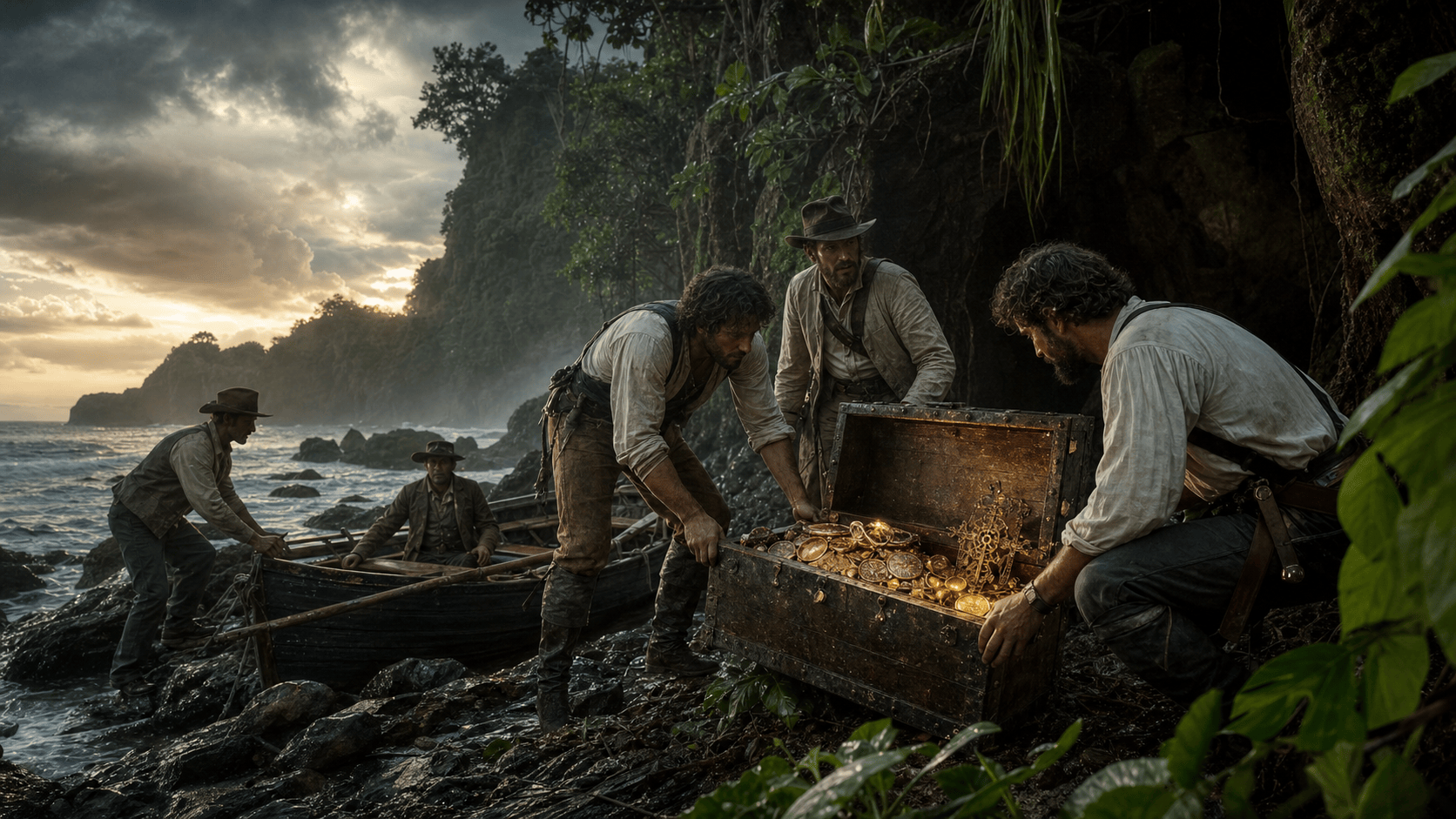
The Treasure of Lima is one of those stories where the setup already sounds like someone is about to make a very bad choice near a coastline.
In the early 1800s, Lima, Peru, was sitting on an enormous amount of wealth. Churches, wealthy citizens, and Spanish authorities held gold, silver, jewels, religious objects, and other valuables. Then came political unrest and the wars of independence in South America, which made everyone with a treasure vault suddenly very nervous.
According to the legend, officials loaded a massive treasure onto a ship called the Mary Dear and trusted its captain, William Thompson, to carry it away for safekeeping.
This was, in hindsight, a lot of trust to place in a man with a ship.
Instead of delivering the treasure, Thompson and his crew allegedly killed the guards and sailed off with it. They were later captured, but the treasure was already gone. The story says Thompson hid it on Cocos Island, off the coast of Costa Rica, before being caught.
He never successfully led anyone back to it.
Since then, Cocos Island has attracted treasure hunters, expeditions, theories, and the kind of optimism that makes people look at a remote island and think, “Yes, this is a reasonable place to spend my savings.”
No confirmed Treasure of Lima has ever been recovered. Some historians doubt parts of the story. Others think there may be a real event buried under the legend, even if the details have been polished by time, rumor, and probably a few men in hats pointing at maps.
That is the problem with island treasure stories.
The ocean keeps the receipts, and it is not very generous about sharing them.
#2 The Flor De La Mar Shipwreck
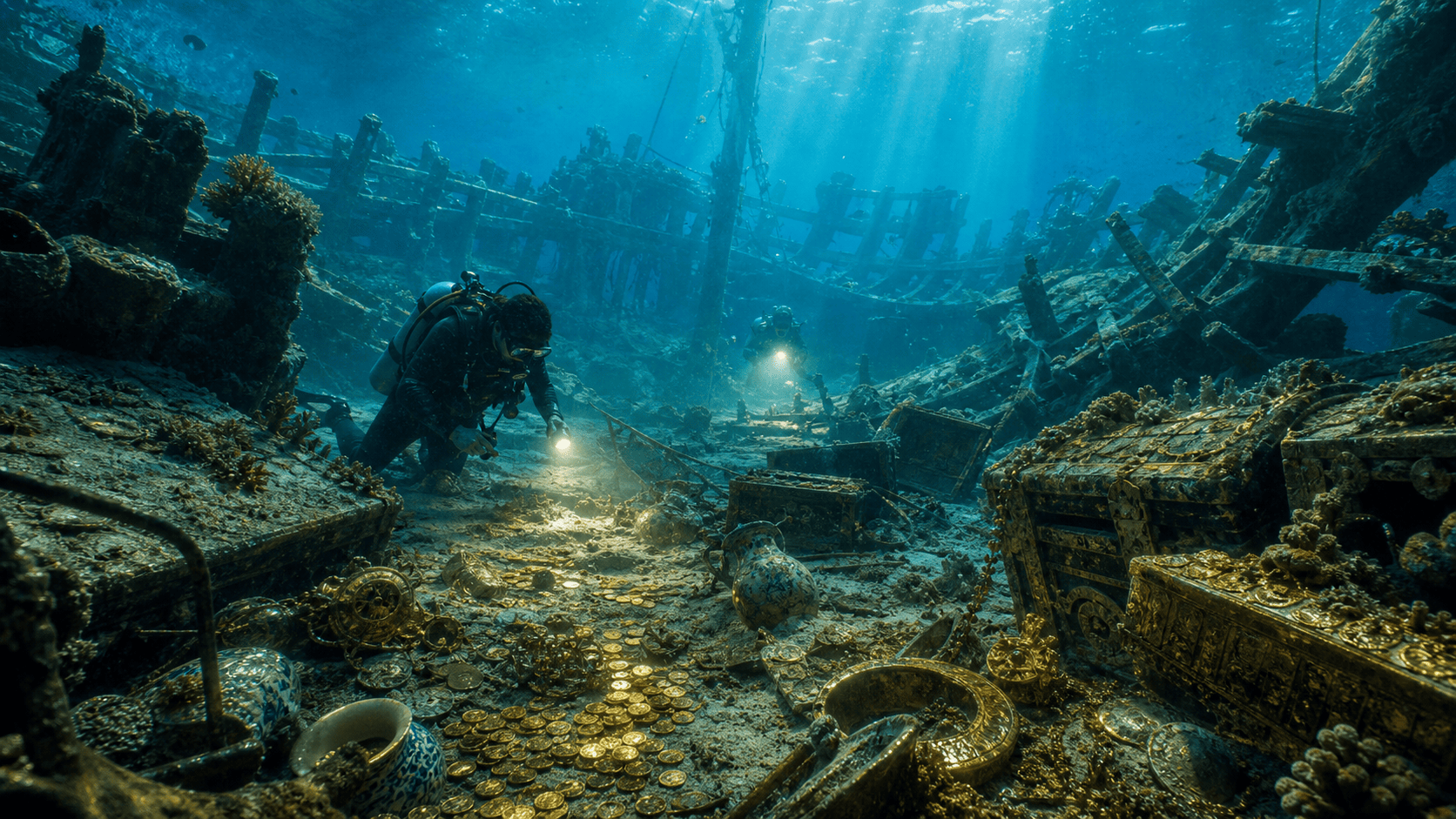
The Flor de la Mar was not just a ship.
It was the kind of shipwreck story that makes treasure hunters stare at old maps like the maps personally owe them money.
In 1511, the Portuguese ship Flor de la Mar was sailing back from the conquest of Malacca, loaded with an enormous amount of treasure. The cargo was said to include gold, jewels, and luxury goods taken from one of the richest trading cities in Southeast Asia.
Then the ship met a storm near Sumatra.
That is usually where treasure stories stop being glamorous and start becoming very wet.
The Flor de la Mar sank, and much of its treasure disappeared with it. The ship’s exact wreck site has never been confirmed, which is a small problem if your plan involves recovering one of the richest lost cargos in history.
Over the centuries, the wreck has become almost legendary. Some accounts may exaggerate the amount of treasure on board, because treasure stories are not famous for their emotional restraint. But even if the numbers grew over time, the ship was still connected to real imperial conquest, real wealth, and a real disaster at sea.
People still search for it because the possibility is enormous. A wreck. A fortune. A location that is just uncertain enough to keep hope alive and budgets in danger.
The Flor de la Mar is not just a lost treasure story.
It is a reminder that the ocean has been winning hide and seek for a very long time.
#1 The Amber Room

The Amber Room is the lost treasure that feels less like a missing object and more like someone misplaced an entire royal hallucination.
It was built in the early 1700s and eventually installed in Catherine Palace near St. Petersburg. The room was covered in amber panels, gold leaf, mirrors, and intricate decoration. People called it the “Eighth Wonder of the World,” which sounds dramatic until you remember the room was basically glowing walls made of wealth.
Then World War II happened.
In 1941, Nazi forces invaded the Soviet Union and looted the Amber Room from Catherine Palace. The panels were dismantled, packed into crates, and taken to Königsberg Castle, in what was then East Prussia. After that, the trail gets messy.
Very messy.
Königsberg was heavily bombed during the war, and the castle was later damaged and eventually demolished. Some believe the Amber Room was destroyed. Others think it was hidden in mines, bunkers, tunnels, or secret storage sites before the war ended.
That uncertainty has kept the search alive for decades.
There have been theories, expeditions, false leads, supposed clues, and plenty of people convinced they were finally close. So far, no confirmed original Amber Room has been found. A reconstruction now exists at Catherine Palace, but the original remains missing.
The Amber Room sits at the top of this list because it has everything: art, war, theft, mystery, tunnels, rumors, and an object so beautiful that people still do not want to believe it simply vanished.
Maybe it was destroyed.
Maybe it is hidden somewhere.
Either way, the fact that a whole room can disappear and still keep people arguing 80 years later is honestly impressive.
Leave a Reply