

Some movie ads sell tickets. Others accidentally make people call the police.
Movie marketing is supposed to make people curious. Maybe a trailer gets shared. Maybe a poster makes someone stop scrolling. Maybe a creepy website convinces half the internet that a horror movie is actually recovered evidence from the woods.
That is the job.
But sometimes the stunt gets a little too good at feeling real. Or too confusing. Or too suspiciously shaped like something that should not be blinking under a bridge.
The result is the kind of publicity every studio wants for about six minutes, right before officials get involved and everyone starts pretending this was definitely part of the plan.
Here are five movie marketing stunts that went too far.
#5 The Blair Witch Project Made People Wonder If It Was Real

The Blair Witch Project did not just market itself like a horror movie.
It marketed itself like evidence.
Before the film became a massive hit in 1999, the campaign leaned hard into the idea that three student filmmakers had actually disappeared in the woods near Burkittsville, Maryland. There were fake police reports, fake interviews, missing-person-style material, and an official-looking website that treated the whole thing like a real investigation.
That sounds normal now because every movie wants an “immersive campaign.” Back then, the internet was younger, weirder, and much easier to emotionally manipulate with a scary webpage.
The actors even used their real names in the movie, which made the whole thing feel less like fiction and more like footage someone probably should not have found in the first place. Some early viewers genuinely wondered if they were watching a documentary instead of a scripted horror film.
That is what made the campaign brilliant. It did not shout, “Come see our scary movie.” It whispered, “Something happened in the woods, and maybe you should look into it.”
Of course, it was fiction. The actors were not missing. Nobody had uncovered cursed student footage. But the marketing blurred the line just enough to make people uncomfortable, and that discomfort sold tickets.
It was clever, cheap, creepy, and wildly effective.
It also helped teach Hollywood that sometimes the scariest trailer is not a trailer at all. It is a website that makes you wonder if you are being advertised to or accidentally reading a case file.
#4 Aqua Teen Hunger Force Caused a Bomb Scare

There are marketing stunts that go wrong.
Then there is “your cartoon ad campaign gets treated like a possible terror threat and shuts down parts of Boston” wrong.
In 2007, Turner Broadcasting helped promote Aqua Teen Hunger Force with a guerrilla marketing campaign. The idea was to place small electronic signs around major cities. The signs showed the Mooninites, two pixel-looking characters from the show, glowing in that smug little way only a cartoon rectangle can manage.
In most cities, people either ignored them or understood they were weird ads.
Boston did not have that day.
Some of the devices were found near bridges, roads, and other public spaces. They had lights, wires, and circuit boards, which is not exactly the visual recipe you want hanging under infrastructure in a post-9/11 city. Authorities responded as if they might be dangerous. Roads and bridges were closed. Bomb squads were called. The Charles River was affected. News helicopters got involved. Everyone’s afternoon became much more dramatic than a late-night cartoon probably deserved.
The devices turned out to be harmless.
That did not make officials feel better. Turner apologized, two men involved in placing the devices were arrested, and the company later agreed to pay millions to settle costs related to the scare.
This is why the stunt belongs so high on the list. The campaign was supposed to make people notice a movie.
It did.
Unfortunately, the people who noticed included law enforcement, city officials, bomb squads, and a large number of commuters who suddenly had strong opinions about cartoon marketing.
#3 Carrie’s Coffee Shop Telekinesis Prank

The Carrie remake had a simple marketing idea: what if people walked into a coffee shop and briefly believed they were about to be murdered by furniture?
Subtle? No.
Memorable? Unfortunately, yes.
To promote the 2013 film, marketers staged a hidden-camera prank inside a New York City coffee shop. The setup was elaborate. A fake wall. Remote-controlled tables and chairs. Books rigged to fly off shelves. An actor playing an angry customer. Another actor playing a woman who appeared to have telekinetic powers after someone spilled coffee on her laptop.
Then unsuspecting customers walked in and got front-row seats to what looked like a supernatural breakdown next to the pastry case.
The video went viral because the reactions were exactly what you would expect from normal people watching a woman seemingly throw a man against a wall with her mind. Wide eyes. Frozen bodies. People trying to decide if this was a crime, a haunting, or New York just being New York.
As a marketing stunt, it worked. People talked about it. The video spread fast. The movie got attention.
But it also belongs on this list because the whole thing depended on scaring real customers who did not know they were part of an ad. That is where the line gets blurry. A fake horror scene is fun when everyone bought a ticket.
It is a little different when someone just wanted coffee and accidentally entered the telekinesis section.
#2 The Mission: Impossible III Newspaper Box Scare
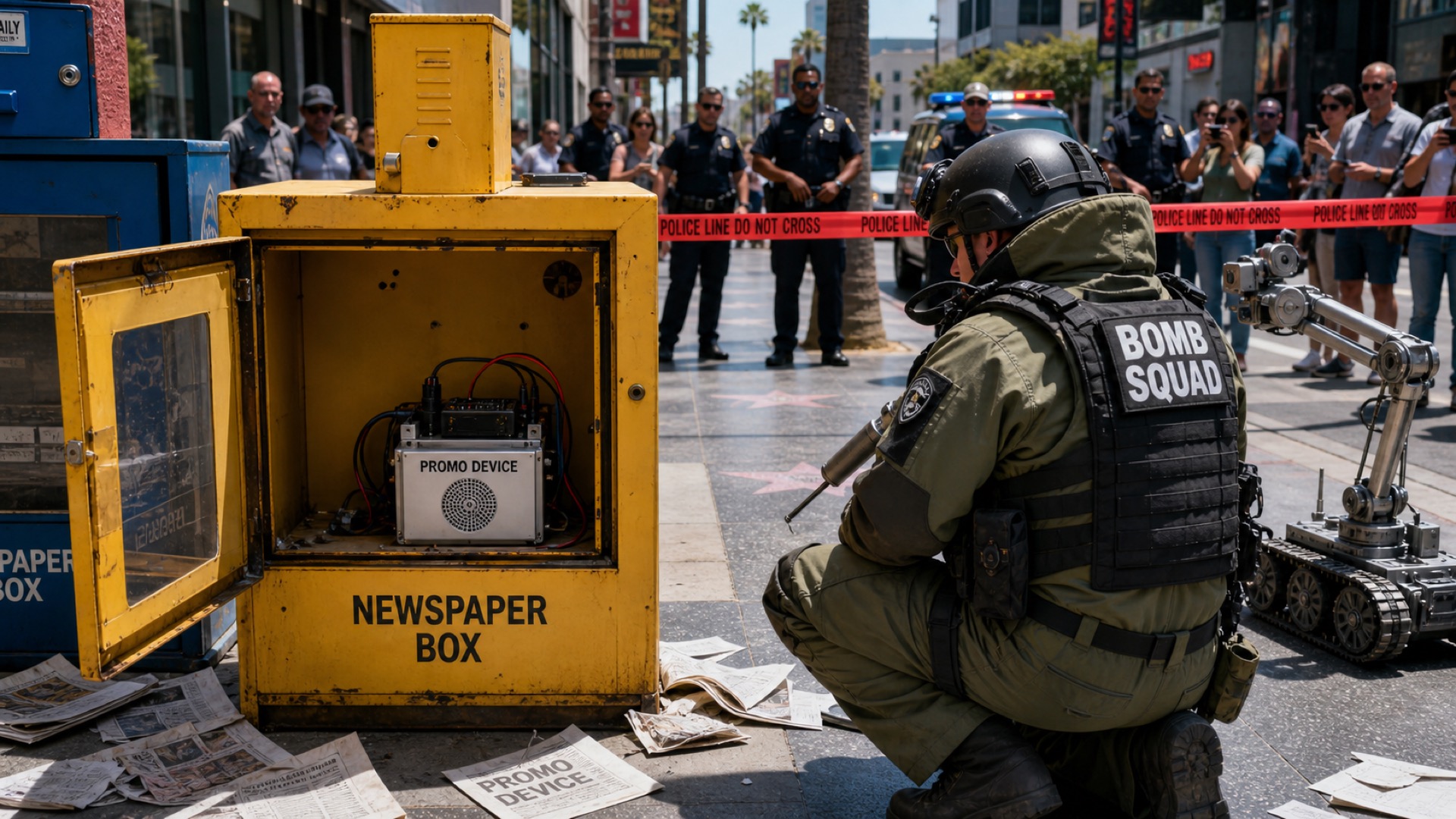
Mission: Impossible III tried to make buying a newspaper feel like accepting a secret mission.
That sounds cute until the bomb squad gets invited.
In 2006, Paramount and the Los Angeles Times promoted the movie by placing small digital music devices inside thousands of newspaper vending boxes. When someone opened the box, the device was supposed to play the Mission: Impossible theme.
The problem was that some of the devices came loose. Instead of staying hidden, they ended up visible inside the news racks: little plastic boxes with wires attached.
That is not a great surprise to find in public.
In Santa Clarita, California, one person saw a suspicious device in a newspaper box and called authorities. A bomb squad responded and reportedly destroyed the news rack. Another device caused concern at a veterans medical center in West Los Angeles, where people had to be evacuated.
The devices were harmless. They were just supposed to play music.
But that is exactly why this stunt went too far. The idea probably sounded clever in a meeting. “What if the newspaper box plays the theme song?” Fine. Cute. Very spy movie.
But out in the real world, a strange box with wires in a public place does not read as “fun surprise.” It reads as “please step away and call someone with protective gear.”
At that point, your marketing campaign has stopped promoting the movie and started creating its own action sequence.
#1 The Dark Knight Turned Fans Into Gotham Citizens

The Dark Knight did not just have a marketing campaign.
It had homework.
Before the movie came out in 2008, Warner Bros. and 42 Entertainment built a massive alternate reality game around Gotham City. Fans did not just watch trailers and wait for release day. They followed clues, visited websites, opened emails, joined fake political campaigns, hunted for Joker cards, solved puzzles, and treated movie marketing like a part-time detective job.
And honestly, people loved it.
The campaign started with Harvey Dent’s fake political run and the “I Believe in Harvey Dent” material. Then the Joker started “vandalizing” parts of the campaign, pulling fans into a darker game. Solving puzzles helped reveal the first official image of Heath Ledger as the Joker. Later, fans were sent on scavenger hunts, found clues at real-world locations, received fake Gotham newspapers, and even dealt with cakes that had phones hidden inside them.
That is not a trailer. That is a side quest with a budget.
Compared with the other stunts on this list, The Dark Knight campaign was not a disaster in the same way. It did not shut down Boston or send bomb squads to newspaper boxes. But it absolutely pushed movie marketing further than most campaigns had gone, blurring fiction, games, internet culture, and real-world events into one giant promotional machine.
It sits in a different corner from behind the scenes Movies that were creepier than the plot, but it has the same weird feeling of a movie spilling out past the screen and into real life.
And that is why it belongs here.
Some movie ads ask you to buy a ticket.
This one looked at fans and said, “Congratulations, you live in Gotham now.”
Leave a Reply