

History had plenty of terrible jobs, but apparently some of them came with a surprisingly decent paycheck.
Some jobs from history sound miserable until you see the paycheck.
That is where things get annoying. A lot of people were doing dangerous, dirty, or deeply strange work, and somehow a few of them were making better money than you would expect.
Here are five weird jobs from history that paid surprisingly well.
#5 Gong Farmer
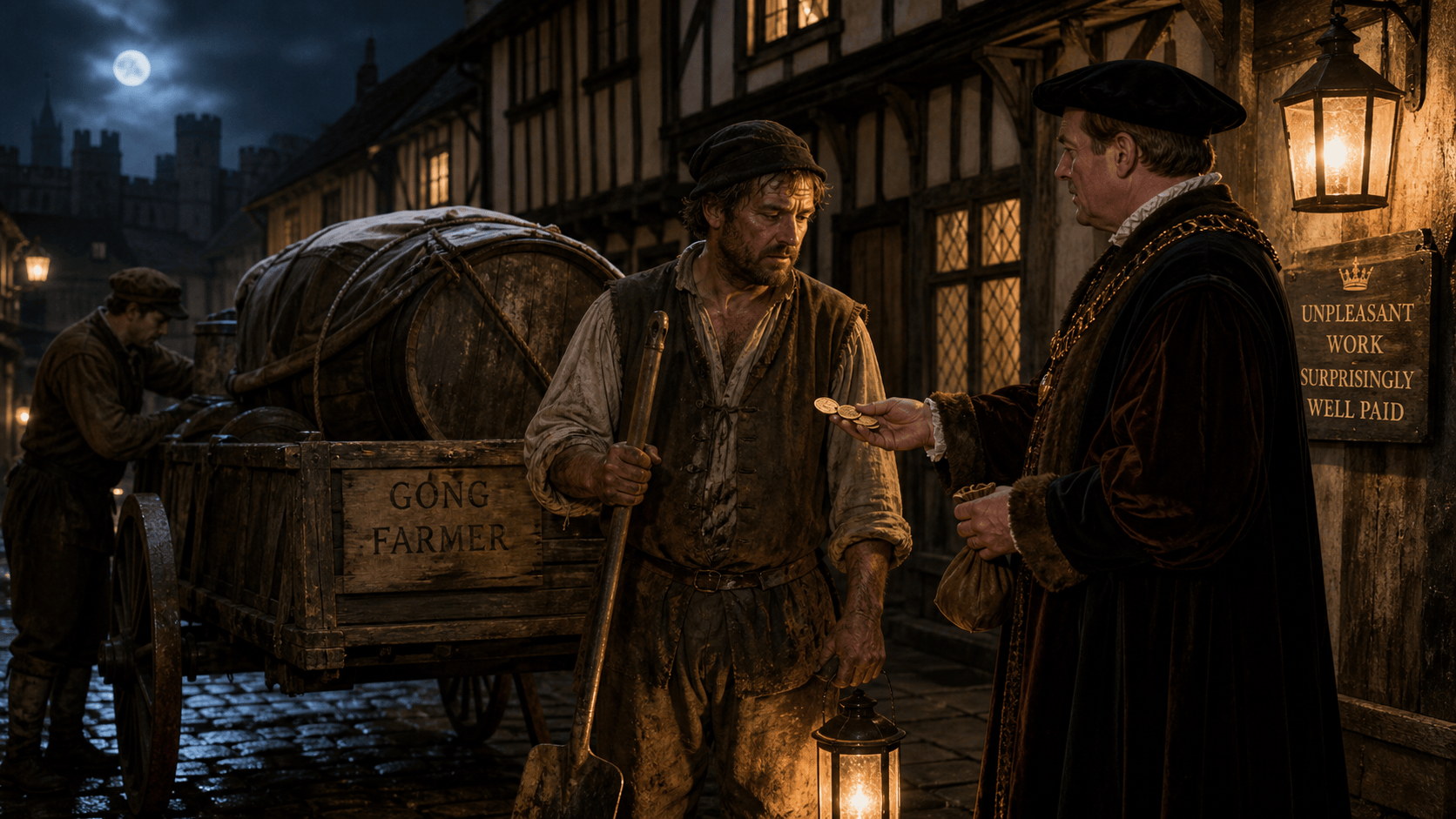
If you have never heard the phrase “gong farmer” before, congratulations. Your day was cleaner ten seconds ago.
In Tudor England, gong farmers were hired to clean out privies, cesspits, and other places where human waste gathered in exactly the way you are imagining and probably worse. They usually worked at night, partly because nobody wanted this job happening in the middle of a pleasant afternoon stroll.
But here is the twist: the job could pay surprisingly well.
Some accounts say gong farmers working at Hampton Court under Queen Elizabeth I earned sixpence a day. That does not sound like much now, mostly because old money sounds like someone spilled Scrabble tiles into a wallet. But for the period, it was respectable working pay. A common laborer might earn around four pence a day, while sixpence was closer to skilled-worker territory.
In modern terms, that is hard to convert cleanly, but it was more like a solid day’s wage than loose change. Very roughly, depending on how you compare historical wages, think somewhere around $75 to $120 for a day of deeply unfortunate work.
In some places, gong farmers could also be paid by the amount of waste they removed. There are references to payment by the ton, which means someone, somewhere, had to look at a job involving human waste and say, “Let’s make this performance-based.”
That is how you know the past was serious about being unpleasant.
The money made sense, though. The work was filthy, dangerous, and socially embarrassing. The fumes could be hazardous. The hours were awful. And if you were doing it, everyone in town knew exactly what you did for a living.
So yes, being a gong farmer was one of those strange jobs from history that sounds too miserable to be real. But compared with a lot of cleaner, more respectable work, it could actually pay better.
Which is probably the only way you get someone to climb into history’s worst basement.
#4 Executioner
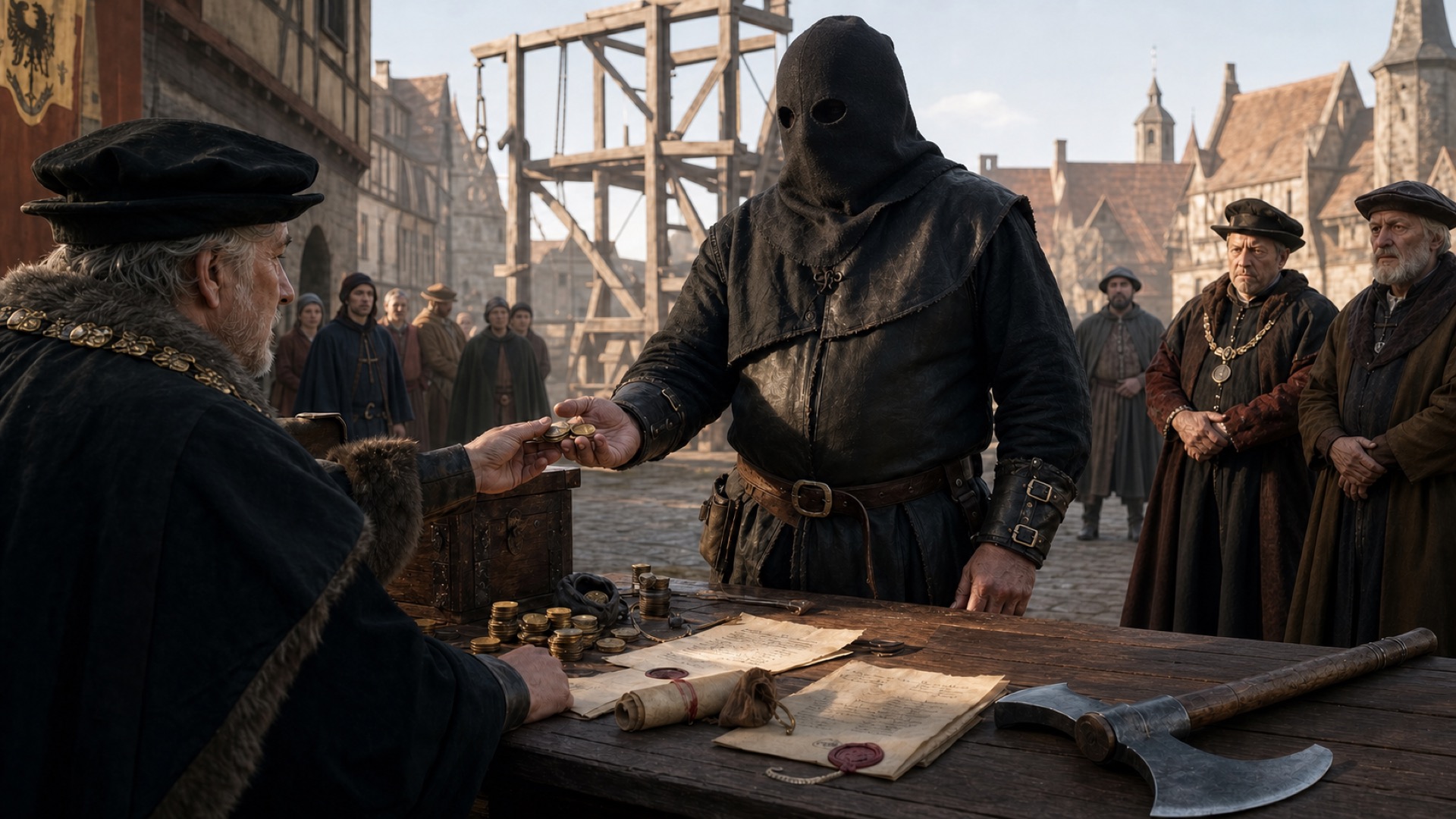
Executioners had one of the strangest positions in history: necessary enough to be paid, feared enough to be avoided, and disliked enough that nobody wanted to sit next to them at dinner.
Which is fair. “What do you do for work?” probably got awkward fast.
In medieval and early modern Europe, executioners were not always rich, and the pay varied wildly depending on place and period. But in some towns, the job came with more than just a basic fee. Executioners could receive official payments for executions, extra money for torture or punishments, and sometimes side income from related work.
That side income is where things get especially weird.
In parts of Europe, executioners had access to the bodies of the condemned. That could lead to money from selling things people believed had medical or magical value, including human fat, blood, or body parts. It sounds grotesque now because it was grotesque then too, just with more paperwork and fewer health regulations.
Some executioners also performed tasks nobody else wanted: removing dead animals, cleaning waste, disposing of corpses, or handling other dirty public jobs. Basically, if society needed something grim done and everyone else took one step backward, the executioner was already standing there.
Compared with ordinary labor, the work could be financially useful. Not glamorous. Not respected. But useful.
A modern dollar estimate is hard to give because executioners often made money through fees, privileges, and side work instead of a clean salary. A better comparison is this: the job could function like an unpleasant skilled trade, with official pay plus extra income from tasks most people refused to touch.
So no, being an executioner was not some easy path to wealth. It came with social isolation, danger, and a job description that made casual conversation nearly impossible.
But in a world where reputation and survival were often fighting each other, the executioner had something many people did not: a steady demand for his services.
Terrible business model. Surprisingly durable career.
#3 Barber Surgeon
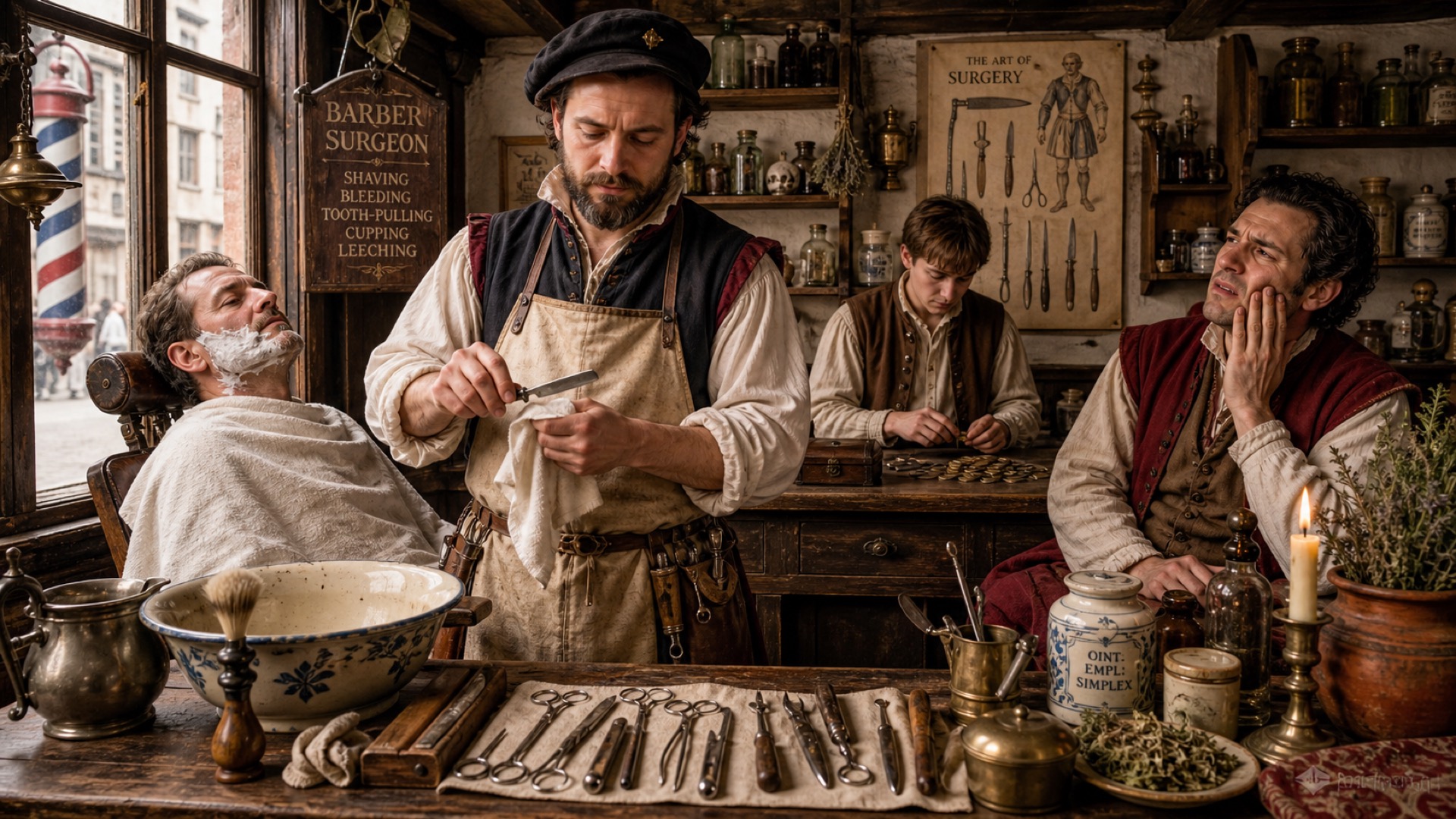
At some point in history, someone looked at the person cutting hair and thought, “You know who should also be doing minor surgery? This guy.”
That is how you get the barber-surgeon.
In medieval and early modern Europe, barber-surgeons did a strange mix of work. They cut hair, shaved faces, pulled teeth, treated wounds, performed bloodletting, lanced boils, set bones, and sometimes handled battlefield injuries. It was part grooming, part medicine, part “please do not sneeze while holding that blade.”
And because the work required skill, nerve, and a strong stomach, it could pay better than ordinary labor.
A barber-surgeon was not the same as a university-trained physician. Physicians were usually higher status and focused more on diagnosis and theory. Barber-surgeons were the hands-on workers. They dealt with the blood, teeth, cuts, swelling, infections, and other things polite society preferred to discuss from across the room.
That made them useful.
The pay depended on where they worked and who they served. A barber-surgeon in a town might earn money from regular customers. One attached to an army, ship, noble household, or royal court could have steadier income, food, lodging, or official wages. Some joined guilds, which helped protect their trade and status.
A modern comparison is tricky because they were often paid per service, by patronage, or through official employment. But the best way to think of it is this: a good barber-surgeon could function like a skilled medical tradesman. Not elite doctor money, but definitely above basic day-labor money.
The weirdest part is how normal the combination was for centuries. Need a shave? Sit down. Need a tooth pulled? Also sit down, but maybe grip the chair harder.
Today, we separate salons, dentists, doctors, and surgeons for obvious reasons. History liked to bundle services.
#2 Court Jester

Court jesters sound like they should have been paid in applause and mild humiliation.
But the better ones could do surprisingly well, especially if they worked for a powerful ruler. A jester was not just some random guy jingling around in a hat. In royal and noble households, a trusted fool could receive food, lodging, clothing, gifts, protection, and regular access to people most servants could barely approach without sweating through their tunics.
That was a big deal.
Take Will Somers, the famous fool at the court of Henry VIII. Records show clothing and gifts being provided for him, including coats, caps, and other wardrobe items. That may not sound thrilling now, but in a royal household, clothing was part of compensation. Good fabric was expensive. Being dressed by the court was not exactly the same as getting a free company polo.
Some court fools were also valued because they could say things other people could not. A good jester could tease, criticize, distract, or soften bad news by wrapping it in a joke. That is a weird skill set, but a useful one if you worked near kings, nobles, and other people who had the emotional stability of a lit candle near dry straw.
Modern pay comparisons are hard because a jester’s “salary” often came as a package: meals, lodging, clothing, gifts, and status inside the household. But that package could be much better than what many ordinary workers had. You were fed. You were sheltered. You might receive expensive clothes. And if the ruler liked you, you had a strange kind of protection.
Of course, the job came with risks. Being funny around powerful people is dangerous when those powerful people can ruin your life before lunch.
Still, for someone with sharp timing and enough nerve, court jester was not just a silly job.
It was entertainment, politics, survival, and benefits, all in one ridiculous outfit.
#1 Roman Charioteer
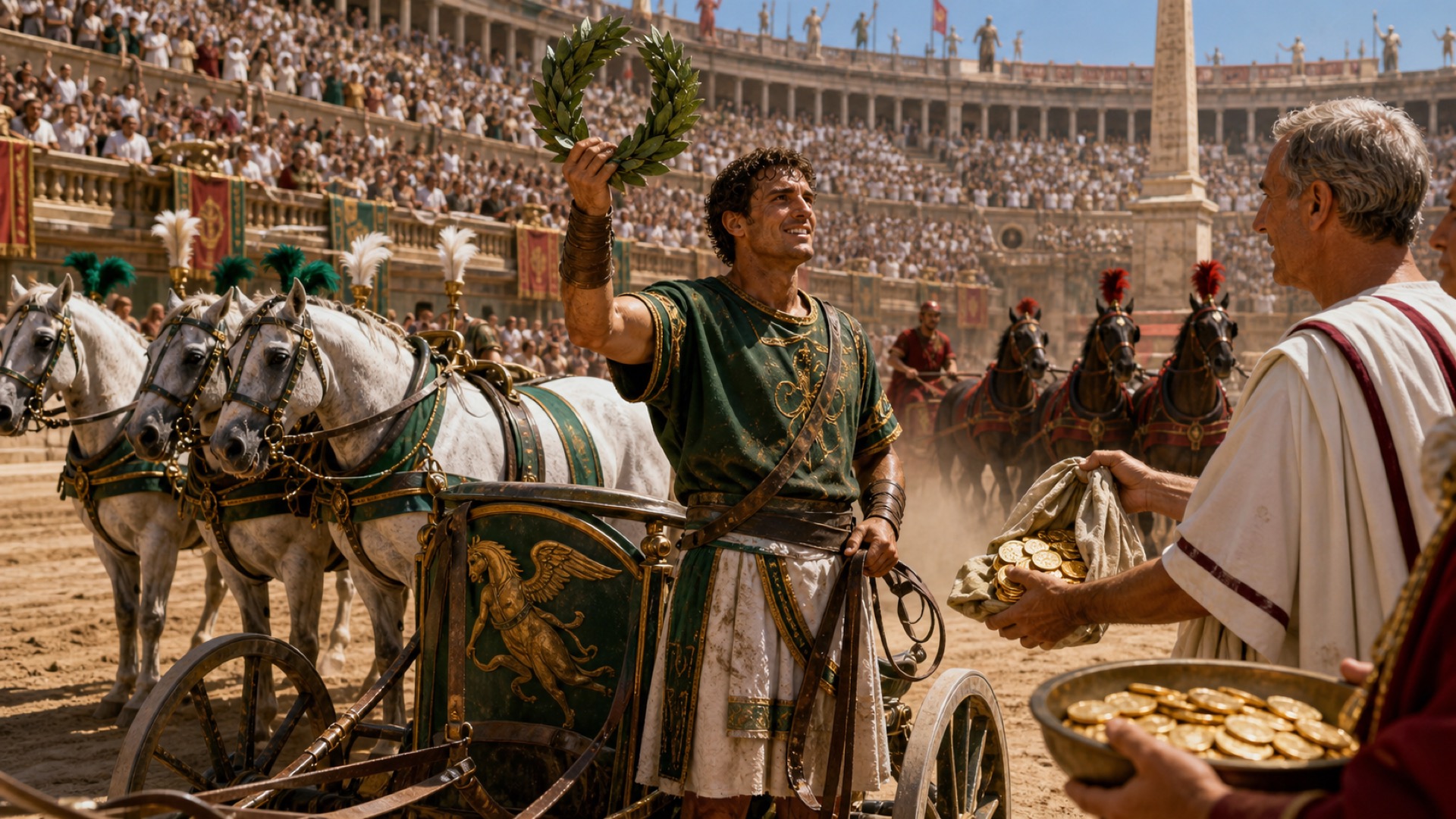
Roman charioteers were not just guys riding around in circles while people yelled.
They were athletes, celebrities, gamblers’ nightmares, and walking insurance claims. The races were fast, violent, dangerous, and wildly popular. If you were good, the crowd loved you. If you were bad, the crowd still got entertainment, just possibly in a more medical direction.
And if you were great, you could become unbelievably rich.
The most famous example is Gaius Appuleius Diocles, a Roman charioteer from Lusitania, in what is now Portugal and western Spain. His winnings were recorded in an inscription, which is convenient because otherwise this number would sound like something a sports agent made up after three glasses of wine.
Diocles reportedly earned 35,863,120 sesterces over his career.
That is a ridiculous amount of Roman money. Exact modern conversions are messy, because ancient wealth does not slide neatly into a dollar calculator. But some modern estimates compare it to hundreds of millions or even billions of dollars in today’s terms, depending on the method. The safest way to say it is this: Diocles was not just well paid. He was rich on a level that made normal rich people look like they were clipping coupons.
This is also a nice reminder that the ancient world was more advanced than people expect. Rome had organized racing teams, massive arenas, fan culture, prize money, celebrity athletes, and enough public obsession to make modern sports fans look emotionally balanced by comparison.
Of course, the job was dangerous. Chariot crashes could be brutal, and drivers sometimes wrapped the reins around their bodies to control the horses better, which is exactly the kind of career choice that makes a retirement plan feel optimistic.
But Diocles survived long enough to retire after a 24-year career.
That is what puts him at number one. Gong farmers made solid dirty-job money. Executioners had fees. Barber-surgeons had skill. Court jesters had royal perks.
Diocles had ancient sports money.
And apparently, ancient sports money could be absolutely insane.
Leave a Reply