

There are museum objects you study, museum objects you admire, and museum objects you try not to make eye contact with.
This list is not about fake haunted artifacts or horror-movie props. These are real museum objects and displays with real histories behind them.
If you like real places with unsettling histories, this has some of the same uneasy feeling as haunted places with terrifying histories, just with better lighting and more glass cases.
Here are five museums with objects that should not be this creepy.
#5 Museum of Death
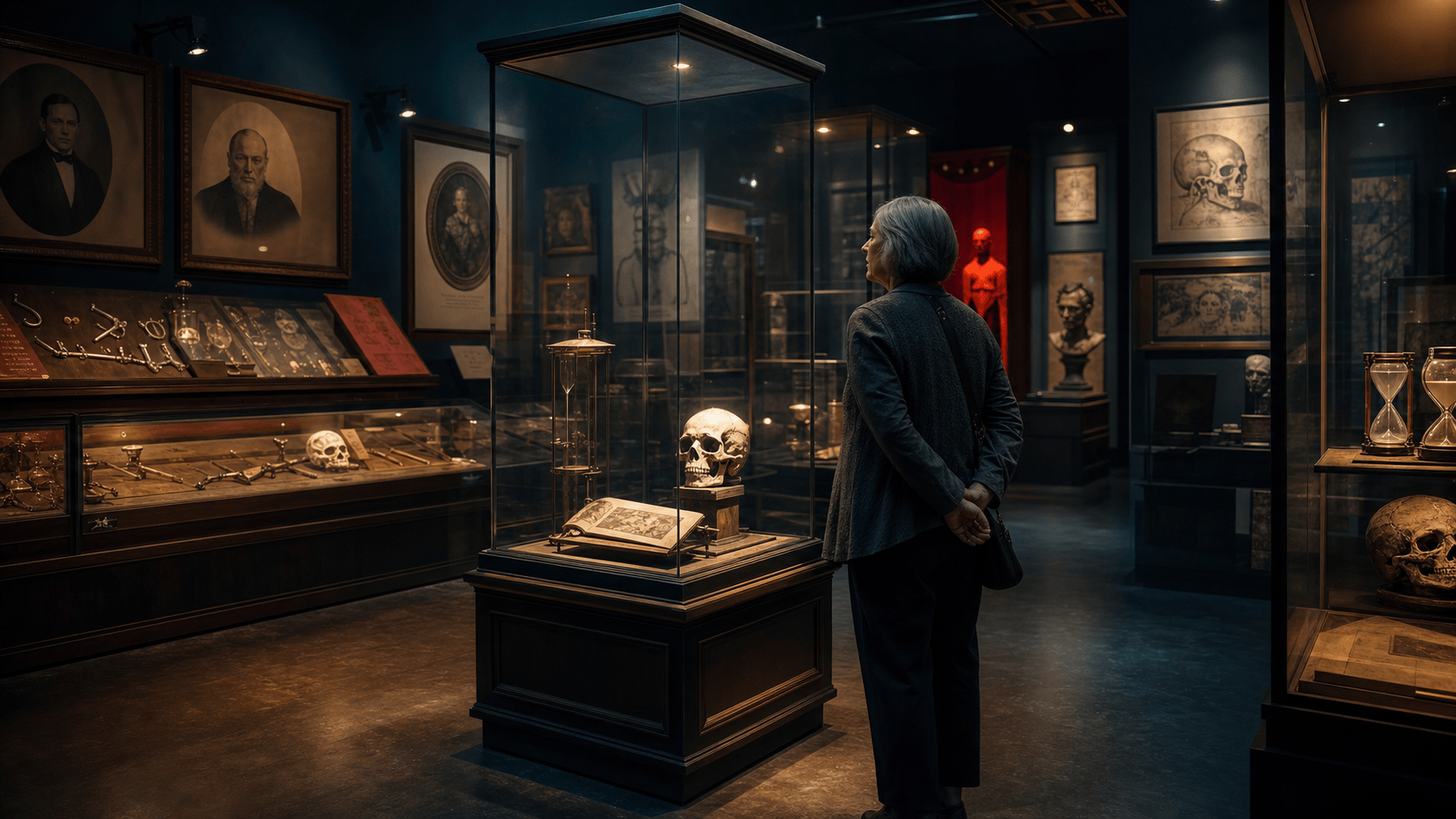
Some museums ease you into the uncomfortable stuff. The Museum of Death does not seem especially interested in easing.
Founded in 1995 by J.D. Healy and Cathee Shultz, the museum was created around what they saw as a lack of death education in the United States. Which sounds reasonable enough, until you realize the lesson plan includes body bags, coffins, skull collections, mortician tools, crime-related exhibits, serial killer artwork, and other objects that make the average museum gift shop magnet feel underqualified.
The museum has locations in Hollywood, California, and New Orleans, Louisiana, and its own website warns that it is meant for mature audiences. That is probably wise. Some places have a “please do not touch the display” energy. This one has more of a “maybe eat lunch afterward” energy.
What makes it creepy is not just that the objects are tied to death. Museums display death all the time. Mummies, bones, battle artifacts, medical specimens. We are weirdly used to that as long as the lighting is tasteful and someone says “educational” in a calm voice.
The Museum of Death feels different because it puts death, crime, mourning, curiosity, and discomfort very close together. You are not looking at one ancient skull from behind a velvet rope. You are walking through an entire collection built around the thing most people spend their lives trying not to think about.
It is real. It is intentional. It is educational in its own very blunt way.
But yes, it also sounds like the kind of place where you suddenly become extremely aware of every creak in the floor.
#4 Mutter Museum’s Soap Lady
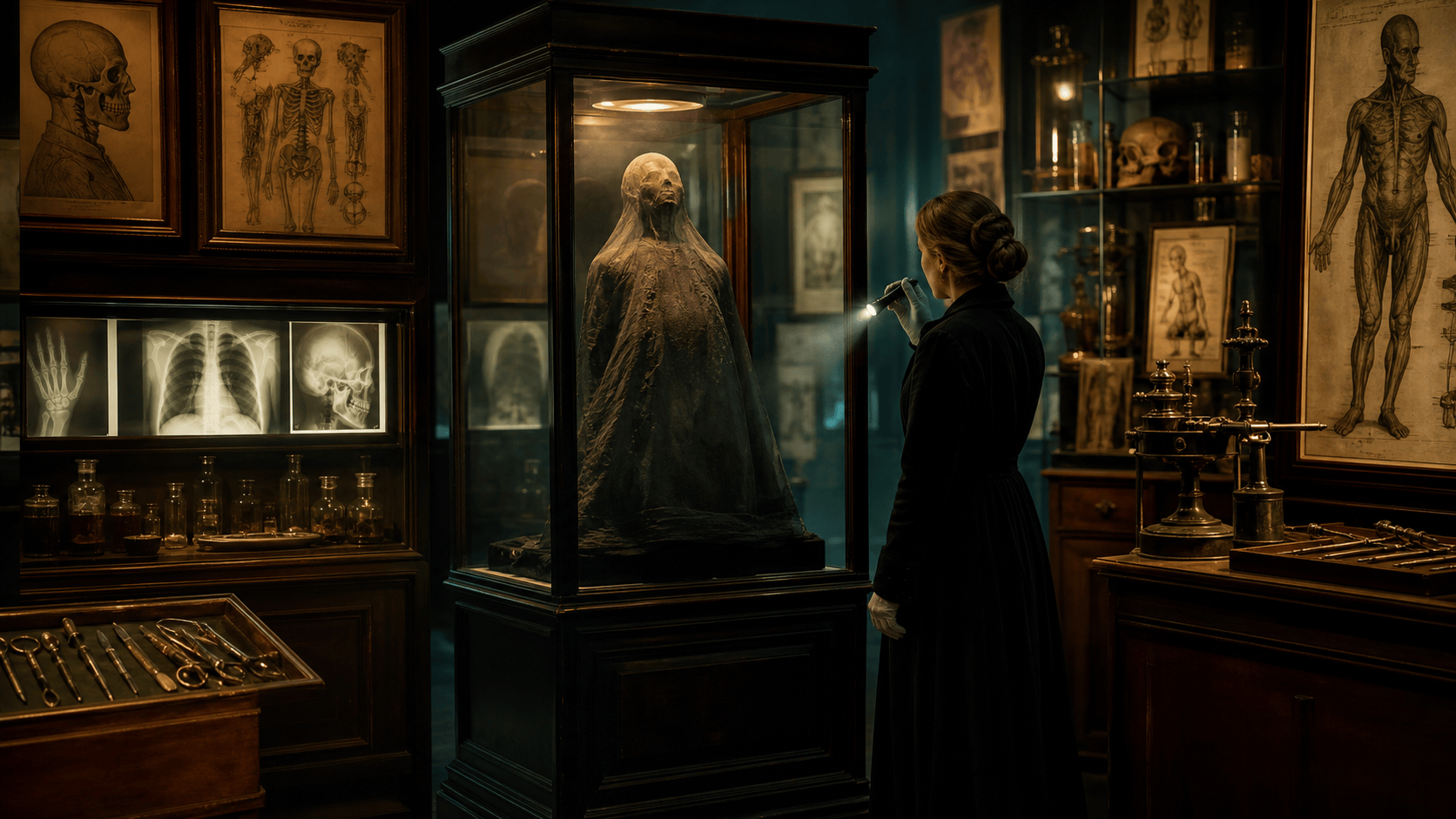
The Mutter Museum in Philadelphia is already the kind of place where the phrase “medical curiosity” does a lot of heavy lifting.
It was founded from the collection of Dr. Thomas Dent Mutter, a 19th-century surgeon who wanted medical students to learn from real anatomical specimens. Today, the museum is known for skulls, preserved organs, unusual medical cases, and exhibits that can make visitors suddenly remember they were supposed to be somewhere else.
One of its most famous displays is the Soap Lady.
She was exhumed in Philadelphia in 1875, and her remains were found covered in adipocere, a waxy, soap-like substance that can form when body fat changes in certain burial conditions. It is rare, and it can preserve remains in a way that feels less like a normal museum specimen and more like science quietly making the room worse.
For years, people believed she may have died during the yellow fever epidemic of the 1790s. Later X-rays complicated that story. Buttons and pins found with her clothing suggested she died decades later, probably in the 19th century. More imaging also led researchers to revise her age at death, possibly placing her in her late 20s rather than middle age.
That is what makes the Soap Lady so unsettling. She is not just creepy because of how she looks. She is creepy because the display is also a mystery. A real person, an old mistake, a strange chemical process, and a museum case all sitting together under quiet lighting.
Most museum exhibits ask you to learn something. This one feels like it asks you not to blink too much while doing it.
#3 Jeremy Bentham’s Auto Icon
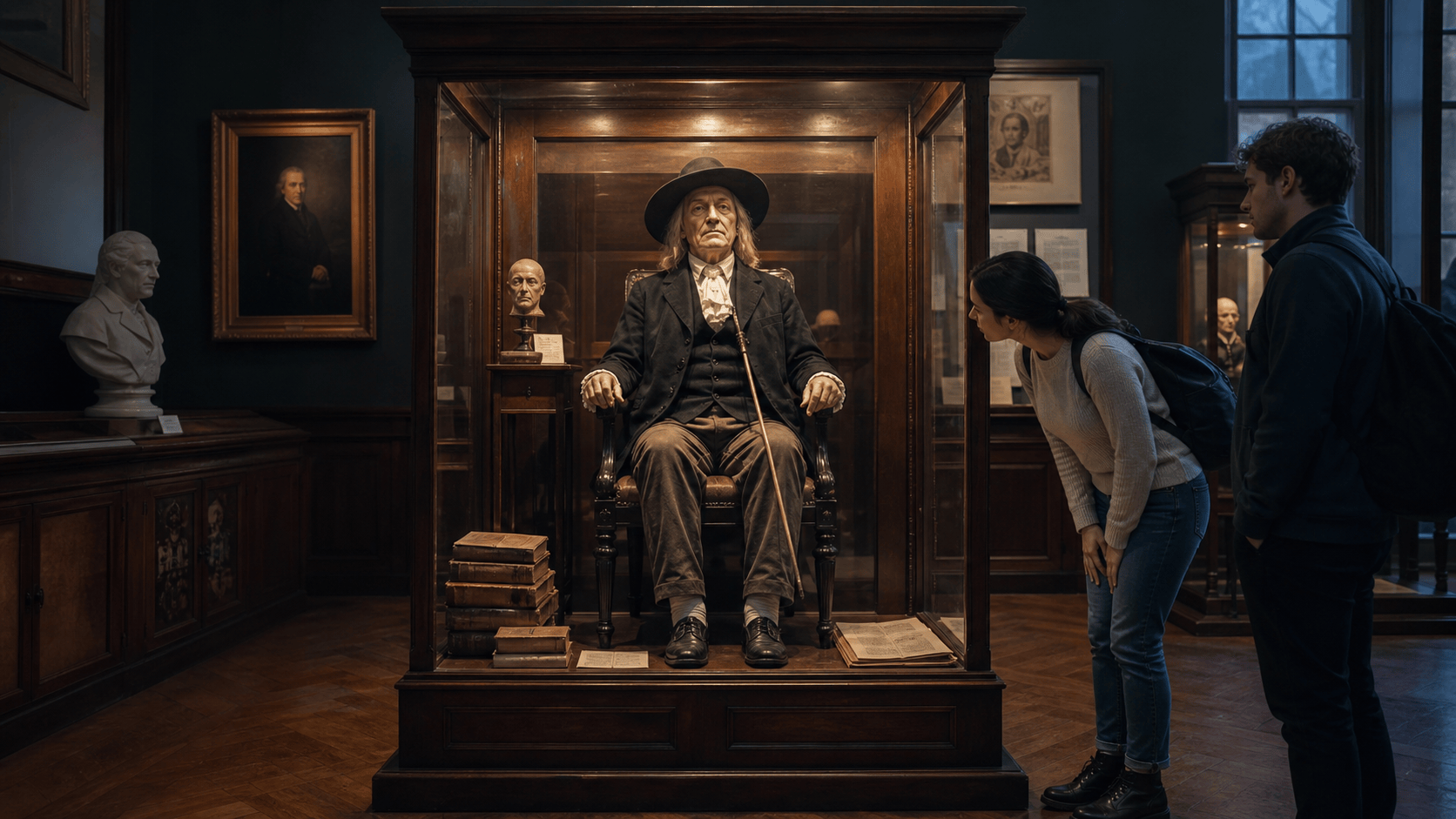
Jeremy Bentham had strong opinions in life, and apparently did not see death as a good enough reason to stop being involved.
Bentham was an English philosopher best known for utilitarianism, the idea often summed up as seeking the greatest happiness for the greatest number. When he died in 1832, he left instructions for his body to be preserved as what he called an “Auto Icon.” Not a statue. Not a portrait. Him.
Today, his preserved skeleton sits in a glass case at University College London, dressed in his own clothes and topped with a wax head. The original head was supposed to be part of the display too, but the preservation process did not go well. That is the polite museum way of saying it became something you probably would not want greeting students in a hallway.
For years, the Auto Icon was displayed in a wooden cabinet in UCL’s South Cloisters. In 2020, it was moved to a new case in the UCL Student Centre, where visitors can still see it.
The whole thing is unsettling because Bentham did not become a museum object by accident. This was the plan. He wanted his body preserved, dressed, seated, and used after death as a kind of physical reminder of his ideas.
There is something oddly practical about that. Also deeply strange. Most philosophers leave behind books. Bentham left behind books, theories, and himself sitting in a chair.
#2 Vent Haven Museum’s Ventriloquist Dummies
Vent Haven Museum in Fort Mitchell, Kentucky, is the only museum in the world dedicated entirely to ventriloquism. That is already specific enough to make you respect it.
Then you remember what ventriloquism involves.
The museum began with the collection of William Shakespeare Berger, a Cincinnati businessman who bought his first figure, Tommy Baloney, in 1910. What started as one man’s collection eventually grew into a full museum, opened to the public in 1973 after Berger’s death.
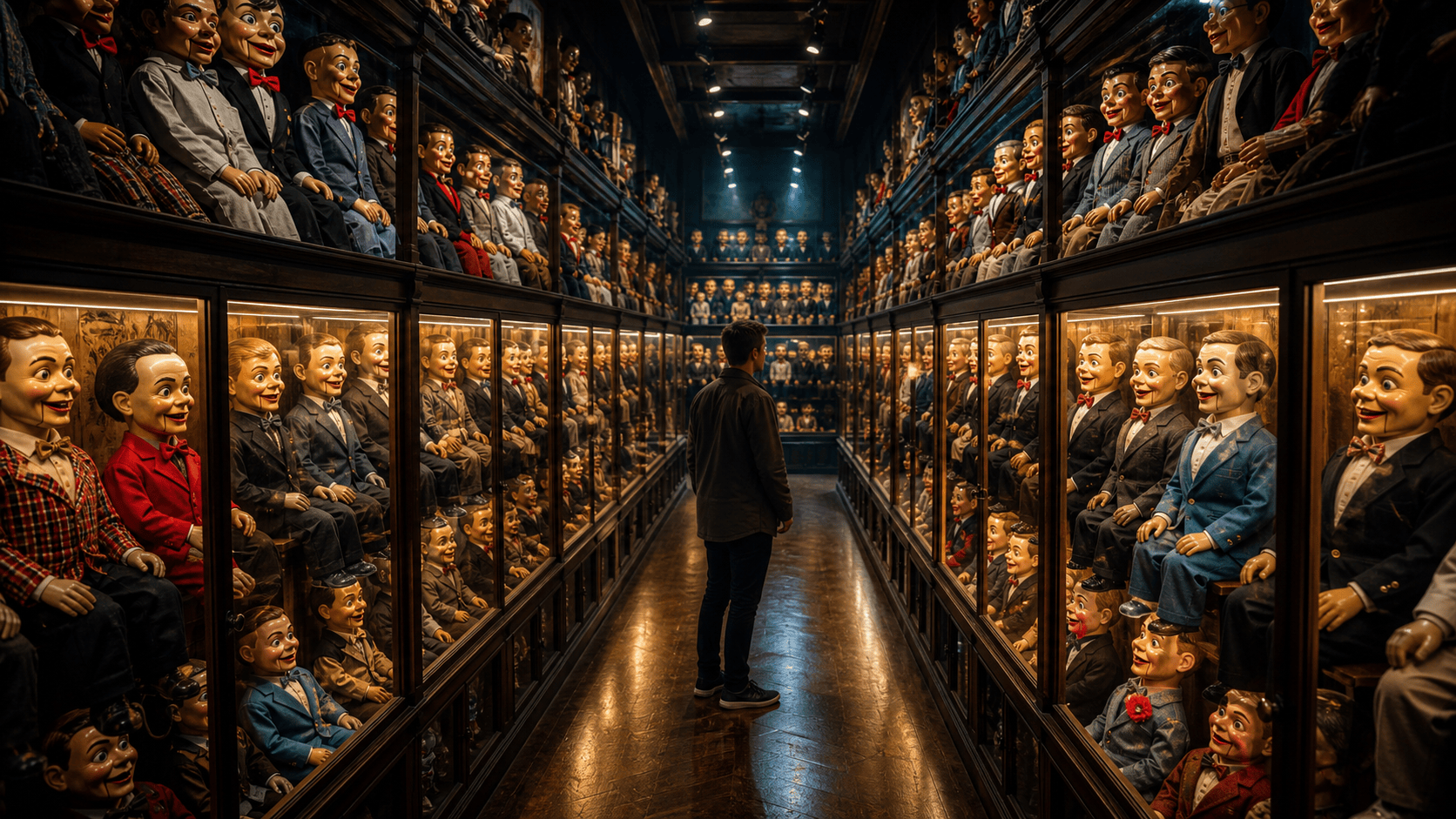
Today, Vent Haven holds more than 1,200 ventriloquist figures, along with photos, scripts, recordings, playbills, and other pieces of performance history. Some of the figures date back to the 19th century.
On paper, that is fascinating. Ventriloquism has a long history as entertainment, and the museum preserves a very specific art form that could easily have been scattered or forgotten.
In person, though, the effect is a little different.
Rows of painted faces. Fixed smiles. Heavy-lidded eyes. Tiny suits. Wooden mouths that were built to move, but currently are not moving, which somehow does not make things better.
Nothing has to be haunted for the room to feel wrong. The creepiness comes from the number of them, and from the fact that every face looks designed to be looked at while also looking back.
It is a museum of performance history. It is also probably not where I would want to be during a power outage.
#1 Capuchin Catacombs of Palermo
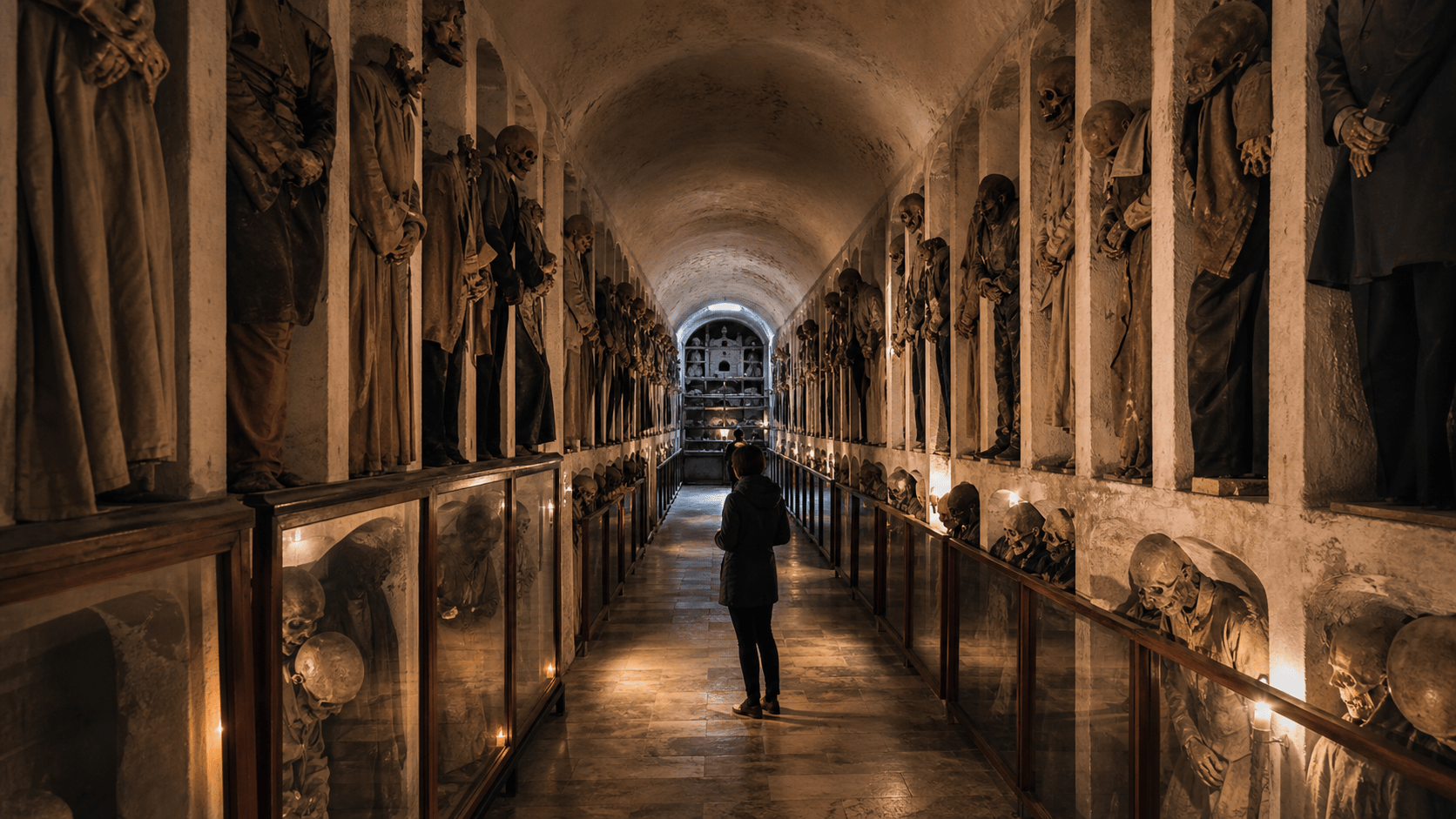
The Capuchin Catacombs of Palermo do not have one creepy object. That would almost be polite.
They have corridors.
Beneath a Capuchin monastery in Palermo, Sicily, thousands of preserved bodies were placed along underground passages, many still dressed in the clothing they were buried in. The catacombs began in the late 1500s, after the monastery needed more burial space. When friars later exhumed bodies from an older cemetery area, they reportedly found dozens that had naturally mummified.
Instead of treating that as a quiet reason to back away slowly, the Capuchins saw it as meaningful. The preserved bodies became part of the burial tradition.
Over time, the catacombs expanded. What started with friars eventually included laypeople, especially wealthier citizens who could pay for mummification and burial there. Families could visit. Bodies were dressed. Some were arranged by category: monks, priests, men, women, children, and professionals.
That is what makes the place so unsettling. It is not a single strange specimen behind glass. It is a whole underground system built around death being visible, organized, and present.
The most famous body there is Rosalia Lombardo, a two-year-old girl who died in 1920 and was embalmed by Alfredo Salafia. She is often called the “Sleeping Beauty of Palermo” because of how remarkably preserved she appears. Her story is sad, and it is also part of why the catacombs feel so hard to look away from.
The Capuchin Catacombs earn the number one spot because they turn the museum experience inside out. Usually, you walk through history and look at what people left behind.
Here, in a very literal way, history looks back.
Leave a Reply