

The odds were not in their favor. Apparently nobody told them.
Some survival stories are impressive because someone stayed calm, made smart choices, and got lucky at exactly the right time.
Then there are these.
Falls from the sky. Weeks at sea. Ice, jungle, canyons, injuries, and situations where the reasonable outcome was “absolutely not.”
Here are five real life survival stories that sound impossible
#5 Vesna Vulović
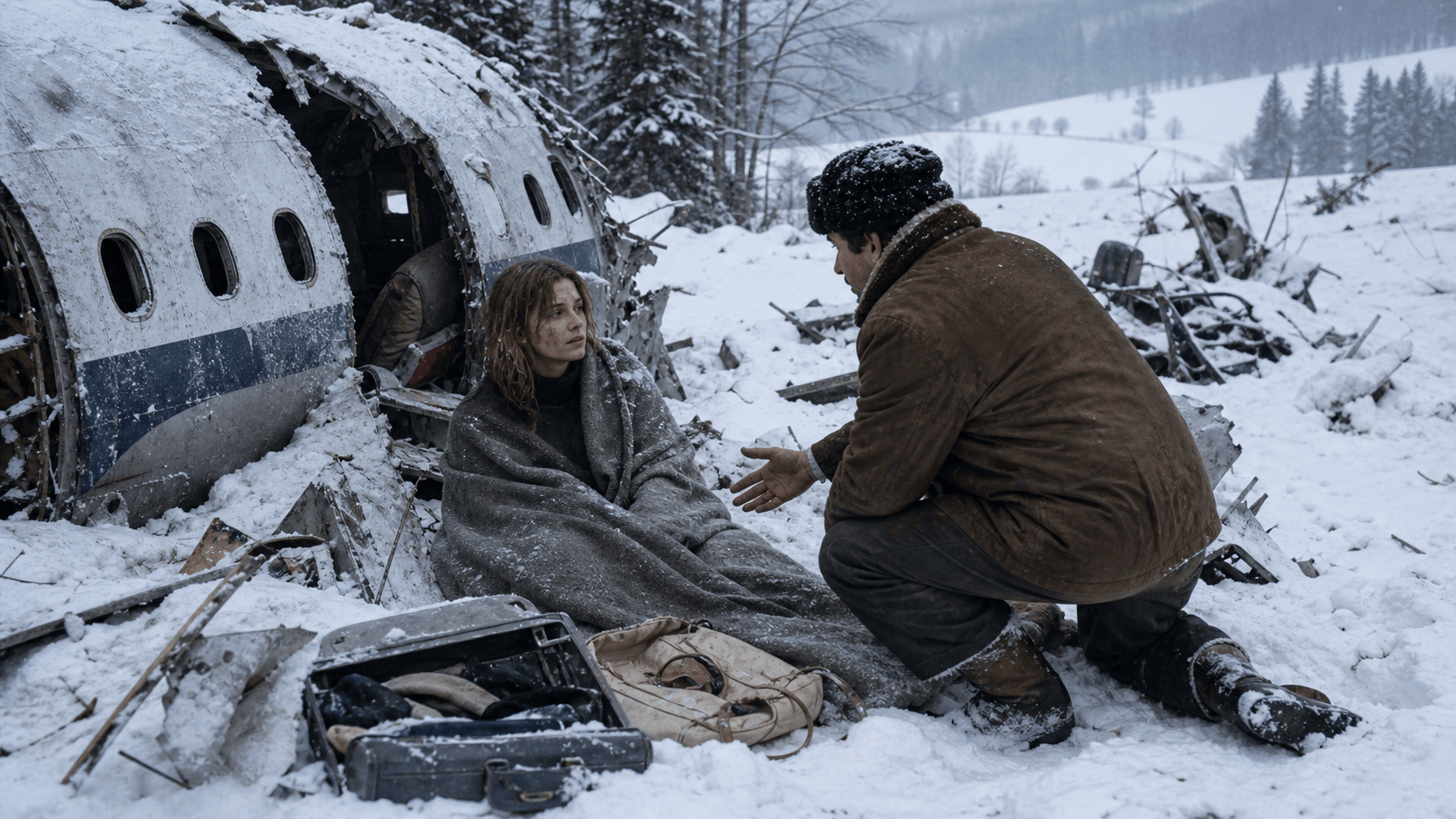
Vesna Vulović survived the kind of fall that sounds less like a real event and more like someone lost control of the screenplay.
In January 1972, Vulović was working as a flight attendant on JAT Flight 367, a Yugoslav Airlines flight traveling through Europe. She was reportedly not even supposed to be on that flight. A scheduling mix-up placed her there instead of another flight attendant with the same first name, which is the kind of clerical error that makes you want to personally apologize to the concept of paperwork.
Then the plane exploded in midair.
The official account says a bomb went off in the baggage compartment while the aircraft was flying over Czechoslovakia, now the Czech Republic. The plane broke apart, and 27 people were killed. Vulović was the only survivor.
According to the commonly reported version of the story, she survived because she was trapped in part of the fuselage as it fell. Snow, trees, and the angle of impact may have helped cushion the crash. “Cushion” is doing a heroic amount of work there, because she still suffered devastating injuries, including a fractured skull, broken vertebrae, broken legs, and temporary paralysis.
She was found alive in the wreckage by a local villager, Bruno Honke, who had medical experience from World War II and helped keep her alive until rescuers arrived.
Vulović later held the Guinness World Record for surviving the highest fall without a parachute. Some later reports have questioned parts of the official version, including the exact altitude, but even with those debates, the core fact remains almost impossible to process: a plane exploded, everyone else died, and she lived.
That is not luck in the normal sense.
That is luck showing up late, covered in snow, and somehow still getting the job done.
#4 José Salvador Alvarenga
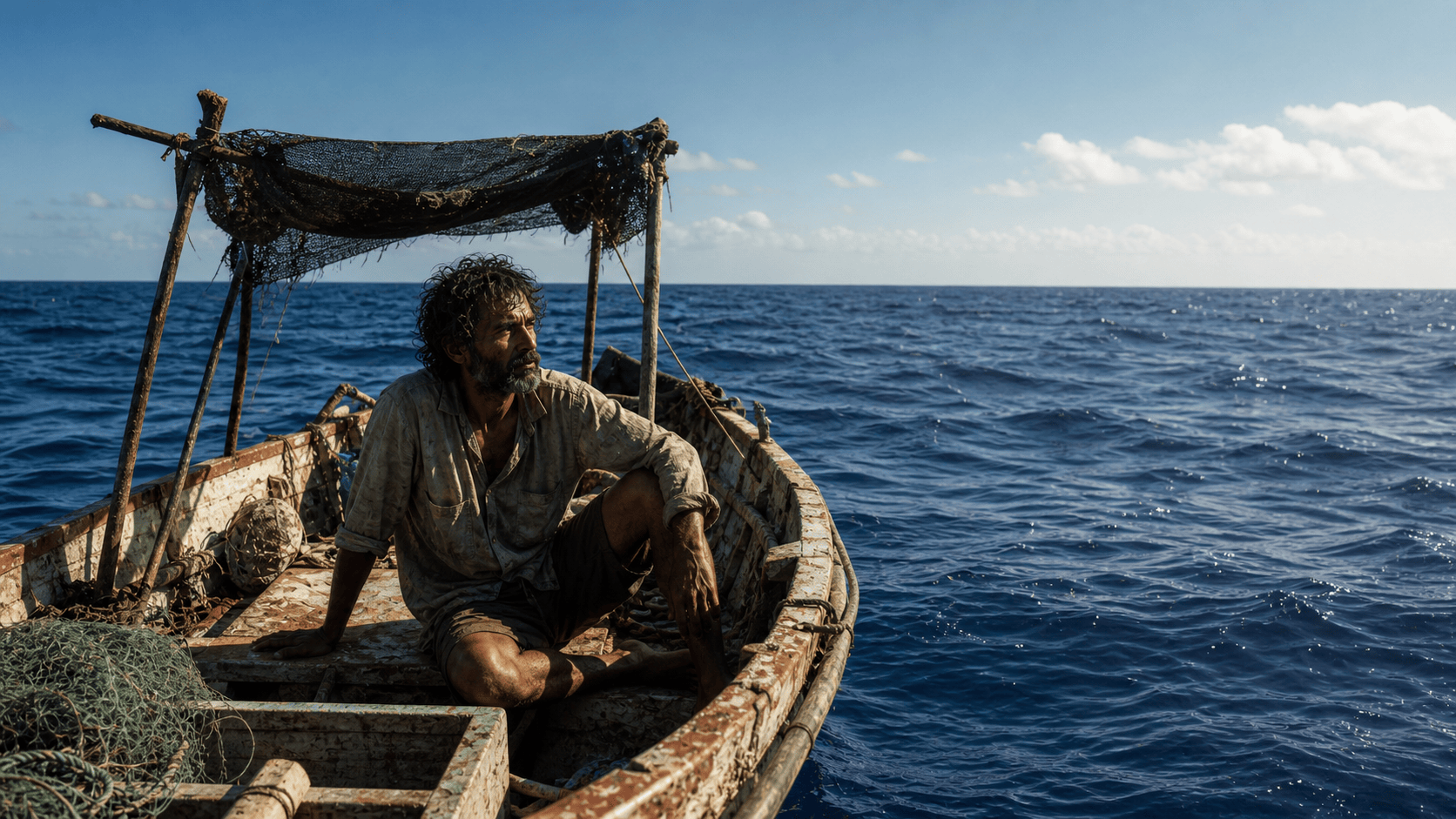
José Salvador Alvarenga’s survival story starts with a fishing trip and then very quickly becomes the ocean asking, “What if we made this everyone’s problem?”
In November 2012, Alvarenga set out from Mexico in a small fishing boat with a younger crewmate, Ezequiel Córdoba. They were supposed to be gone for about a day. Then a storm hit. Their motor failed, their radio died, and the boat drifted out into the Pacific.
Which is a calm way of saying they were swallowed by an ocean the size of a bad decision.
For months, Alvarenga survived on whatever he could catch: fish, birds, turtles, rainwater, and sometimes his own urine when there was nothing else. Córdoba did not survive the journey. Alvarenga later said his companion died after losing the will, or ability, to keep eating what they could find.
That part is hard to make neat. It should not be neat.
Alvarenga kept drifting. Days turned into weeks. Weeks turned into months. He had no map, no engine, no reliable supplies, and no idea if he would ever see land again. At some point, survival stopped being a plan and became a routine. Wake up. Find water. Find food. Stay alive. Repeat, because the alternative was not especially flexible.
In January 2014, after more than a year at sea, Alvarenga finally washed ashore in the Marshall Islands. He had drifted thousands of miles across the Pacific.
The story sounds impossible because it almost is. A man left for a one-day fishing trip and returned from the ocean more than a year later, sunburned, exhausted, and carrying a story so extreme it feels like it should have been rejected for being too much.
But it happened.
The Pacific got 438 days to finish the job.
It did not.
#3 Hugh Glass
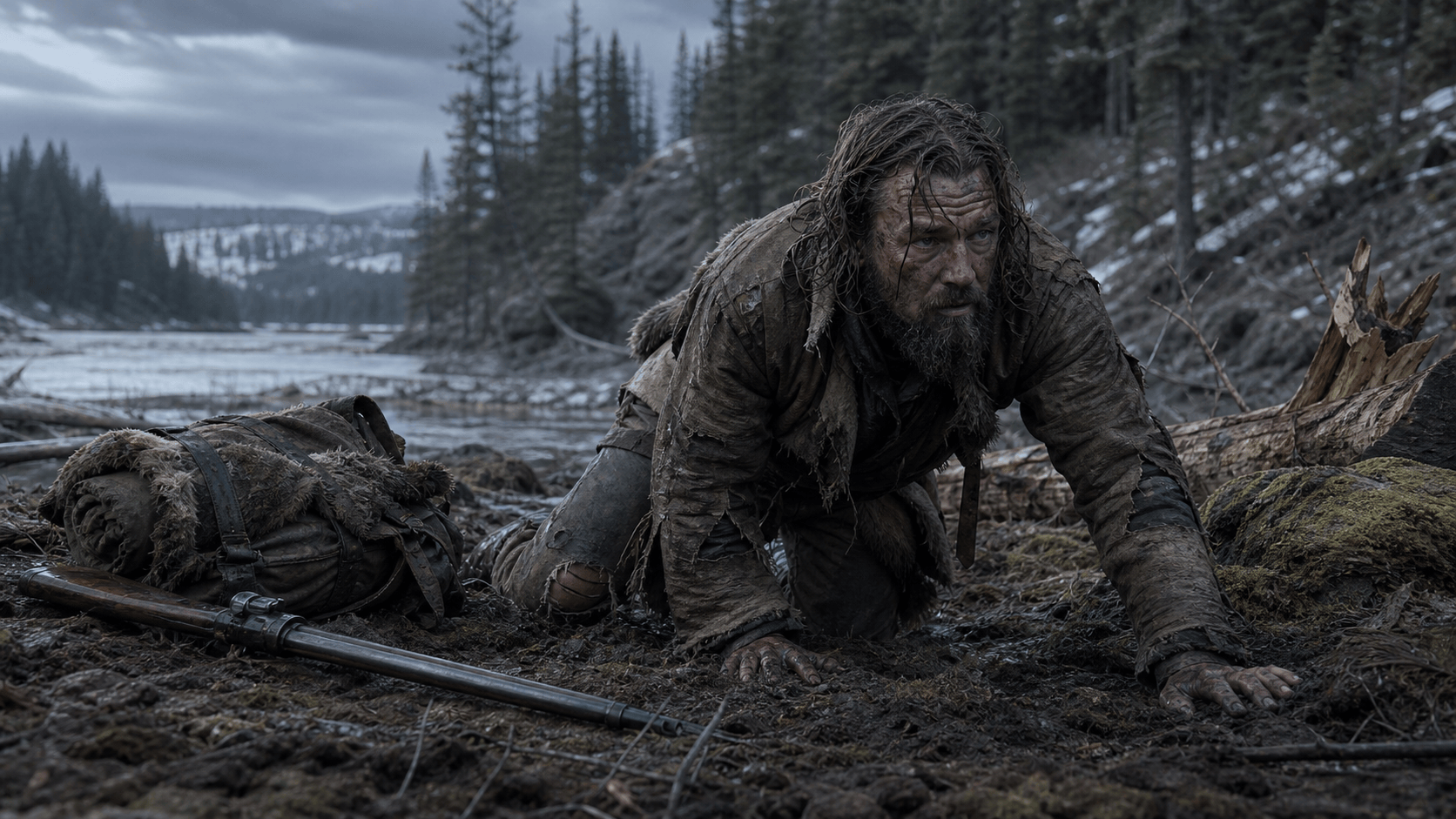
Hugh Glass is one of those survival stories where the basic facts are already wild, and then frontier legend walks in wearing muddy boots and makes everything harder to verify.
Glass was a fur trapper in the early 1800s. In 1823, while traveling with a trapping expedition near the Missouri River, he was attacked by a grizzly bear. The bear mauled him so badly that the men with him believed he was probably going to die.
And honestly, history does not make them look completely unreasonable there.
Glass was reportedly left with severe wounds, a broken leg, and injuries bad enough that moving him seemed nearly impossible. Two men were assigned to stay behind with him until he died. Instead, they eventually left him, taking some of his belongings with them.
Small note: if your survival plan depends on “wait here until this guy definitely dies,” maybe do not be shocked when history remembers you poorly.
But Glass did not die.
According to the most famous version of the story, he regained consciousness alone, injured, and without proper supplies. He then crawled, staggered, and dragged himself across the wilderness for weeks, surviving on whatever he could find. Some accounts say he traveled hundreds of miles before reaching help.
The exact details are debated. Over time, the Hugh Glass story became part history, part frontier legend, and part campfire tale that probably grew a beard of its own. But the core story remains incredible: a man was mauled, abandoned, and still somehow made it back alive.
That is what makes it feel impossible.
Not just the bear attack. Not just the distance. Not just the injuries.
It is the part where Hugh Glass looked at a situation that had already been written off by everyone around him and kept moving anyway.
#2 Aron Ralston
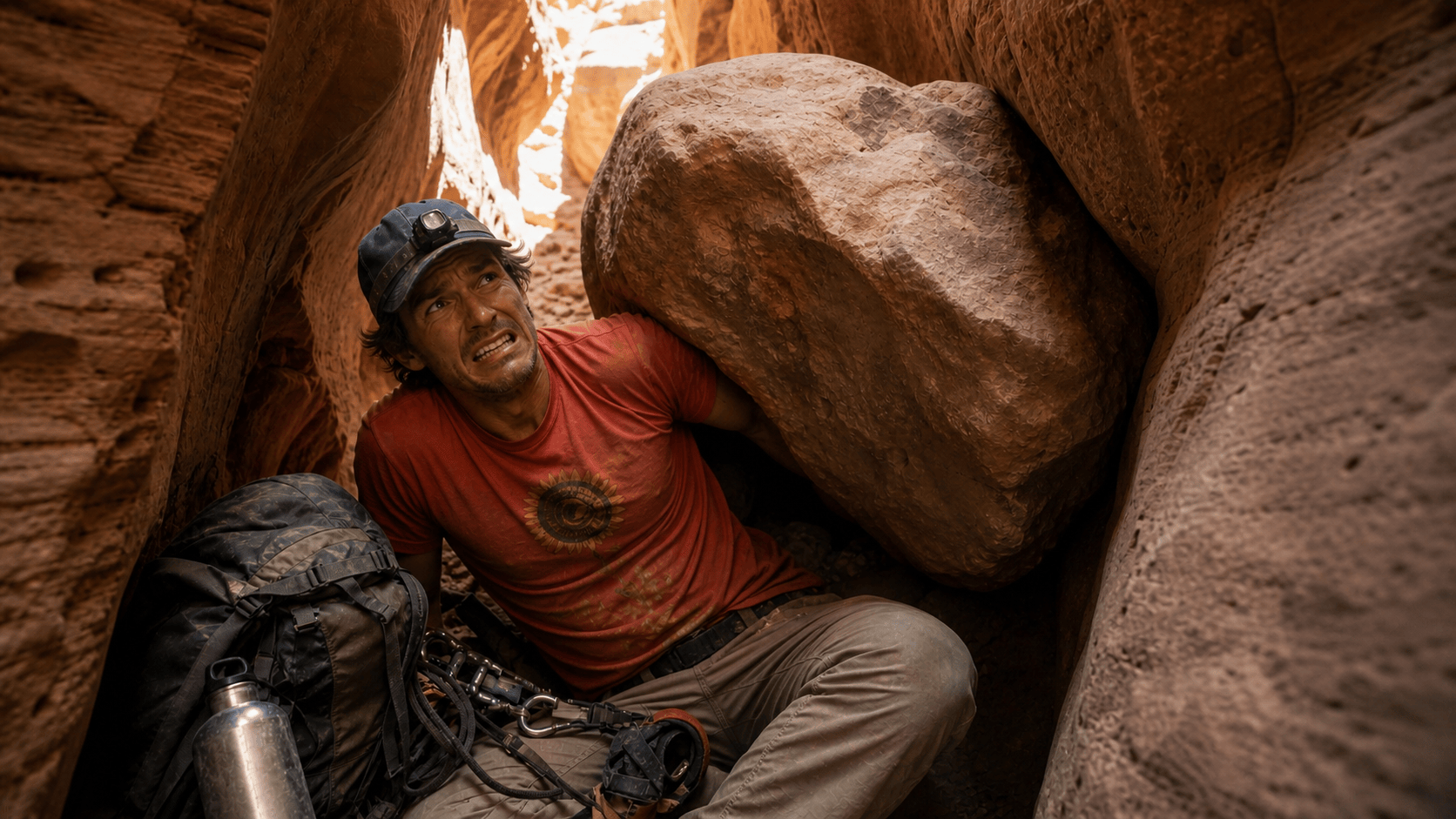
Aron Ralston’s story is famous for one reason, but the full situation is still hard to sit with.
In 2003, Ralston was hiking alone in Bluejohn Canyon, Utah, when a boulder shifted and pinned his right arm against the canyon wall. He was trapped in a narrow slot canyon with limited food, limited water, and no easy way for anyone to know where he was.
That last part mattered.
Ralston had not told anyone exactly where he was going. So while he was stuck there, the outside world did not immediately know where to search. It was just him, the canyon, and a rock that had apparently decided to become a life-altering administrative problem.
For days, he tried to free himself. He chipped at the boulder. He rationed water. He recorded messages for his family. The situation slowly became clearer and worse: if he stayed there, he was going to die.
So he made the decision that turned the story into legend.
Ralston broke the bones in his trapped arm and used a dull multi-tool to amputate it. Then he rappelled down a cliff and hiked until he found help.
There is no casual way to write that sentence.
What makes the story so intense is not just the physical act. It is the mental distance he had to cross before doing it. Survival sometimes gets talked about like instinct takes over, but this was not simple instinct. It was calculation, desperation, pain, and the awful clarity of having only one option left.
Ralston survived because he did something most people cannot even comfortably imagine.
The canyon did not give him a way out.
So he made one.
#1 Juliane Koepcke
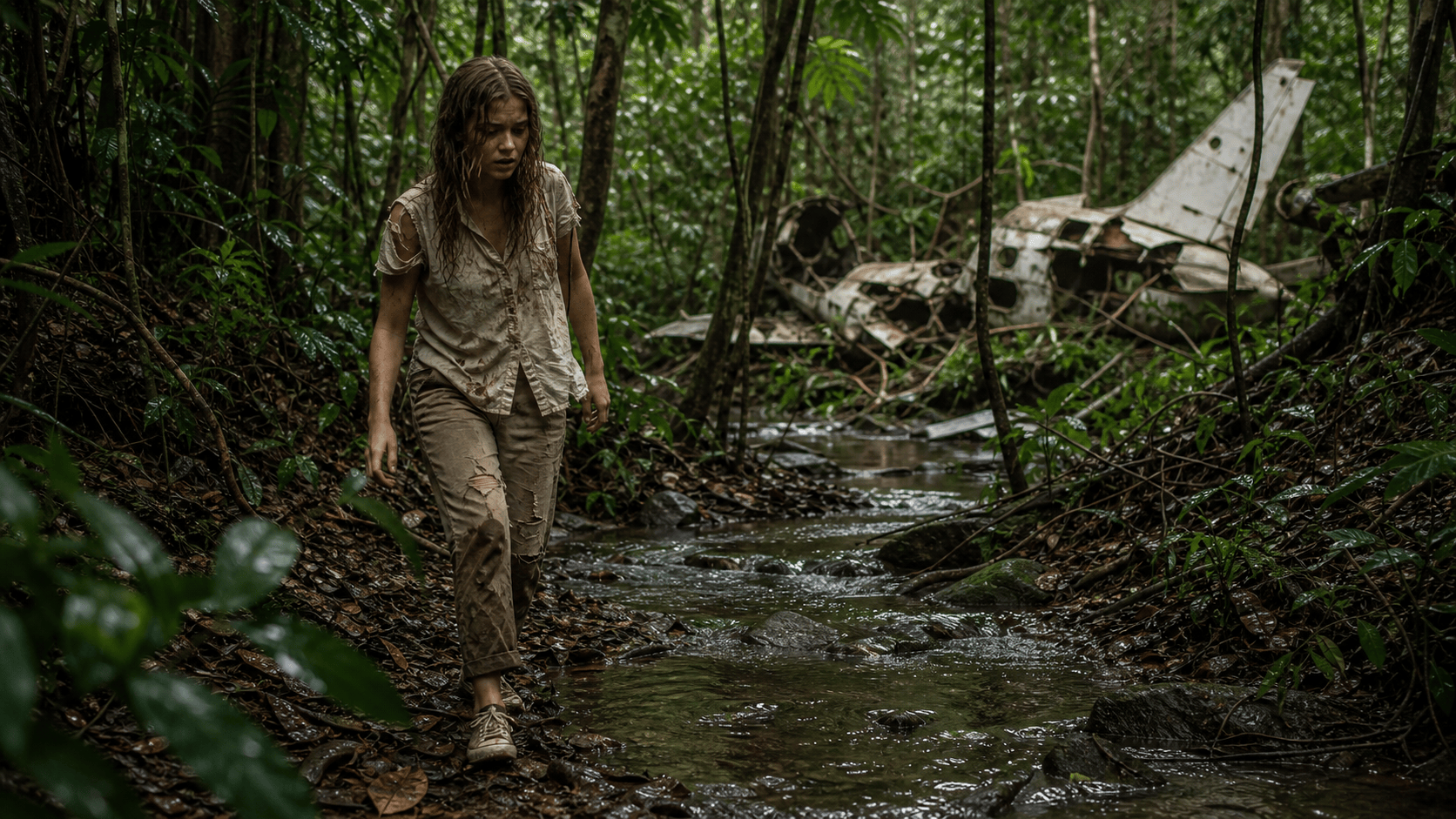
Juliane Koepcke’s survival story begins with a plane falling out of the sky and somehow gets more unbelievable from there.
In December 1971, Koepcke was flying over Peru with her mother when the plane entered a violent thunderstorm. Lightning struck the aircraft, and it broke apart in midair. Koepcke, still strapped into her seat, fell thousands of feet into the Amazon rainforest.
She was 17 years old.
Somehow, she survived the fall.
That sentence feels too small for what it is trying to hold.
Koepcke woke up in the jungle injured, alone, and surrounded by wreckage. She had a broken collarbone, a deep cut on her arm, an eye injury, and no idea where anyone else was. Her mother had not survived. Most people in that situation would have no realistic path forward.
But Koepcke had something unusual: she knew the rainforest.
Her parents were zoologists, and she had grown up around jungle research stations. She remembered that following water downstream could eventually lead to people. So she walked. Injured, hungry, bitten by insects, and wearing only one shoe, she followed a stream through the Amazon for days.
Eventually, she found a small shelter and was later rescued by local workers.
It is the kind of story that sounds exaggerated until you realize the truth is already dramatic enough. No need to decorate it. A teenager survived a midair plane breakup, a fall into the rainforest, and days alone in the Amazon.
The jungle got every advantage.
Juliane Koepcke kept moving anyway.
Leave a Reply